

 Preview
 Send
Send Share
Share
 Details
 Guide
Guide

 Download
 Similars
 X-Ray
X-Ray Diaporama
 Q&A
Q&A Stats
StatsTwo Trees


 Read More
Giclée / Art Print
Museum-quality giclée or canvas print with fast production and flexible finish options. ( Buy Hand Made Painting Switch to Digital Image)




































Pick from our preset sizes that match the artwork's original proportions.

Type the width and the height you need, to fit your frame or your wall. A print can only be cut, never made bigger than the picture, so a size with a different shape loses a part of the image. We send you a digital mockup to approve before we print anything. The picture shown on this page does not show the real cut — only the mockup does.
Worldwide Delivery () in 2 weeks instead of standard 4/5 weeks. (8 November)

Free Worldwide Express Shipping

High-Quality Linen Canvas

Full Shipping Insurance

Customs Tax Refund Guarantee

True Color Matching Guarantee

100-Day Return Policy (Defects Only)

100% Money-Back Guarantee

Bulk Discount Offer
 Glass option is only available in size under 110 CM

Two Trees
Giclée / Art Print
Reproduction Size
-


Total Price
$ 63
Artistic Style and Technique
Gilbert Munger's style is characterized by his use of soft brushstrokes and vivid colors, which bring the natural world to life. In Two Trees, the artist's technique is evident in the way the light filters through the leaves of the trees, casting dappled shadows on the ground. The people in the scene are also noteworthy, as they add a sense of scale and humanity to the painting.- The use of oil on canvas allows for a depth and richness of color that is not easily achievable with other mediums.
- The composition of the painting, with the two trees prominently featured, creates a sense of balance and harmony.
- The inclusion of people in the scene adds a sense of movement and energy to the painting.
Questions & Answers
What other names is Gilbert Munger known by?
Gilbert Munger appears under the alternate names Gilbert Davis Munger.
Can the image of "Two Trees" by Gilbert Munger be freely reproduced?
The copyright answer for "Two Trees" by Gilbert Munger: the work is in the public domain - its copyright has expired. This determines whether reproductions of the image may be freely made.
Is "Two Trees" by Gilbert Munger a portrait, landscape or square composition?
"Two Trees" by Gilbert Munger has a portrait format. The format describes the proportions of the composition.
Related Artworks


Artist Biography
Early Life and Artistic Training
Gilbert Davis Munger (April 14, 1837 – January 27, 1903) emerged from Connecticut’s Madison County as a child captivated by artistic pursuits. Born to Sherman and Lucretia Benton Munger—the last of five children—his family recognized his innate talent and fostered it through an apprenticeship with William H. Dougal, senior engraver at the Smithsonian Institution at just thirteen years old. This formative experience instilled in him not only technical proficiency but also a profound appreciation for meticulous observation—skills that would define his artistic vision throughout his life. Notably, Munger’s distant cousin was George Munger, another artist who explored similar themes of landscape and scientific inquiry. Early influences included the luminism championed by John Ruskin and the pioneering painters of the Hudson River School, whose emphasis on atmospheric light and tonal gradation profoundly shaped Munger's artistic sensibilities.- Sherman Munger, a farmer, instilled in Gilbert a love for nature and craftsmanship.
- Lucretia Benton Munger supported Gilbert’s artistic ambitions with unwavering encouragement.
- William H. Dougal provided invaluable training in engraving and fostered an appreciation for detailed rendering.
Engraving Commissions and Scientific Observation
Munger's initial professional endeavors centered on engraving, primarily for government reports documenting geological expeditions led by Clarence King. These commissions demanded precision and accuracy—skills honed during his apprenticeship—and exposed him to the burgeoning field of geology. He meticulously reproduced illustrations of animals, plants, and rock formations, reflecting the scientific fervor of the era and demonstrating a commitment to representing nature with unwavering fidelity.- His work for the Smithsonian Institution showcased his engraving skills and deepened his understanding of scientific concepts.
- Collaborations with Clarence King’s Geological Survey fostered an appreciation for geological observation and artistic representation.
The Hudson River School Influence and Early Landscapes
Gilbert Munger's artistic style was decisively shaped by the Hudson River School, a movement characterized by its romantic idealism and masterful depiction of American landscapes bathed in luminous light. Artists like John Ruskin served as inspiration for Munger who studied their techniques—particularly their use of tonal gradation to convey mood and atmosphere.- Ruskin’s advocacy for tonal harmony influenced Munger's approach to color and composition.
- The Hudson River School painters established a precedent for capturing the grandeur of American wilderness with emotional resonance.
Service in the Civil War and Artistic Development
During the tumultuous years of the Civil War, Munger served as a military engineer assisting in the defense of Washington D.C., demonstrating courage and dedication alongside his fellow soldiers.- His involvement in the Union Army provided him with firsthand experience of American society during wartime.
- The challenges posed by the war spurred artistic innovation and refined his observational skills.
Western Landscapes and Recognition
Gilbert Munger’s most celebrated achievements lie in his breathtaking landscapes of the American West—particularly those created during Clarence King's Fortieth Parallel Survey. Collaborating closely with photographer Timothy H. O’Sullivan, he captured iconic vistas such as Yosemite Valley and Donner Pass, meticulously documenting geological formations and conveying their sublime beauty.- His partnership with Timothy H. O’Sullivan resulted in groundbreaking photographic landscapes that cemented Munger’s reputation as a pioneer of Western art.
- Ten chromolithographs produced from his survey paintings gained widespread acclaim and established him as one of the foremost landscape painters of his generation.
European Travels and Artistic Legacy
Following the Civil War, Munger embarked on extensive travels in Europe—primarily to London and Paris—where he honed his artistic skills further under the tutelage of John Ruskin and Jean-Baptiste Camille Corot.- Ruskin’s influence extended beyond tonal harmony into broader philosophical considerations about art's role in elevating human consciousness.
- Corot’s Barbizon School style encouraged Munger to embrace looser brushwork and atmospheric perspective—techniques that distinguished his European paintings from his earlier landscapes.

Gilbert Munger
1837 - 1903 , United States of America
Quick Facts
- Full Name: Gilbert Davis Munger
- Nationality: American
- Date Of Birth: 1837
- Date Of Death: 1903
- Place Of Birth: Madison, United States of America
- Notable Artworks:
- Niagara Horseshoe Falls with Rainbow
- Niagara Falls
- Artistic Movement Or Style: Hudson River School
- Artists Who Influenced This Artist:
- John Ruskin
- William H. Dougal
- Artists Or Movements Influenced By This Artist: ['Albert Bierstadt']
Related Articles

Impressionistic Landscapes: 10 Masterpieces That Changed Art & Decor
Journey into the heart of Impressionism! Explore 10 masterpieces by Monet, Renoir & Degas that revolutionized landscape art. Discover their stories, techniques & find museum-quality reproductions to elevate your home decor on ArtsDot.com.

Mastering Form: The 25 Greatest Paintings by Paul Cézanne
Explore 25 iconic Paul Cézanne masterpieces and his Post-Impressionist legacy. Discover the full collection online at ArtsDot.com.

Evocations of Place: A Historical Journey Through Landscape Art
Explore the rich history of landscape art with ArtsDot. Discover renowned artists, movements like Impressionism & Romanticism, and expert guidance for collecting timeless pieces. Find your perfect serene escape today!

Arboreal Echoes: A Historical & Artistic Exploration of Trees in Painting
Explore the rich history of trees in painting! Discover symbolism, Romantic masterpieces by Caspar David Friedrich & beyond. A curated journey for art enthusiasts.
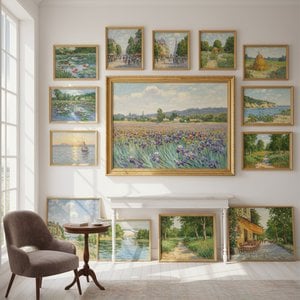
Impressionist Landscapes: 10 Masterpieces for Your Home | ArtsDot
Journey through 10 iconic Impressionist landscapes by Monet, Renoir & Degas. Explore the history, techniques & emotions behind these masterpieces. Find museum-quality reproductions for your home at ArtsDot.com – where art comes to life! Discover all masterpieces on ArtsDot.com


