

 Preview
 Send
Send Share
Share
 Details
 Guide
Guide

 Download
 Similars
 X-Ray
X-Ray Diaporama
 Q&A
Q&A Stats
StatsViolin Melodie

- 55.0 x 38.0 cm


 Read More
Get a print-ready file that goes far beyond the web preview. Every digital image we sell comes from a high-resolution master in our stock database — usually 5,000 to 15,000 pixels wide — so you can print large, crop tightly, or reproduce fine detail with confidence.
No file leaves our studio untouched. A digital expert checks the colors against the original painting and corrects them if needed, then improves clarity and detail with professional retouching tools — always staying faithful to the artist's brushwork and style. The result is an image that looks like the painting, not like a filtered scan.
You approve before you're done: our expert sends the image by e-mail within 72 hours for your review. Not satisfied? Ask for improvements or corrections, or request a refund if the quality falls short.
This is the quality relied on by publishers, design studios, galleries and print shops.
Digital Image
Download a high-resolution file for personal display, printing, and creative projects. ( Switch to Print Buy Hand Made Painting)
Included in Every Digital Image Order
Expert Digital Delivery, Guaranteed
When you choose ArtsDot.com, you're not just getting an image - you're receiving a professionally enhanced digital artwork, crafted with precision and backed by a satisfaction guarantee. Here's everything that comes with your order, automatically:

Fast Email Delivery
Your high-resolution digital image file will be emailed to you within 72 hours of ordering - ready for immediate use.

AI-Enhanced Digital File
Your artwork is professionally optimized using advanced AI tools and manual editing, ensuring maximum detail, clarity, and color accuracy.

Free Lifetime Re-Delivery
Accidentally deleted or lost your file? No worries - we'll resend it to you anytime, free of charge.

No Import Fees - Ever
Enjoy your artwork instantly with zero customs, duties, or delivery fees - digital downloads are always tax-free.

Color Accuracy Guarantee
We ensure your digital image reflects the original colors as closely as possible using professional tools and color management.

100-Day Satisfaction Guarantee
If you're not satisfied with your digital image, we'll revise it or refund 100% within 100 days - no questions asked.

100% Money-Back Guarantee
Not satisfied? Get a full refund within 100 days of receiving your digital file - no questions asked.

Bulk Order Discounts
Buy 3 images, save 10% - Buy 5, save 15% - Buy 10+, save 20%. Great for creative projects, galleries, and agencies.
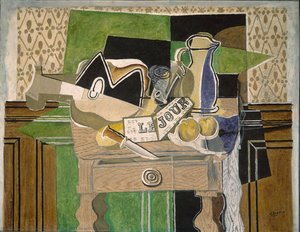
A Fragmented Melody: Georges Braque’s “Violin Melodie”
This captivating painting, "Violin Melodie," executed by Georges Braque in 1914, offers a profound glimpse into the heart of Synthetic Cubism – a movement that irrevocably altered the course of modern art. Measuring 55 x 38 cm, this work transcends a simple depiction of a violin; it’s an exploration of fractured perception and the subjective experience of sound itself. Braque, deeply influenced by Paul Cézanne's emphasis on form and structure, sought to dismantle traditional representation, presenting multiple viewpoints of the same object simultaneously. The result is a visually arresting composition where the violin isn’t rendered as a unified whole but rather as a collection of geometric planes and overlapping forms, echoing the fragmented nature of musical notes and their reverberations.Synthetic Cubism and the Reimagining of Still Life
“Violin Melodie” firmly establishes Braque within the burgeoning world of Synthetic Cubism, a phase that moved beyond the analytical concerns of its predecessor. Unlike Analytical Cubism’s dissection into smaller components, Synthetic Cubism embraced bolder color palettes and incorporated collage elements – though not explicitly present here, the influence is undeniable in the flattened perspective and the deliberate distortion of space. The painting's subject matter, a still life, was chosen deliberately to explore these new techniques. Braque aimed to capture not just the appearance of objects but their essence, their emotional impact, and their relationship to the surrounding environment. The inclusion of the birds adds another layer of symbolic richness, often associated with harmony, freedom, and musical inspiration within artistic contexts.Technique and Materiality: A Masterclass in Illusion
Braque’s masterful technique is immediately apparent in the meticulous rendering of the violin's surface. He employs a layering of thin glazes – a hallmark of his approach – to create an illusion of depth and volume despite the fragmented forms. The subtle shifts in color and tone contribute significantly to the painting’s overall effect, drawing the viewer’s eye across the complex arrangement of planes. Note the careful attention to detail in depicting the strings, seemingly vibrating with unseen energy, further emphasizing the central theme of musicality. The cup, a secondary element, adds an unexpected touch of domesticity and perhaps symbolizes containment or preservation – mirroring the act of capturing a fleeting melody.Symbolism and Emotional Resonance
Beyond its formal qualities, “Violin Melodie” resonates with a profound emotional depth. The violin itself is a potent symbol of beauty, passion, and artistic expression. Its fragmented representation suggests the elusive nature of music – its ability to evoke powerful emotions while simultaneously resisting precise definition. The birds, often interpreted as messengers or symbols of joy, reinforce this sense of harmony and aspiration. This painting invites contemplation on the relationship between art, sound, and human experience, prompting viewers to consider how we perceive and interpret the world around us. It’s a testament to Braque's ability to transform everyday objects into vehicles for profound artistic exploration. NoneQuestions & Answers
What color intensity does "Violin Melodie" by Georges Braque have?
"Violin Melodie" by Georges Braque shows a monochromatic color intensity.
Who created "Violin Melodie" and what style is it in?
Behind "Violin Melodie" stand Georges Braque and the Synthetic Cubism movement.
What is the luminance of "Violin Melodie" by Georges Braque?
The luminance recorded for "Violin Melodie" by Georges Braque is gentle luminance.
Related Artworks


Artist Biography
Early Life, Family and Training
Georges Braque was born in Argenteuil, France, in 1882. His early years were spent in Le Havre, France, within a household defined by the practicalities of decoration and color. Growing up in a family of house painters and decorators, he was immersed in the tactile realities of his trade from a young age. This upbringing provided a foundation of technical craftsmanship that would later inform his approach to the canvas.
Before pursuing the fine arts, he followed the established path of his kin by apprenticing as a house painter and decorator. This period of manual labor instilled in him a specific understanding of materials and the physical properties of surfaces. Such practical training offered a grounded perspective on how pigments interact with different textures, a sensibility that would eventually distinguish his later experiments with materiality.
The transition from trade to formal study took him to Paris in 1902. It was there that he continued his studies at the Académie Humbert, seeking to refine his innate inclinations through academic discipline. This period of formal instruction provided the necessary structure for his developing vision, bridging the gap between the manual application of paint and the intellectual pursuit of composition.
The Fauvist Period and Cézanne's Influence
The early years of Braque's career were shaped by the lingering shadows of Impressionism and Post-Impressionism. His initial explorations sought to capture the fleeting qualities of light and atmosphere, yet a deeper structural hunger began to emerge. By 1905, he turned toward the principles of Fauvism, embracing a more intense and non-naturalistic use of color to convey emotion. This period was marked by a departure from mere observation, as he began to prioritize the expressive power of the palette over the literal depiction of his subjects.
This newfound coloristic freedom found a necessary anchor in the work of Paul Cézanne. Braque found himself drawn to the way Cézanne utilized firm structures and a deliberate approach to color to organize the visual field. It was this intersection of Fauvist color and Cézannian geometry that would define his transition into a more radical mode of seeing. He sought to reconcile the emotional intensity of his colors with a sense of architectural permanence.
The results of this synthesis are visible in his 1908 work, Houses at L'Estaque. In this piece, the landscape is no longer a collection of soft impressions but a series of colorful, tilted planes and geometric shapes. The influence of Cézanne is unmistakable here, as the terrain is reduced to its essential volumes. He began to dismantle the traditional perspective of the landscape, replacing it with a fragmented, structured reality that prioritized the underlying form of the world.
The Development of Cubism
Between 1907 and 1914, Paris became the site of a profound visual restructuring through the collaboration of Georges Braque and Pablo Picasso. This partnership moved beyond the emotional intensity of Fauvism toward a more cerebral investigation of form. They developed Analytical Cubism, a method that dissected objects into fragmented geometric shapes. Rather than attempting to replicate the illusion of three-dimensional space, they sought to represent the totality of an object by presenting multiple viewpoints simultaneously. This approach stripped away traditional perspective, replacing it with a complex arrangement of planes and lines.
By about 1912, the movement underwent a significant transition into Synthetic Cubism. This phase moved away from the dissection of forms and toward the construction of new images through the assembly of diverse elements. Braque was a primary innovator in this shift, having created the first papier collé by attaching wallpaper to a drawing. This act of gluing physical materials onto the surface challenged the boundaries of the canvas, asserting the painting as an autonomous object rather than a window into another world. His work during this period focused on the relationship between representation and the tangible reality of the materials used.
- Houses at L'Estaque (1908)
- Man with a Guitar (1911)
- Fruit Dish and Glass (1912)
Technique and Artistic Innovation
Braque’s approach to the canvas was defined by a restless curiosity regarding the physical properties of his materials. He moved beyond the traditional boundaries of oil painting by introducing elements that challenged the illusion of depth. By incorporating real-world materials such as newspaper clippings, wallpaper, and fabric, he disrupted the singular perspective of the picture plane. This experimentation led to the development of papier collé, a method of pasting paper that allowed him to integrate the textures of everyday life directly into his compositions. He sought to bridge the gap between the painted image and the tangible object.
His technical repertoire was marked by a tactile, almost sculptural sensibility. He frequently blended pigments with sand to alter the surface texture, creating a grit that caught the light in unexpected ways. To further manipulate the viewer's perception of space and materiality, he experimented with copying the visual patterns of wood grain and marble. This was not merely a decorative choice but a way to explore how different surfaces interact with light and form. He also utilized stenciled letters on his works, a technique that added a layer of graphic dimension and helped anchor the composition within a modern, legible reality.
- Fruit Dish and Glass (1912)
- Violin and Pipe (1912)
- Clarinet and Bottle of Rum on the Mantlepiece (1912)
War and Stylistic Evolution
The outbreak of World War I in 1914 brought a sudden, violent interruption to the intellectual rigor of the Cubist movement. Braque was called up for military service, a period that would fundamentally alter both his physical well-being and his creative temperament. In 1915, he sustained a serious head wound in the trenches, an injury that resulted in temporary blindness and required a trepanation to recover his sight. This brush with darkness forced a shift in his perception. The rigid, analytical structures that had defined his earlier years began to soften, replaced by a more personal and lyrical approach to his subjects.
Upon his return from the war, the strict geometric constraints of his previous collaboration with Picasso were no longer his sole concern. His style evolved to incorporate elements of classical composition, seeking a sense of balance and harmony that felt more grounded in the physical world. He moved away from the purely intellectual dissection of form, embracing a more nuanced and contemplative way of seeing. His work became less about the fragmentation of space and more about the quiet, serene atmosphere of the objects themselves.
- Still Life with Playing Cards (1919)
Key Works and Notable Pieces
The trajectory of Braque's career is marked by specific compositions that signal his shifts in thought and technique. In 1908, Houses at L'Estaque emerged, utilizing colorful, tilted planes and geometric shapes that reflected a departure from traditional perspective. This period of experimentation continued into 1910 with Violin and Palette, a work that utilized paper and mixed media to study how color interacts with form. By 1911, his focus moved toward the dissection of space in Man with a Guitar, a piece that exemplifies the analytical approach he developed alongside his contemporaries.
As his methods evolved, the introduction of new materials changed the texture of his canvases. The 1912 work Fruit Dish and Glass demonstrated the transition into a style where recognizable subject matter was reincorporated through the use of collage. Even after the disruptions of war, his output maintained a connection to his earlier investigations. The Musician, created in 1918, reflects a period of personal transition, while his much later 1955 painting, Two Birds, shows a continued interest in the fundamental properties of his chosen subjects.
- Mandola (1910)
- Still life with harp and violin (1912)
- Guitar (1913)
- Still Life with Playing Cards (1919)
Legacy and Enduring Impact
By the time of his death on August 31, 1963, Georges Braque had fundamentally altered the understanding of how we perceive and represent the world. As a co-founder of the Cubism movement, he helped dismantle the long-held reliance on traditional perspective, replacing it with a fragmented, multi-dimensional reality. His work moved beyond mere imitation of nature, seeking instead to capture the essence of objects through a rigorous study of form and space. This shift forced a permanent change in the visual language of the twentieth century.
His influence on subsequent generations of artists remains immeasurable. By introducing papier collé and integrating everyday materials into his compositions, he bridged the gap between the canvas and the tangible world. This innovation challenged the boundaries of what a painting could be, paving the way for future explorations into texture and materiality. Even as his style evolved toward more lyrical and serene themes in his later years, the structural integrity of his Cubist foundations remained a constant presence in his output.
- Houses at L'Estaque
- Man with a Guitar
- Fruit Dish and Glass
- Violin and Pipe
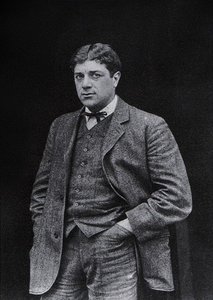
Georges Braque
1882 - 1963 , France
Quick Facts
- Artistic Movement Or Style:
- Fauvism
- Cubism
- Analytical Cubism
- Synthetic Cubism
- Artists Or Movements Influenced By This Artist: ['Modern art']
- Artists Who Influenced This Artist:
- Henri Matisse
- André Derain
- Paul Cézanne
- Full Name: Georges Braque
- Nationality: French
- Notable Artworks:
- Houses at L'Estaque
- The Patience
- Violin and Palette
- Mandola
- Place Of Birth: Argenteuil, France
- Date Of Birth: 1882
- Date Of Death: 1963