

 Preview

 Send
 Share
 Details
 Guide


 Download
 Similars
 X-Ray
 Diaporama
 Q&A
 Stats
Landscape

- 23.0 x 31.0cm


 Read More
Giclée / Art Print
Museum-quality giclée or canvas print with fast production and flexible finish options. ( Buy Hand Made Painting Switch to Digital Image)




P118B $10

P118H $10

P118W $10

P438Z $10

P508JH $12

P508YH $12

P805H $10

P805Z $10

P919BZ $10

P919G $10

P919XJ $10

P959ZH $10

P968JZ $12

W106C $8

W218G $10

W218JH $8

W218Y $10

W307PJ $10

W316G $10

W316PJ $8

W316Y $10

W398PJ $8

W4111J $10

W500HY $15

W500JH $15

W692G $12

W849H $8

W940BG $15

W953PJ $8




Pick from our preset sizes that match the artwork's original proportions.

Type the width and the height you need, to fit your frame or your wall. A print can only be cut, never made bigger than the picture, so a size with a different shape loses a part of the image. We send you a digital mockup to approve before we print anything. The picture shown on this page does not show the real cut — only the mockup does.
Worldwide Delivery () in 2 weeks instead of standard 4/5 weeks. (19 November)

Free Worldwide Express Shipping

High-Quality Linen Canvas

Full Shipping Insurance

Customs Tax Refund Guarantee

True Color Matching Guarantee

100-Day Return Policy (Defects Only)

100% Money-Back Guarantee

Bulk Discount Offer
 Glass option is only available in size under 110 CM

Landscape
Giclée / Art Print
Reproduction Size
-


Total Price
$ 63
Identification of the Landscape Painting
In this oil on canvas work titled Landscape, the artist George Inness captures a quiet moment in the natural world. Created in 1888, the painting offers a glimpse into the artist's approach to the American landscape during a period of significant stylistic development. The piece is currently held in the collection of the Cleveland Museum of Art in the United States.
George Inness approached the canvas with a focus on the atmosphere of the setting. The work avoids the rigid precision often found in earlier landscape traditions, opting instead for a more fluid representation of the environment. Through this medium, the artist sought to translate the subtle shifts in light and the weight of the air into a tangible visual experience.
Composition and Visual Elements
The composition is structured around a low horizon line, which grants a significant presence to the sky. This arrangement allows the viewer to feel the weight of the atmosphere as the sun sets behind a line of trees. The light from the descending sun filters through the foliage, casting a warm glow that defines the space. This interplay of light and shadow creates a quiet, settled mood across the scene.
In the midground, trees with green leaves are positioned against a yellow sky. The artist uses these elements to capture the subtle beauty of the natural world. The color palette relies on these soft transitions between the warmth of the sunset and the cooling tones of the greenery. There is a sense of stillness in the way the light interacts with the organic forms of the trees.
Questions & Answers
What mood does "Landscape" by George Inness express within American Impressionism?
"Landscape" carries a tranquil emotional tone within the American Impressionism movement.
What size should I print "Landscape" for my room?
For a wellness center, the recommended print size of "Landscape" by George Inness is small.
How do the colors of "Landscape" relate to each other?
"Landscape" by George Inness displays a unified palette color harmony.
Related Artworks


Artist Biography
The Quiet Observer of Nature’s Soul
George Inness stands as a pivotal figure in American Impressionism, a movement that sought to capture fleeting moments of beauty and emotion through luminous color palettes and loose brushstrokes. Born in Newburgh, New York, Inness developed an artistic vision that prioritized introspection and spiritual contemplation, reflecting a profound engagement with philosophical ideas. Unlike the grand narratives championed by the Hudson River School, his landscapes were imbued with a palpable serenity, portraying rural scenes and animal life with a remarkable sensitivity to light and atmosphere. His dedication to capturing the essence of the natural world resulted in works that transcend mere representation, offering instead a window into a more meditative reality.
His formative years were deeply marked by exposure to Transcendentalist thinkers such as Ralph Waldo Emerson and Henry David Thoreau. Their emphasis on intuition and the spiritual connection with the natural world profoundly shaped his artistic sensibilities. While he pursued formal training at Yale University, much of his true education was self-directed. During the mid-1850s, a crucial period for absorbing Impressionistic techniques, Inness traveled to Paris. There, he immersed himself in the burgeoning movements of the era, studying under masters like Gustave Courbet and Jean-François Millet. These encounters solidified his commitment to capturing immediate visual sensations rather than meticulously recreating reality.
Evolution of Style and Technique
In Paris, Inness began to experiment with plein air painting, working outdoors directly from nature to develop a distinctive style characterized by subtle gradations of color and textured brushwork. This period was essential in his transition toward a more atmospheric approach to landscape. He moved away from the rigid details of his early influences, seeking instead to capture the "power of motive" and a sense of grandeur that avoided being belittled by trifling detail. His later works became increasingly influenced by the theology of Emanuel Swedenborg, which introduced a deeper layer of spiritualism into his mature compositions.
The breadth of his artistic development can be seen through several key elements of his technique:
- Atmospheric Mastery: A profound ability to depict conditions such as mist and light to create depth and mood.
- Color Palette: The use of luminous, subtle color gradations to evoke emotion and tranquility.
- Brushwork: A move toward looser, more expressive strokes that prioritize the feeling of a scene over precise anatomical or botanical accuracy.
- Philosophical Depth: The integration of spiritual and transcendentalist ideas into the very fabric of his landscapes.
Legacy and Lasting Significance
Throughout a prolific career spanning more than forty years and encompassing over 1,000 paintings, Inness’s oeuvre remains a cornerstone of American art history. His ability to blend the influences of the Barbizon school with an uniquely American sensibility allowed him to become a leading artist-philosopher of his generation. Iconic works such as The Dark Side of Twilight and Winter Landscape continue to be celebrated for their masterful depiction of the ephemeral qualities of nature. By focusing on the internal, spiritual response to the landscape, George Inness left an enduring legacy that continues to inspire artists who strive for expressive depth and emotional resonance in their work.

George Inness
1825 - 1894 , United States
Quick Facts
- Artistic Movement Or Style: American Impressionism
- Artists Who Influenced This Artist:
- Gustave Courbet
- Jean-François Millet
- Claude Lorrain
- Salvator Rosa
- Thomas Cole
- Asher B. Durand
- Full Name: George Inness
- Nationality: American
- Notable Artworks:
- The Dark Side of Twilight
- Winter Landscape
- A Bit of Roman Aqueduct
- Castel Gandolfo
- Place Of Birth: Newburgh, New York, United States of America
- Date Of Birth: 1825
- Date Of Death: 1894
Related Articles

Serene Visions: Exploring Tranquility in Art History & Contemporary Practice
Explore the history of serene landscape art & discover artists who evoke tranquility. Find the perfect calming artwork for your home with expert guidance from ArtsDot.

George Inness: Transcendental Landscapes & the American Search for Spiritual Harmony
Explore the profound landscapes of George Inness, a leading American artist-philosopher. Discover his spiritual approach to painting, influences, and lasting legacy with ArtsDot.

The Art of Stillness: Finding Peace Within Classical Landscapes
Explore the mastery of Corot, Renoir, and Dutch masters in this guide to tranquil landscapes. Discover peace through classical art today.
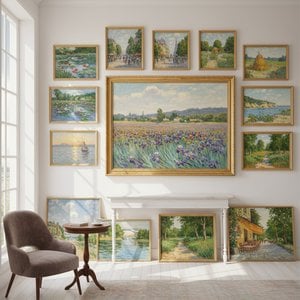
Impressionist Landscapes: 10 Masterpieces for Your Home | ArtsDot
Journey through 10 iconic Impressionist landscapes by Monet, Renoir & Degas. Explore the history, techniques & emotions behind these masterpieces. Find museum-quality reproductions for your home at ArtsDot.com – where art comes to life! Discover all masterpieces on ArtsDot.com

The Art of Quietude: Finding Stillness in Classical Landscapes
Explore the tranquil mastery of Corot, Renoir, and Dutch masters through classical landscapes. Discover timeless serenity in every brushstroke.


