

 Preview
 Send
Send Share
Share
 Details
 Guide
Guide

 Download
 Similars
 X-Ray
X-Ray Diaporama
 Q&A
Q&A Stats
StatsLandscape

- 22.0 x 29.0 cm


 Read More
Giclée / Art Print
Museum-quality giclée or canvas print with fast production and flexible finish options. ( Buy Hand Made Painting Switch to Digital Image)




































Pick from our preset sizes that match the artwork's original proportions.

Type the width and the height you need, to fit your frame or your wall. A print can only be cut, never made bigger than the picture, so a size with a different shape loses a part of the image. We send you a digital mockup to approve before we print anything. The picture shown on this page does not show the real cut — only the mockup does.
Worldwide Delivery () in 2 weeks instead of standard 4/5 weeks. (4 November)

Free Worldwide Express Shipping

High-Quality Linen Canvas

Full Shipping Insurance

Customs Tax Refund Guarantee

True Color Matching Guarantee

100-Day Return Policy (Defects Only)

100% Money-Back Guarantee

Bulk Discount Offer
 Glass option is only available in size under 110 CM

Landscape
Giclée / Art Print
Reproduction Size
-


Total Price
$ 63
Related Artworks


Artist Biography
Frederick Golden Short: A Painter of the New Forest’s Soul
Frederick Golden Short (1863-1936) wasn't merely a painter; he was an observer, a chronicler of a vanishing world. Born in Lyndhurst, Hampshire, nestled within the heart of the New Forest National Park, his life and art were inextricably linked to this ancient landscape – a place that profoundly shaped his vision and became the enduring subject of his canvases. Short’s work transcends simple depiction; it's an attempt to capture the very essence of the forest, its light, its atmosphere, and the subtle shifts in color that define its moods. He wasn’t interested in grand vistas or dramatic events, but rather in the quiet beauty of everyday moments – a dappled sunbeam through the trees, the texture of moss-covered bark, the distant silhouette of hills against the horizon.
His early life instilled within him a deep appreciation for nature and a keen eye for detail. Growing up so intimately connected to the New Forest fostered an understanding of its rhythms and secrets that would inform his artistic practice throughout his career. This connection is evident in his meticulous observation, his ability to render textures with astonishing accuracy, and his preference for muted, earthy tones that evoke the forest’s atmosphere. Short's formal training included studies at the Royal Academy of Arts and the Royal Institute of Painters in Water Colours, providing him with a solid foundation in traditional techniques but never eclipsing his innate artistic sensibility.
The Language of Light and Texture
Short’s technique is characterized by a remarkable sensitivity to light and texture. He employed oil paints with a deliberate slowness, building up layers of color to create a sense of depth and luminosity. His brushstrokes are often loose and expressive, yet always controlled, conveying both the physicality of the landscape and its ethereal quality. He frequently worked *en plein air*, directly observing and painting from nature, which allowed him to capture the fleeting effects of light and shadow with unparalleled immediacy. A key element in his work is his masterful use of color – he rarely relied on bright, saturated hues, instead favoring a palette of browns, greens, greys, and ochres that perfectly mirrored the muted tones of the New Forest.
Consider “Autumn” (1898), a quintessential example of Short’s style. The painting isn't simply a representation of falling leaves; it’s an evocation of the season’s melancholy beauty, rendered through subtle shifts in color and texture. Similarly, "Landscape" (1912) captures the essence of a coastal harbor scene with a remarkable sense of atmosphere – the hazy light, the muted colors, and the suggestion of movement all contribute to its evocative power. His later works, such as “A Distant Forest Scene,” demonstrate an increasing focus on capturing the atmospheric perspective of the landscape, using color and value to create a sense of depth and distance.
Influences and Artistic Context
Short’s work is firmly rooted in the Pre-Raphaelite tradition, though he developed his own distinctive style. Like the Pre-Raphaelites, he was deeply influenced by Romanticism and sought to capture the beauty and sublimity of nature. However, unlike the more overtly emotional and symbolic works of the Pre-Raphaelites, Short’s paintings are characterized by a quiet restraint and an understated elegance. He shared with them a fascination for detail and a commitment to portraying the natural world with accuracy and sensitivity.
Furthermore, his work reflects the broader artistic trends of the late 19th and early 20th centuries – the rise of Impressionism and Post-Impressionism, which emphasized capturing fleeting moments of light and color. While Short never fully embraced these movements, he undoubtedly drew inspiration from them, incorporating elements of their techniques into his own practice. The influence of photography is also noticeable in his careful observation and attention to detail.
Legacy and Historical Significance
Frederick Golden Short’s paintings are more than just beautiful landscapes; they offer a valuable glimpse into the changing relationship between humans and nature. His work reminds us of the importance of preserving these wild spaces and appreciating their beauty. Short's dedication to capturing the essence of the New Forest has secured his place as one of the most important landscape painters of his time, and his paintings continue to resonate with viewers today.
His art is now held in collections across the United Kingdom, including Astley Hall Museum and Art Gallery, Southampton City Art Gallery, and Russell-Cotes Art Gallery & Museum. Short’s legacy extends beyond his artistic achievements; he was also a keen photographer, documenting the New Forest through a series of evocative images that further enhanced our understanding of this remarkable landscape. His work serves as a testament to the power of art to capture beauty, evoke emotion, and connect us to the natural world.

Frederick Golden Short
1863 - 1936
Quick Facts
- Artistic Movement Or Style: Landscape painting
- Artists Or Movements Influenced By This Artist: ['Impressionism']
- Artists Who Influenced This Artist: ['John Constable']
- Date Of Birth: 1863
- Date Of Death: 1936
- Full Name: Frederick Golden Short
- Nationality: British
- Notable Artworks:
- Autumn
- Landscape
- A Distant Forest Scene
- Place Of Birth: Lyndhurst, Hampshire
Related Articles

Impressionistic Landscapes: 10 Masterpieces That Changed Art & Decor
Journey into the heart of Impressionism! Explore 10 masterpieces by Monet, Renoir & Degas that revolutionized landscape art. Discover their stories, techniques & find museum-quality reproductions to elevate your home decor on ArtsDot.com.
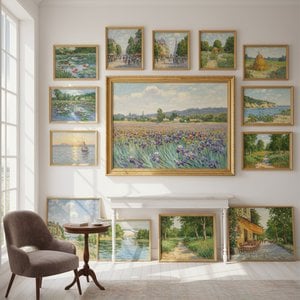
Impressionist Landscapes: 10 Masterpieces for Your Home | ArtsDot
Journey through 10 iconic Impressionist landscapes by Monet, Renoir & Degas. Explore the history, techniques & emotions behind these masterpieces. Find museum-quality reproductions for your home at ArtsDot.com – where art comes to life! Discover all masterpieces on ArtsDot.com

Romantic Landscapes: 10 Masterpieces for Your Home | ArtsDot
Journey through 10 Romantic landscape masterpieces by Friedrich, Turner & Cole. Explore emotional art, sublime nature scenes & iconic 19th-century paintings. Find museum-quality reproductions for your home at ArtsDot.com – discover the full collection online!

Beyond the Horizon: A Curated Guide to Integrating Post-Impressionist Landscapes into Modern Interiors
Transform your home with the emotive power of Post-Impressionist landscapes. Discover expert tips on selecting hand-painted oil reproductions to create a soulful, vibrant interior that reflects your unique style and connection to nature.

Evocations of Place: A Historical Journey Through Landscape Art
Explore the rich history of landscape art with ArtsDot. Discover renowned artists, movements like Impressionism & Romanticism, and expert guidance for collecting timeless pieces. Find your perfect serene escape today!


