
- Home

- Print on canvas
- Frederic Remington
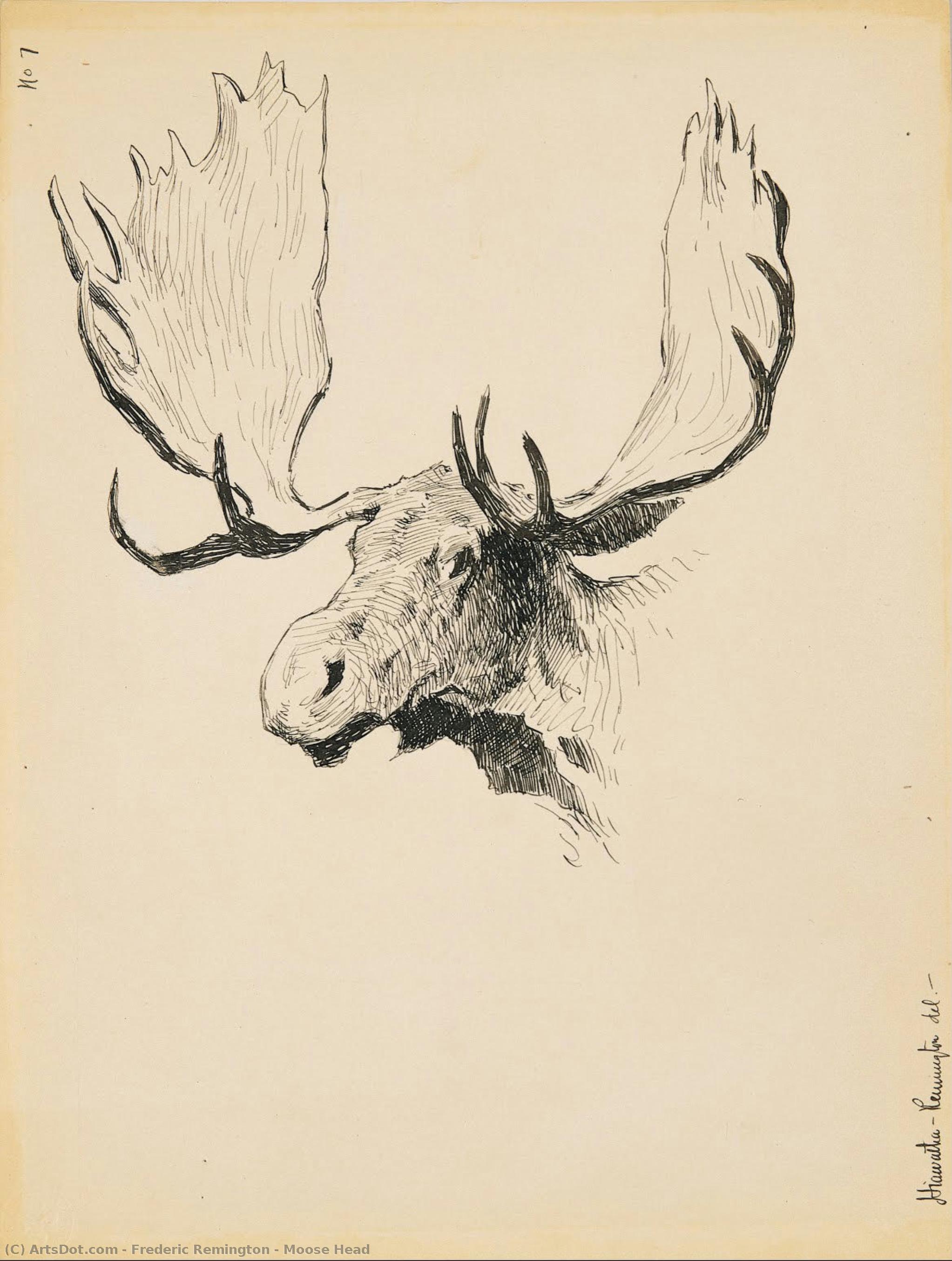
- Moose Head
 Buy Painting
 Send
Send Share
Share
 Details

 Download
 Similars
 X-Ray
X-Ray Diaporama
Moose Head


 Read More
Giclée / Art Print
Museum-quality giclée or canvas print with fast production and flexible finish options.




P118B $10

P118H $10

P118W $10

P438Z $10

P508JH $12

P508YH $12

P805H $10

P805Z $10

P919BZ $10

P919G $10

P919XJ $10

P959ZH $10

P968JZ $12

W106C $8

W218G $10

W218JH $8

W218Y $10

W307PJ $10

W316G $10

W316PJ $8

W316Y $10

W398PJ $8

W4111J $10

W500HY $15

W500JH $15

W692G $12

W849H $8

W940BG $15

W953PJ $8




Pick from our preset sizes that match the artwork's original proportions.

You may enter your own dimensions to fit a specific frame or space. If your selected size does not match the original image's proportions, we will either crop the artwork or extend the image with a mirrored or solid-fill edge. A digital mockup will be sent for your approval before production begins.
Please note that the on-screen preview does not reflect the actual cropping or extension. Only the mockup will accurately show the final composition.
While custom sizes are available, we recommend selecting a dimension from the predefined list to preserve the original proportions.
Worldwide Delivery () in 2 weeks instead of standard 4/5 weeks. (23 July)

Free Worldwide Express Shipping

High-Quality Linen Canvas

Full Shipping Insurance

Customs Tax Refund Guarantee

True Color Matching Guarantee

60-Day Return Policy (Defects Only)

100% Money-Back Guarantee

Bulk Discount Offer
 Glass option is only available in size under 110 CM

Moose Head
Giclée / Art Print
Reproduction Size
-


Total Price
-
Collectible Description
A Majestic Encounter: Frederic Remington’s “Moose Head”
Frederic Remington's "Moose Head," rendered in stark black ink on ivory paper in 1889, is more than just a depiction of an animal; it’s a profound meditation on the vastness and solitude of the American West. Commissioned for his illustrations in Longfellow’s epic poem “The Song of Hiawatha,” this seemingly simple drawing pulsates with a quiet intensity, capturing not merely the physical form of the moose but also its inherent dignity and the wild spirit of the landscape it inhabits.
Remington, born in Canton, New York, wasn’t initially destined for the frontier. His lineage traced back to French Basque settlers and his father was a prominent Civil War colonel and newspaper editor. Yet, a childhood spent absorbing tales of westward expansion ignited within him an enduring fascination with the vanishing West – a subject he would dedicate his life to portraying with remarkable accuracy and emotional depth. “Moose Head” exemplifies this commitment; it’s a meticulously observed study, reflecting Remington's deep understanding of animal anatomy and behavior, gleaned from countless hours spent observing wildlife in the American West.
The Language of Line: Technique and Style
Remington’s technique is characterized by bold, confident lines – a hallmark of his style. He eschews delicate shading or subtle gradations, instead relying on varying line weight and density to create form and texture. Notice how the thickest lines define the moose's powerful shoulders and antlers, while thinner, more hesitant strokes suggest the surrounding snow and the shadowed recesses of its head. This deliberate use of line isn’t merely representational; it imbues the image with a sense of immediacy and dynamism, as if the moose is poised to move at any moment.
The composition itself is deceptively simple. The moose stands in profile, facing slightly off-center, its gaze directed into the distance – an act of quiet contemplation that invites the viewer to share in its solitude. The background is deliberately vague, a wash of indistinct gray tones that emphasizes the animal’s isolation and reinforces the vastness of the wilderness.
Symbolism and the Spirit of the West
“Moose Head” transcends a simple portrait; it's rich with symbolic meaning. The moose itself represents resilience, strength, and an untamed spirit – qualities deeply associated with the American West. Its solitary stance speaks to the challenges and hardships faced by those who sought their fortunes in this rugged landscape. Furthermore, the image can be interpreted as a commentary on the relationship between humanity and nature—a reminder of our place within a world dominated by forces far greater than ourselves.
The choice of black ink on ivory paper further enhances the artwork’s impact. The stark contrast between the dark lines and the pale background creates a dramatic effect, drawing the viewer's eye directly to the moose. Ivory, historically associated with luxury and refinement, subtly elevates the image, suggesting that even in this depiction of wilderness, there is an inherent value and dignity.
A Legacy of Western Art
“Moose Head” stands as a pivotal work in Frederic Remington’s oeuvre and a cornerstone of American Western art. It exemplifies his ability to capture not just the physical appearance of the West but also its spirit—its beauty, its danger, and its profound sense of solitude. Today, reproductions of this iconic image continue to resonate with audiences worldwide, serving as a powerful reminder of the enduring allure and complex legacy of the vanishing frontier.
For collectors seeking a piece that embodies the romance and ruggedness of the American West, or for interior designers aiming to evoke a sense of expansive space and quiet contemplation, Frederic Remington’s “Moose Head” offers an unparalleled combination of artistic merit and historical significance. It's more than just a print; it’s a window into a bygone era—a testament to the enduring power of art to capture the essence of a nation.
Related Artworks


Artist Biography
A Chronicler of the Vanishing West: The Life and Art of Frederic Remington
Frederic Sackrider Remington, born in Canton, New York, on October 4, 1861, wasn’t a product of the Wild West he so vividly depicted; rather, he was an Easterner who forged his artistic identity through fascination and dedicated study. His lineage hinted at a life far removed from dusty trails and cavalry charges – French Basque ancestry mingled with staunchly Republican New England roots, a father who was a Civil War colonel and newspaper editor, and connections to the famed Remington Arms dynasty through distant cousins. Yet, it was an early exposure to military themes, coupled with a restless spirit and a keen eye for storytelling, that set him on a path toward becoming arguably the most recognizable artist of the American West. His childhood moved to Bloomington, Illinois, then back to Canton and finally Ogdensburg, New York, but his imagination remained captivated by tales of frontier life. Though initially steered towards a military education at Vermont Episcopal Institute, Remington’s true calling lay not in following orders, but in observing and interpreting the world around him through art. A brief stint at Yale University confirmed this; football and sketching held far more appeal than formal academic pursuits.From Illustrator to Painter: Forging an Artistic Vision
Remington’s artistic journey began not with grand canvases, but with ink and paper. His first published work, a cartoon for the *Yale Courant*, signaled an early aptitude for capturing action and narrative. A pivotal trip to Montana in 1881 ignited his lifelong obsession with the West. This wasn't merely a tourist’s gaze; Remington sought to immerse himself in the culture, observing cowboys, Native Americans, and the landscape itself. He initially attempted ranching and mining ventures, but these proved unsuccessful, freeing him to fully dedicate himself to art. Returning East, he quickly established himself as an illustrator for magazines like *Harper's Weekly* and *Collier’s*, his dynamic depictions of Western scenes captivating a national audience hungry for stories of the frontier. These illustrations weren’t simply reportage; they were infused with drama, energy, and a romanticized vision of the West that resonated deeply with the public imagination. It was through this work that Remington honed his skills in composition, capturing movement, and conveying emotion – qualities that would later define his paintings. He received minimal formal training beyond some drawing classes at Yale and a short period at the Art Students League, developing instead a distinctive style characterized by energetic brushwork, bold colors, and a focus on realism blended with dramatic flair.Capturing a Vanishing World: Themes and Style
Remington’s art is inextricably linked to a specific moment in American history – the twilight of the Old West. His canvases are populated by iconic figures: rugged cowboys driving cattle, stoic Native Americans facing displacement, and U.S. Cavalry soldiers engaged in both heroic battles and tragic conflicts. He didn't shy away from depicting the harsh realities of frontier life, but his work often leans towards a romanticized portrayal, emphasizing courage, adventure, and the clash of cultures. His paintings aren’t simply historical documents; they are evocative narratives that explore themes of heroism, loss, and the inevitable march of progress. Remington's style evolved over time, moving from tighter, more academic renderings to looser, more expressive brushwork. He was a master of capturing movement – horses galloping across the plains, cowboys wrestling steers, soldiers charging into battle. He often employed quick sketches and photographs as reference material, but his art always transcended mere imitation, imbued with his own unique vision and emotional intensity. Notable works like *My Ranch*, *Waiting in the Moonlight*, *Ridden Down* (1905), and *The Long-Horn Cattle Sign* (1908) exemplify his ability to capture both the grandeur and the vulnerability of the American West.Legacy and Enduring Influence
Frederic Remington died unexpectedly in 1909 at the age of 48, leaving behind a vast body of work that continues to captivate audiences today. His impact on Western art is undeniable; he didn’t just depict the West, he helped *define* it for generations of Americans. He established a visual language for the frontier – an iconography of cowboys, Indians, and cavalrymen that became deeply ingrained in popular culture.- His work inspired countless other artists, including N.C. Wyeth and Zane Grey.
- The Frederic Remington Art Museum in Ogdensburg, New York, stands as a testament to his enduring legacy, preserving an extensive collection of his paintings, sculptures, and archival materials.
- His art continues to be exhibited in major museums across the country, including the Metropolitan Museum of Art and the Amon Carter Museum of American Art.

Frederic Remington
1861 - 1909 , United States of America
Quick Facts
- Artistic Movement Or Style: Western American Art
- Artists Or Movements Influenced By This Artist:
- N.C. Wyeth
- Zane Grey
- Date Of Birth: October 4, 1861
- Date Of Death: December 26, 1909
- Full Name: Frederic Sackrider Remington
- Nationality: American
- Notable Artworks:
- My Ranch
- Waiting in the Moonlight
- Ridden Down (1905)
- The Long-Horn Cattle Sign
- Place Of Birth: Canton, USA
Related Articles

Met Museum's 25 Masterpieces: Art History & Decor Inspiration | ArtsDot
Journey through 25 iconic artworks at the Metropolitan Museum of Art! Explore Van Gogh, Monet, Rembrandt & more. Discover art history, inspiring stories, and museum-quality reproductions to elevate your home decor. Explore the full collection on ArtsDot.com.

DIA's Masterpieces: Explore 25 Iconic Artworks & Bring Detroit's Spirit Home
Journey through 25 iconic artworks at the Detroit Institute of Arts! Explore Van Gogh, Monet, Rembrandt & more. Discover art history, stunning techniques & find museum-quality reproductions to elevate your home decor on ArtsDot.com.

Whistler's Masterpieces: Explore 25 Iconic Paintings & Aesthetic Art for Your Home
Journey through 25 iconic James Abbott McNeill Whistler paintings! Explore his masterpieces of Aestheticism, from 'Nocturne in Black and Gold' to captivating portraits. Find museum-quality art reproductions & elevate your home decor with ArtsDot.com. Discover the full collection online.

Roy Lichtenstein's Masterpieces: 25 Iconic Pop Artworks for Your Home | ArtsDot
Explore Roy Lichtenstein's 25 most iconic Pop Art masterpieces! Discover the stories behind 'Drowning Girl', 'Look Mickey' & more. Find museum-quality reproductions and elevate your home decor with ArtsDot. Explore the full collection online.
National Gallery of Art's Masterpieces: 25 Iconic Paintings for Your Home Decor
Explore 25 iconic artworks from Washington DC's National Gallery of Art! Discover masterpieces by Cézanne, Matisse & Picasso. Find museum-quality art reproductions and elevate your home decor with timeless paintings. Explore the full collection online at ArtsDot.com.



