


 Preview
 Send
Send Share
Share
 Details
 Guide
Guide

 Download
 Similars
 X-Ray
X-Ray Diaporama
 Stats
StatsSt Roche
 Tempera
- Early Renaissance
 1438
1438 39.0 x 14.0 cm
 Lindenau-Museum
 Read More
Hand Made Oil Reproduction
Hand-painted oil on canvas in your size and frame, made to order by our artists. ( Switch to Print Switch to Digital Image)




P118B $10

P118H $10

P118W $10

P438Z $10

P508JH $12

P508YH $12

P805H $10

P805Z $10

P919BZ $10

P919G $10

P919XJ $10

P959ZH $10

P968JZ $12

W106C $8

W218G $10

W218JH $8

W218Y $10

W307PJ $10

W316G $10

W316PJ $8

W316Y $10

W398PJ $8

W4111J $10

W500HY $15

W500JH $15

W692G $12

W849H $8

W940BG $15

W953PJ $8




Pick from our preset sizes that match the artwork's original proportions.

Type the width and the height you need, to fit your frame or your wall. This is hand-painted, so for a size with a different shape the artist can paint a bit more around the picture, or cut a bit — you choose. We send you a digital mockup to approve before the painting starts. The picture shown on this page does not show the real result — only the mockup does.
After order, ArtsDot.com team will email client for instructions and provide a mockup preview
Worldwide Delivery () in 3/4 weeks instead of standard 5 weeks. (24 October). No compromise on quality.

Free Worldwide Express Shipping

High-Quality Linen Canvas

Full Shipping Insurance

Customs Tax Refund Guarantee

True Color Matching Guarantee

100-Day Return Policy (Defects Only)

100% Money-Back Guarantee

Bulk Discount Offer
 Glass option is only available in size under 110 CM

St Roche
Reproduction Medium
Reproduction Size
-


Total Price
$ 263
Fra Angelico’s St Roche: A Meditation on Faith and Suffering
Fra Angelico's "St Roche," painted in tempera on wood around 1438, is more than just a portrait of a devout figure; it’s a profound visual meditation on faith, suffering, and the enduring power of prayer. This intimate panel, measuring a modest 39 x 14 cm, reveals a remarkable depth of emotion and spiritual intensity rarely found in works of its scale. The subject himself, St Roche, a Roman soldier martyred for his Christian beliefs, is depicted in a posture of quiet contemplation – head bowed, hand resting gently on the staff bearing a small red bag, suggesting perhaps a relic or offering. The simplicity of his attire—a rich brown robe—contrasts sharply with the vibrant colors and intricate details that define the scene, drawing our attention to his inner world.
Angelico’s mastery lies not just in his technical skill but in his ability to imbue a seemingly straightforward depiction with layers of symbolic meaning. The setting is deliberately spare – a plain wall serves as backdrop, directing all focus onto St Roche and his act of prayer. This deliberate minimalism elevates the scene beyond mere representation, transforming it into an emblem of spiritual devotion. The use of tempera paint—known for its luminous quality and slow drying time—allowed Angelico to build up layers of color with incredible precision, creating a surface that seems to shimmer with an ethereal light. The rich hues, particularly in the robe and the subtle gradations of color within St Roche’s face, speak to the artist's deep understanding of color theory and his desire to capture not just appearance but also mood and atmosphere.
The Context of a Saint’s Life
St Roche’s story is one of unwavering faith in the face of brutal persecution. He was martyred during the reign of Leo I, around 390 AD, for refusing to renounce his Christian beliefs. His legend became particularly prominent in the Middle Ages, and he was venerated as a protector against plague – a connection that likely informed the small red bag held by St Roche, symbolizing both his devotion and the hope for divine intervention.
Angelico’s painting emerged during a period of significant religious fervor within Florence. The city was experiencing a resurgence of interest in medieval spirituality, fueled by the patronage of powerful families like the Medici. The Dominican Order, to which St Roche belonged, played a crucial role in this revival, promoting piety and artistic expression as means of spreading their message. Angelico’s work for the Dominican monastery at Fiesole exemplifies this trend – his frescoes and panel paintings were intended not just as decorative elements but as tools for spiritual instruction and contemplation.
Symbolism and Spiritual Depth
Beyond St Roche's story, the painting is rich in symbolic detail. The staff he holds isn’t merely a walking aid; it represents his connection to God and his role as a messenger of divine grace. The act of prayer itself—represented by his bowed head and outstretched hand—is central to the work’s meaning. It's a gesture of humility, supplication, and trust in a higher power. The simplicity of the setting reinforces this message, suggesting that true devotion doesn’t require elaborate rituals or grand displays but rather a quiet, intimate connection with the divine.
The overall effect is profoundly moving. “St Roche” isn't a dramatic depiction of martyrdom; instead, it offers a glimpse into the soul of a man consumed by faith and seeking solace in prayer. It’s a testament to Angelico’s ability to capture not just the outward appearance of holiness but also the inner experience of spiritual devotion—a quality that continues to resonate with viewers centuries later.
A Reproduction for Reflection
ArtsDot offers meticulously hand-painted reproductions of Fra Angelico's "St Roche," allowing you to bring this powerful work of art into your home or office. Our skilled artists replicate the original’s luminous colors, delicate details, and profound emotional depth with unparalleled accuracy. Whether you are an art collector, a devotee of Renaissance spirituality, or simply seeking a piece that evokes contemplation and serenity, our reproduction provides a beautiful and authentic representation of this iconic masterpiece. Experience the enduring legacy of Fra Angelico – a testament to the power of faith, beauty, and artistic expression.
Questions & Answers
What was Fra Angelico's age when "St Roche" was created?
When "St Roche" was created in 1438, Fra Angelico - born in 1395 - was 43 years old.
In which year and which movement was "St Roche" made?
"St Roche" was made in 1438, within the Early Renaissance movement.
Is "St Roche" by Fra Angelico in the public domain?
Regarding copyright, "St Roche" is in the public domain - its copyright has expired.
Related Artworks


Artist Biography
Early Life and Spiritual Formation
Born Giovanni da Fiesole around 1395 in the Tuscan hills near Florence, Fra Angelico’s early life remains shrouded in a gentle obscurity that seems fitting for an artist whose work would become synonymous with ethereal beauty and devout spirituality. Little is known of his family or childhood, but it's believed he received a solid education, preparing him for a life beyond the humble origins of Rupesana. The pivotal moment arrived when the young Giovanni entered the Dominican Order at Fiesole, embracing a life of religious contemplation and service. It was within the walls of the monastery that he received the name Fra (Brother) Angelico, a moniker that would soon reflect not only his monastic vows but also the angelic quality inherent in his art. Initially tasked with illuminating manuscripts – a meticulous craft demanding precision and vibrant color – he honed skills that would later blossom into breathtaking frescoes and panel paintings. This early training instilled in him a profound respect for detail, a mastery of pigment, and an understanding of how to convey narrative through visual storytelling. The Dominican Order’s emphasis on theological study undoubtedly shaped his artistic vision, imbuing his work with a deep sense of faith and purpose.The Blossoming of a Unique Style
Fra Angelico's artistic development wasn’t born in isolation; he absorbed the currents of Florentine painting circulating at the time. The elegant linearity and decorative patterns of Lorenzo Monaco, a leading painter of the era, are evident in his early works. However, Fra Angelico didn’t merely imitate his predecessor. He began to synthesize these influences with a burgeoning naturalism, likely sparked by exposure to the groundbreaking frescoes of Masaccio. While Masaccio revolutionized painting with his dramatic use of perspective and realistic depiction of human form, Fra Angelico charted a different course. He embraced perspective not for its own sake, but as a means to create a more immersive spiritual experience. His figures, though graceful and often idealized, possess a quiet dignity and emotional resonance that transcends mere representation. Crucially, his art was inextricably linked to his faith; he viewed painting not as a profession, but as an act of prayer – a way to contemplate the divine and make it visible to others. This deeply held belief infused every brushstroke with reverence and sincerity.Masterpieces of Faith and Color
Fra Angelico’s artistic legacy is anchored by several monumental works that continue to inspire awe centuries later. The frescoes within the San Marco monastery in Florence are widely considered his masterpiece. Commissioned for the Dominican convent, these scenes from the life of Christ radiate a serene simplicity and emotional depth rarely encountered in Renaissance art. Each image – from the Annunciation to the Crucifixion – is imbued with a sense of quiet contemplation, inviting viewers into a personal encounter with the sacred narrative. Beyond San Marco, his *Perugia Altarpiece* showcases his evolving style, particularly in its delicate depiction of the Annunciation. The recurring theme of the Annunciation itself appears in numerous versions throughout his oeuvre, each rendered with ethereal beauty and symbolic richness. Works like *St. Lawrence Giving Alms* demonstrate his skill in narrative composition and his ability to portray human emotion with sensitivity and grace. His palette is characterized by bright, clear colors – blues, golds, and reds – that seem to glow from within, creating an atmosphere of otherworldly radiance.Legacy and Lasting Influence
Fra Angelico stands as a pivotal figure in the Early Renaissance, embodying the era’s fusion of religious devotion and artistic innovation. He wasn't simply a painter; he was a spiritual visionary who translated his faith into visual form. His work reflects the humanist ideals of the period, emphasizing human dignity and the potential for spiritual contemplation. Giorgio Vasari, the celebrated art historian, lauded Fra Angelico in his *Lives of the Artists*, proclaiming that no amount of praise could adequately capture the beauty of his creations. This recognition cemented his place within the canon of Western art. His influence extended far beyond his own time, inspiring generations of artists with his devotional style and masterful use of color. In 1982, Pope John Paul II officially recognized Fra Angelico’s holiness by beatifying him – a testament to the profound spiritual impact of his life and work. Today, his art continues to resonate with viewers around the world, offering a timeless message of faith, hope, and beauty.Where to Experience His Art
- Museo di San Marco, Florence: This museum houses the largest and most significant collection of Fra Angelico’s works, including the breathtaking frescoes from the monastery.
- The Louvre Museum (Paris): Several important paintings by Fra Angelico can be found within the Louvre's extensive collection.
- The National Gallery (London): The National Gallery boasts a selection of his works, offering visitors a glimpse into his artistic genius.
- Santa Maria sopra Minerva, Rome: This church contains frescoes by Fra Angelico and is the site where he was officially beatified.
- Numerous other museums worldwide also display examples of his art, allowing a broader appreciation for his enduring legacy.

Fra Angelico
1395 - 1455 , Italy
Quick Facts
- Artistic Movement Or Style: Early Renaissance
- Artists Or Movements Influenced By This Artist: ['Early Renaissance']
- Artists Who Influenced This Artist:
- Lorenzo Monaco
- Masaccio
- Full Name: Giovanni da Fiesole
- Nationality: Italian
- Notable Artworks:
- Annunciation
- Coronation of the Virgin
- St. Lawrence Giving Alms
- Deposition of Christ
- Place Of Birth: Rupesana, Italy
- Date Of Birth: 1395
- Date Of Death: 1455
Related Articles

Fra Angelico's Masterpieces: 25 Renaissance Paintings for Your Home | ArtsDot
Explore 25 breathtaking masterpieces by Fra Angelico, a Renaissance master. Discover the stories behind his iconic frescoes, Annunciations & religious art. Find museum-quality reproductions and elevate your home decor with ArtsDot.com.

Sacred Expressions: A Journey Through Devotional Art Across Cultures & Eras
Explore the rich history of devotional art across cultures & eras. Discover iconic masterpieces, symbolism, and artistic techniques. Expert insights for collectors & enthusiasts.

Illuminating History: A Comprehensive Exploration of Tempera Painting Techniques & Artistic Legacy
Explore the rich history & techniques of tempera painting! Discover Renaissance masters like Botticelli & Fra Angelico, conservation insights, and the enduring legacy of this captivating art form.

El Greco's Masterpieces: Explore 25 Iconic Paintings & Spiritual Visions | ArtsDot
Journey through El Greco's 25 most iconic paintings! Explore the spiritual depth & dramatic beauty of this Spanish Renaissance master. Discover art history, techniques & find museum-quality reproductions for your home at ArtsDot.com.
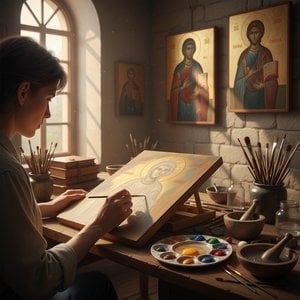
Illuminating Surfaces: A Comprehensive Exploration of Tempera on Panel Painting Techniques & Historical Significance
Explore the rich history & techniques of tempera painting! Discover Renaissance masters like Botticelli & Fra Angelico, conservation insights, and the enduring legacy of this captivating art form. Learn more now!


