


The picture follows your choices: , .
Collectible Description
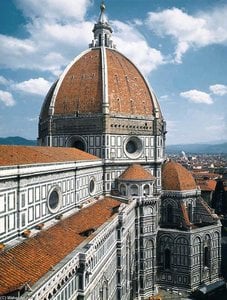
Experience the solemn grandeur of a Gothic cathedral interior, masterfully envisioned by Filippo Brunelleschi; discover this timeless Renaissance architectural beauty for your collection.
 Read More
Artist Biography
Filippo Brunelleschi (1377-1446): Renaissance architect & engineer famed for Florence Cathedral's dome and pioneering linear perspective. A true innovator who shaped the Renaissance!
Hand Made Oil Reproduction
Hand-painted oil on canvas in your size and frame, made to order by our artists. ( Switch to Print Switch to Digital Image)
More about this painting
 Send
Send Share
Share
 Details
 Guide
Guide

 Download
 Similars
 Diaporama
 Q&A
Q&A Stats
StatsOrder your painting in four simple steps
Take your time. You can change any answer; the price in your order card follows each choice.
1 Step one of four
Which size would you like?
These sizes keep the proportions of the original painting. The drawing shows your choice on a wall, above a two-metre sofa.
Or give your own measurements
Pick from our preset sizes that match the artwork's original proportions.

Type the width and the height you need, to fit your frame or your wall. This is hand-painted, so for a size with a different shape the artist can paint a bit more around the picture, or cut a bit — you choose. We send you a digital mockup to approve before the painting starts. The picture shown on this page does not show the real result — only the mockup does.
2 Step two of four
How should it be prepared: rolled, stretched or framed?
The prices below are for the size you chose in step one.
Choose the edges of the stretched canvas
Choose your frame

White $1

Blurside $1

Extended $1

P118B $10

P118H $10

P118W $10

P438Z $10

P508JH $12

P508YH $12

P805H $10

P805Z $10

P919BZ $10

P919G $10

P919XJ $10

P959ZH $10

P968JZ $12

W106C $8

W218G $10

W218JH $8

W218Y $10

W307PJ $10

W316G $10

W316PJ $8

W316Y $10

W398PJ $8

W4111J $10

W500HY $15

W500JH $15

W692G $12

W849H $8

W940BG $15

W953PJ $8

H24-GOLD $30

H24-SILVER $30

H36-GOLD $45

H36-SILVER $45
Framed
Moulding: . Overall size with the frame: .
3 Step three of four
Would you like anything changed in the painting?
Most people answer no. Because each painting is made by hand, our artist can also adapt it for you.
After order, ArtsDot.com team will email client for instructions and provide a mockup preview
4 Step four of four
A few finishing options
All of them are optional. The answers already selected cost nothing extra.
Who paints it?
Worldwide Delivery () in 3/4 weeks instead of standard 5 weeks. (9 November). No compromise on quality.
A nameplate, as in a museum?
Engraved Bronze Plaque Details
This elegant plaque features the artist's name and the title of the artwork, finely engraved for a timeless presentation.
It is made from bronze with a refined, elegant finish. The text is precisely laser-engraved for a sharp and permanent result. Measuring 9x2 cm, the plaque is compact yet easy to read. It's built to be durable and scratch-resistant, offering a professional, museum-quality look. Mounting is simple thanks to the included adhesive backing.
Transparent Acrylic Plaque Details
The plaque includes essential engraved details such as the artist's name, the title of the artwork, the date it was created, the type of media used-like oil on canvas or watercolor-a brief description of the piece, and a QR code that links to the complete artwork information.
It is crafted from clear acrylic, offering a sleek, modern appearance. The text is UV-engraved in black to ensure strong visual contrast. With a size of 10x15 cm, it ensures optimal readability. It comes equipped with two metal hooks for secure wall mounting. The plaque is designed to be weather-resistant, making it suitable for various environments, and it includes interactive features that work seamlessly with smartphone scanning.
Black Acrylic Plaque Details
This elegant plaque includes engraved information such as the artist's name, the title of the artwork, the date it was created, the type of media used (like oil on canvas or watercolor), a short description of the artwork, and a QR code for quick access to more information.
The plaque itself is made from refined black acrylic with a premium finish. The text is laser-engraved in white for high contrast and readability. Its size is 10x15 cm, designed to be easy to read. It comes with two metal hooks for professional mounting. The design is sleek and fits any interior style. It is also weather-resistant and durable, with built-in digital integration for mobile compatibility.
A protective varnish?
When do you need it?
✓ Check and order
Your painting, as you ordered it

Interior
Reproduction Medium
Reproduction Size
-

Elite Senior Artist
More detail, finesse, and extra production time
-

Reproduction Frame
-
-
For artworks or reproductions larger than 105 cm (approximately 41 inches) on any side, the frame will be shipped as a kit, disassembled. This method ensures safe delivery and prevents damage during transport.
Professional assembly required - this is not a DIY product.
The kit must be assembled and the canvas stretched by an experienced professional framer, using wood glue (not supplied), a canvas stretching plier and clamps to hold the bars square while the glue dries. Incorrect assembly or uneven canvas tension can permanently damage the artwork and is not covered by our warranty.
 For artworks or reproductions larger than 105 cm (approximately 41 inches) on any side, the frame will be shipped as a kit, disassembled. This method ensures safe delivery and prevents damage during transport.
All solid wood bars are included, precisely cut to size.
Assembled with the screws provided, plus wood glue for the corner joints, which is not supplied and must be sourced by your framer.
Professional tools are required and not included: a canvas stretching plier (tensioner) and clamps to hold the bars square while the glue dries.
Important:
The corner joints require wood glue, the bars must be held with clamps until the glue is fully dry, and tightening the canvas on the assembled frame requires a canvas stretching plier. None of these are included in the kit. Please arrange an experienced professional framer before ordering this size.

Nameplate
-
-

Protective Varnish
Glossy Varnish (enhances colors, protects against light/moisture)
-

Customize My Artwork
Examples of what can be changed: Replace face with customer photo; Add pet (e.g., replace cat with dog); Include hidden message in background; Change background landscape or elements.
-

Urgent
Worldwide Delivery () in 3/4 weeks instead of standard 5 weeks. (9 November). No compromise on quality.
-
Express Shipping
Worldwide Delivery () in 5 weeks. (16 November).
Included
Total Price
$ 263
Glass option is only available in size under 110 CM
Included with every order
- Free Worldwide Express Shipping
- High-Quality Linen Canvas
- Full Shipping Insurance
- Customs Tax Refund Guarantee
- True Color Matching Guarantee
- 100-Day Return Policy (Defects Only)
- 100% Money-Back Guarantee
- Bulk Discount Offer


The Majesty of Gothic Grandeur
To gaze upon this depiction of an interior is to step across the threshold of time and into a realm of sublime devotion. The scene captures the breathtaking scale and intricate artistry of a grand Gothic cathedral, a structure that was not merely built, but seemingly grown from faith itself. One is immediately enveloped by the soaring verticality, where the eye is irresistibly drawn upward along the towering columns and the delicate tracery of the vaulted ceilings. This architecture speaks in a language of aspiration—a physical manifestation of humanity reaching toward the divine.
Architectural Poetry and Renaissance Echoes
The defining characteristic here is the quintessential Gothic vocabulary: the pointed arches, the complex network of ribbed vaults, and the sense of overwhelming, yet ordered, space. While the structure itself belongs to a medieval zenith, its very contemplation resonates with the intellectual rebirth championed by figures like Filippo Brunelleschi. Although the photograph captures an established Gothic setting, the underlying principles—the mastery of proportion, the structural ingenuity, and the pursuit of perfect form—are hallmarks that bridge the gap between the soaring spirituality of the Middle Ages and the rational humanism emerging in the Renaissance. The muted palette, dominated by earth tones, lends a profound sense of antiquity and solemnity to every visible surface.
Symbolism Woven into Stone
Every element within this sacred space seems imbued with symbolic weight. The checkered stone floor suggests an ordered cosmos beneath the celestial vaulting above. More poignant are the statues scattered throughout the foreground; these figures, likely saints or revered religious personages, stand as silent witnesses to centuries of prayer and contemplation. They serve not only as decoration but as tangible conduits to narratives of faith, inviting the viewer to pause, reflect, and connect with a timeless spiritual dialogue. The diffused natural light, entering from unseen clerestory windows, bathes the scene in an ethereal glow, suggesting divine illumination permeating the earthly realm.
Creating Sanctuary: For the Modern Collector
For those who find inspiration in monumental beauty or seek to infuse a space with unparalleled gravitas, this artwork offers more than mere decoration; it offers an atmosphere. Reproducing such a scene allows one to curate a feeling—a sense of profound peace and historical depth. Whether for a grand hall, a library, or a personal sanctuary, the visual weight and inherent dignity captured here provide an immediate elevation to any interior design scheme. It is a piece that demands reverence, promising the quiet contemplation found only within the world's most magnificent places of worship.
Questions & Answers
Is "Interior" by Filippo Brunelleschi a well-known artwork?
"Interior" is classified as iconic.
Which color stands out most in "Interior"?
The color that stands out most in "Interior" is gray (#938778). The dominant color is useful when matching an artwork to an interior.
How saturated is the palette of "Interior"?
"Interior" by Filippo Brunelleschi is recorded with a muted saturation.
Related Artworks


Filippo Brunelleschi
1377 - 1446, Italy
Artist Biography
A Renaissance Pioneer: The Life and Legacy of Filippo Brunelleschi
Filippo Brunelleschi, born in Florence in 1377, stands as a monumental figure bridging the medieval world and the burgeoning Renaissance. Initially destined for a life aligned with his father’s legal profession, young Filippo's artistic inclinations quickly asserted themselves. He was apprenticed to a goldsmith, a craft that honed his meticulous attention to detail and mastery of materials—skills that would prove invaluable in his later architectural endeavors. This early training wasn’t confined to mere technical skill; it fostered an understanding of form, proportion, and the expressive potential inherent in manipulating physical substances. His participation in the 1401 competition for the Florence Baptistery doors, though ultimately unsuccessful against Lorenzo Ghiberti, revealed a burgeoning talent and a bold artistic vision. This experience, while initially disheartening, proved pivotal, redirecting his energies toward architecture—a field where he would indelibly shape the course of Western art and engineering.Architectural Innovations and the Rebirth of Classical Ideals
Brunelleschi’s architectural achievements are nothing short of revolutionary. He didn't simply build structures; he solved seemingly insurmountable problems, pushing the boundaries of what was thought possible. His most celebrated triumph is undoubtedly the dome of Florence Cathedral—a feat that had baffled architects for decades. The sheer scale and complexity of the project demanded innovative solutions, and Brunelleschi delivered them in abundance. Abandoning traditional scaffolding methods, he devised a self-supporting double shell structure, employing ingenious hoisting mechanisms and interlocking brick patterns to distribute weight and ensure stability. This wasn’t merely an engineering marvel; it was a testament to human ingenuity and a symbol of Florence's ambition. Beyond the dome, Brunelleschi championed a return to classical principles in his designs. He meticulously studied Roman ruins, absorbing their sense of proportion, harmony, and spatial organization. This influence is evident in works like the Old Sacristy of San Lorenzo, where he employed symmetrical layouts, rounded arches, and classical ornamentation to create spaces imbued with serenity and balance. Other notable projects—the Spedale degli Innocenti (foundling hospital), Palazzo Rucellai, and the Basilica di San Lorenzo—all bear the hallmarks of his distinctive style: a harmonious blend of classical inspiration and innovative structural solutions.The Dawn of Linear Perspective
Brunelleschi’s impact extends far beyond architecture; he is credited with rediscovering and formalizing the principles of linear perspective, a technique that fundamentally altered the course of art history. Prior to Brunelleschi, depictions of space lacked a consistent system for representing depth and realism. His meticulous investigations into optics and geometry led him to develop a method for creating illusions of three-dimensional space on a two-dimensional surface. This involved establishing a vanishing point—a single point on the horizon line toward which all parallel lines converge—and using mathematical calculations to accurately represent spatial relationships. The implications were profound. Linear perspective provided artists with a powerful tool for achieving greater realism and emotional impact in their work, influencing generations of painters and sculptors. It wasn’t simply about technical accuracy; it was about creating a more immersive and believable visual experience for the viewer.Influences and a Lasting Historical Significance
Brunelleschi's genius didn’t emerge in a vacuum. He drew inspiration from diverse sources, synthesizing them into something entirely new. The ancient Roman architecture he studied provided a foundation of classical principles, while his exposure to Gothic structures instilled an understanding of structural challenges and innovative building techniques. Crucially, the burgeoning humanist movement of the Renaissance—with its emphasis on human potential and achievement—resonated deeply with Brunelleschi’s own innovative spirit. He believed in the power of reason, observation, and experimentation, qualities that underpinned his groundbreaking work. His legacy is immense. He is rightfully regarded as one of the founding fathers of the Renaissance, a pivotal figure who ushered in a new era of artistic and intellectual flourishing. His engineering innovations continue to inform modern construction practices, while his development of linear perspective remains a cornerstone of representational art. But perhaps most importantly, Brunelleschi embodied a new way of thinking—a belief in human ingenuity, a commitment to rational inquiry, and a celebration of the beauty and order inherent in the natural world. He didn’t just change the skyline of Florence; he changed the way we see the world.




Related Articles

The Enduring Legacy of Fine Art Prints: Technique, History & Aesthetic Impact
Explore the rich history & techniques of fine art prints. Discover investment potential, assess authenticity, and learn how to preserve your collection with expert guidance. Trusted insights for discerning collectors.

Harmonizing History & Hue: A Guide to Matching Art Styles with Interior Architecture for Balanced Décor
Elevate your interior design with our expert guide to harmonizing art styles & architecture. Discover timeless pieces, color palettes, & custom artwork solutions for balanced, luxury spaces. Expert advice included!

The Shadow of Faith: Exploring Gothic Art's Spiritual Intensity & Architectural Innovation
Explore the spiritual intensity & architectural innovation of Gothic art! Discover the symbolism behind cathedrals, stained glass & master artists like Giotto and Monet. A deep dive into medieval history & artistic expression.