


 Preview
 Send
Send Share
Share
 Details
 Guide
Guide

 Download
 Similars
 X-Ray
X-Ray Diaporama
 Stats
Statshommage à Bonnard

 Read More
The artwork displayed on this page is protected by copyright law, which means we cannot legally create or sell an identical reproduction. This protection is enforced under international agreements such as the Berne Convention and by national laws, including those outlined by the U.S. Copyright Law - Title 17.
This method fully complies with copyright regulations because it does not involve copying or duplicating the protected artwork. Instead, it is a creative reinterpretation - a new painting that is influenced by the original but not identical to it.
Giclée / Art Print
Museum-quality giclée or canvas print with fast production and flexible finish options. ( Buy Hand Made Painting Switch to Digital Image)




































Pick from our preset sizes that match the artwork's original proportions.

Type the width and the height you need, to fit your frame or your wall. A print can only be cut, never made bigger than the picture, so a size with a different shape loses a part of the image. We send you a digital mockup to approve before we print anything. The picture shown on this page does not show the real cut — only the mockup does.
Worldwide Delivery () in 2 weeks instead of standard 4/5 weeks. (22 October)

Free Worldwide Express Shipping

High-Quality Linen Canvas

Full Shipping Insurance

Customs Tax Refund Guarantee

True Color Matching Guarantee

100-Day Return Policy (Defects Only)

100% Money-Back Guarantee

Bulk Discount Offer
 Glass option is only available in size under 110 CM

hommage à Bonnard
Giclée / Art Print
Reproduction Size
-


Total Price
$ 63
The Inspiration Behind the Painting
Fernando Botero Angulo's Hommage à Bonnard is a testament to the artist's admiration for Pierre Bonnard's work, particularly his depictions of female bathers. The painting features a man standing in front of a bathroom mirror, shaving his back with a razor, surrounded by everyday objects such as a sink, bathtub, and bottles. This scene is reminiscent of Bonnard's intimate and colorful paintings of women in their daily lives. Key Features of the Painting The painting showcases Botero Angulo's signature style, characterized by:- Voluminous figures and objects
- Muted color palette with subtle nuances
- Attention to detail and texture
Artistic Significance and Legacy
Hommage à Bonnard is not only a tribute to Pierre Bonnard but also a reflection of Fernando Botero Angulo's own artistic vision and style. As an artist, Botero Angulo has been influenced by various art movements and styles, including Naive Art and Post-Impressionism. His work continues to inspire and influence artists, collectors, and art enthusiasts around the world.The Museum of Modern Art and other prominent institutions have recognized Fernando Botero Angulo's contributions to modern and contemporary art, solidifying his position as a leading figure in the art world.
Questions & Answers
How does "hommage à Bonnard" fit into Fernando Botero's themes and style?
"hommage à Bonnard" belongs to Fernando Botero's Surrealism work, whose recorded themes include boterismo style exploration, human form as central theme, playful distortion & volume, bonnard, naive art, surrealism, figurative painting, volume.
How does "hommage à Bonnard" balance light and dark?
"hommage à Bonnard" by Fernando Botero is recorded as brilliant, with a bright balance luminance.
What is "hommage à Bonnard" about?
The themes present in "hommage à Bonnard" by Fernando Botero include nudity, bathroom, reflection, volume, botero style, surreal, domestic, portrait. Together they summarize the artwork's subject matter.
Related Artworks


Artist Biography
A Colombian Visionary: The Life and Art of Fernando Botero
Born in Medellín, Colombia, in 1932, Fernando Botero Angulo emerged as one of Latin America’s most celebrated and internationally recognized artists. His journey began not within the hallowed halls of art academies, but amidst the vibrant life and Baroque splendor of his native city. Isolated from mainstream artistic currents during his youth, young Botero found inspiration in the ornate colonial churches and bustling urban scenes of Medellín—a formative experience that would profoundly shape his unique aesthetic vision. This early exposure instilled a primitivist sensibility, an appreciation for simple yet powerful forms, which became a hallmark of his style. Initially drawn to the drama of bullfighting, he honed his skills through drawing, but quickly realized his path lay beyond the arena and towards a broader exploration of form and volume.The Genesis of ‘Boterismo’
Botero's artistic development was marked by a deliberate rejection of European modernism. After periods studying in Madrid and Paris, he found himself disillusioned with the prevailing avant-garde movements. Instead, he turned inward, seeking inspiration from the Old Masters—Velázquez, Goya, and Titian—and rediscovering the power of classical form. This exploration led to the birth of what would become known as ‘Boterismo,’ a style characterized by generous, exaggerated volumes. It wasn’t merely about depicting “fat people,” as some critics simplistically suggested; it was a conscious manipulation of proportion, a celebration of sensuality and abundance, and a subtle commentary on social and political realities. His figures—human, animal, or still life—possess a monumental presence, radiating both warmth and a quiet dignity. The early 1960s saw the solidification of this style, with paintings like *Presidential Family* (1967) becoming iconic representations of his burgeoning aesthetic. This work, in particular, subtly satirized Colombian political elites while simultaneously showcasing the captivating allure of Botero’s rounded forms.Expanding Horizons: Sculpture and Beyond
While initially renowned for his paintings, Botero's artistic ambition extended to sculpture in 1973 after relocating to Paris. This transition proved transformative, allowing him to explore volume and form in three dimensions. His monumental bronze sculptures began appearing in public spaces around the world—parks in New York, Florence, and Medellín—becoming beloved landmarks and symbols of his artistic vision. These sculptures weren’t merely scaled-up versions of his paintings; they possessed a unique physicality, inviting viewers to engage with them on a tactile level. Beyond painting and sculpture, Botero also demonstrated versatility through drawings and collages, often tackling politically charged subjects. His *Violence* series, created in response to the escalating conflict in Colombia, stands as a powerful testament to his commitment to social commentary. Similarly, his *Abu Ghraib* series directly addressed the abuses at the Iraqi prison, demonstrating his willingness to confront difficult truths through art.Legacy and Influence
Fernando Botero’s impact on the art world is undeniable. He became a cultural icon in Colombia, donating generously to museums and public spaces, solidifying his place as a national treasure. His work transcends geographical boundaries, resonating with audiences worldwide through its universal themes of humanity, sensuality, and social critique. While some initially dismissed ‘Boterismo’ as mere stylistic quirk, it has since been recognized as a significant contribution to figurative art. He challenged conventional notions of beauty and proportion, inviting viewers to reconsider their perceptions of the human form. His influence can be seen in the work of numerous contemporary artists who explore themes of body image, social satire, and cultural identity. Botero’s legacy extends beyond his artistic achievements; he inspired a generation of Latin American artists to embrace their own unique voices and perspectives on the world. He passed away in September 2023 at the age of 91, leaving behind an extraordinary body of work that continues to captivate and provoke thought.Key Characteristics & Notable Works
- Style: Boterismo – characterized by exaggerated volumes and proportions.
- Influences: Baroque art, Old Masters (Velázquez, Goya), Latin American folk art, pre-Columbian art.
- Themes: Colombian culture, social satire, political commentary, sensuality, the human form.
- Notable Works: *Mona Lisa, Age Twelve* (1959), *The Presidential Family* (1967), *Dancers* (1987), *Death of Pablo Escobar* (1999), *La Paloma de la Paz* (2016).
- Awards: International Sculpture Center’s Lifetime Achievement in Contemporary Sculpture Award (2012).

Fernando Botero
1932 - 1959 , Colombia
Quick Facts
- Full Name: Fernando Botero Angulo
- Nationality: Colombian
- Date Of Birth: 1932
- Date Of Death: 1959
- Place Of Birth: Medellín, Colombia
- Notable Artworks:
- Mona Lisa, Age Twelve
- The Presidential Family
- Walk in the hills
- Artistic Movement Or Style: Boterismo, Primitivism
- Artists Who Influenced This Artist:
- Diego Rivera
- Francisco de Goya
- Diego Velázquez
Related Articles

Surrealist Painting Masterpieces: 10 Artworks That Redefined Reality | ArtsDot
Journey into the dreamlike world of Surrealism! Explore 10 masterpieces by Dali, Magritte & Miró that redefined art. Discover their stories & find museum-quality reproductions to elevate your home decor on ArtsDot.com.

Surrealist Dreamscapes: A Curated Guide to Integrating Breathtaking Surrealism into Sophisticated Home Decor
Transform your home into a breathtaking dreamscape with expert surrealist decor tips. Discover how to curate Salvador Dalí-inspired masterpieces, integrate symbolic textures, and commission bespoke hand-painted oil reproductions that bring the magic of the subconscious to your walls.
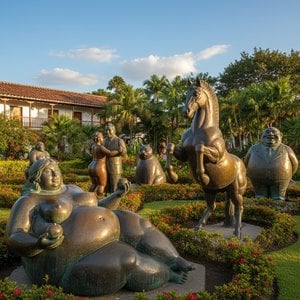
Fernando Botero: Celebrating Volume, Form & Colombian Identity
Explore the captivating world of Fernando Botero! Discover his iconic 'Boterismo' style, Colombian influences, investment potential & lasting legacy. Expert insights for art collectors.
Dreamscapes Unveiled: A Curated Guide to Integrating Surrealist Landscape Art into Modern Interiors
Discover how to transform your home with the captivating mystery of Surrealist landscape art. Our expert guide explores iconic dreamscapes, offering professional tips on curating, styling, and commissioning bespoke surrealist masterpieces for a sophisticated, soulful interior.

Surrealism's Visionaries: 10 Masterpieces for Your Home | ArtsDot
Journey into the dreamlike world of Surrealism! Explore 10 masterpieces by Dali, Magritte & Miró that redefined art. Discover their stories & find museum-quality reproductions to elevate your home decor on ArtsDot.com.


