

 Preview
 Send
Send Share
Share
 Details
 Guide
Guide

 Download
 Similars
 X-Ray
X-Ray Diaporama
 Q&A
Q&A Stats
Statsexcursion au cioncile oecuménique

 Read More
The artwork displayed on this page is protected by copyright law, which means we cannot legally create or sell an identical reproduction. This protection is enforced under international agreements such as the Berne Convention and by national laws, including those outlined by the U.S. Copyright Law - Title 17.
This method fully complies with copyright regulations because it does not involve copying or duplicating the protected artwork. Instead, it is a creative reinterpretation - a new painting that is influenced by the original but not identical to it.
Giclée / Art Print
Museum-quality giclée or canvas print with fast production and flexible finish options. ( Buy Hand Made Painting Switch to Digital Image)




P118B $10

P118H $10

P118W $10

P438Z $10

P508JH $12

P508YH $12

P805H $10

P805Z $10

P919BZ $10

P919G $10

P919XJ $10

P959ZH $10

P968JZ $12

W106C $8

W218G $10

W218JH $8

W218Y $10

W307PJ $10

W316G $10

W316PJ $8

W316Y $10

W398PJ $8

W4111J $10

W500HY $15

W500JH $15

W692G $12

W849H $8

W940BG $15

W953PJ $8




Pick from our preset sizes that match the artwork's original proportions.

Type the width and the height you need, to fit your frame or your wall. A print can only be cut, never made bigger than the picture, so a size with a different shape loses a part of the image. We send you a digital mockup to approve before we print anything. The picture shown on this page does not show the real cut — only the mockup does.
Worldwide Delivery () in 2 weeks instead of standard 4/5 weeks. (10 November)

Free Worldwide Express Shipping

High-Quality Linen Canvas

Full Shipping Insurance

Customs Tax Refund Guarantee

True Color Matching Guarantee

100-Day Return Policy (Defects Only)

100% Money-Back Guarantee

Bulk Discount Offer
 Glass option is only available in size under 110 CM

excursion au cioncile oecuménique
Giclée / Art Print
Reproduction Size
-


Total Price
$ 63
Fernando Botero’s Excursion au Cioncile Oecuménique: A Symphony of Volume and Pastoral Tranquility
The Excursion au Cioncile Oecuménique, created in 1972 by the Colombian artist Fernando Botero Angulo, stands as a cornerstone of Naïve Art (Primitivism)—a movement that championed simplicity, directness, and an unburdened engagement with observation. As a professional art historian and connoisseur at ArtsDot.com, I can confidently assert that this oil on canvas masterpiece transcends mere representation; it embodies Botero’s distinctive vision of the natural world infused with subtle social commentary. Its enduring appeal lies in its masterful manipulation of form—a technique that immediately distinguishes it from academic conventions and invites contemplation about perception itself. ### Artistic Style and Technique: The Essence of “Boterismo” Fernando Botero Angulo's signature style, dubbed "Boterismo," is instantly recognizable through its deliberate exaggeration of proportions. In the Excursion au Cioncile Oecuménique, figures—including a solitary man walking along a path—are rendered with bulbous forms that defy realistic anatomy, prioritizing visual impact over anatomical accuracy. This stylistic choice isn’t arbitrary; it reflects Botero's fascination with Baroque sculpture and his desire to convey emotion through monumental shapes. The vibrant palette—dominated by earthy greens and blues—further enhances the painting’s serene atmosphere, creating a harmonious blend of color that complements the landscape setting. Thick brushstrokes contribute to textural richness, emphasizing the materiality of the canvas and reinforcing Botero's commitment to capturing the essence of his subject matter. ### Historical Context: Embracing Primitivism Amidst Modernity The Excursion au Cioncile Oecuménique emerged during a period of artistic experimentation in Latin America—a reaction against European avant-garde movements that prioritized abstraction and intellectual conceptualization. Botero’s embrace of Naïve Art stemmed from his rejection of formal training, prioritizing intuition and direct experience as sources of inspiration. This stylistic decision aligns with the broader cultural ethos of the time, which valued authenticity and emotional resonance over technical virtuosity. The painting's depiction of a pastoral scene—rolling hills dotted with trees—mirrors the Romantic preoccupation with idealized landscapes and serves as a counterpoint to the anxieties of urban modernity. ### Symbolism and Emotional Impact: A Quiet Reflection on Humanity’s Place in Nature Beyond its formal qualities, the Excursion au Cioncile Oecuménique possesses subtle symbolic layers. The solitary man represents humanity's journey—a contemplative exploration of existence amidst the grandeur of nature. His staff symbolizes guidance and resilience, suggesting a steadfast determination to persevere despite challenges. The inclusion of animals—a cow and a horse—adds to the painting’s richness, representing fertility and strength respectively. More importantly, Botero’s masterful composition evokes a profound sense of tranquility and peace—a balm for the stresses of contemporary life. It invites viewers to pause and appreciate the beauty of simplicity, prompting reflection on our relationship with the natural world and fostering an appreciation for timeless artistic values. ### Exploring Reproductions at ArtsDot.com To experience the captivating artistry of Fernando Botero Angulo firsthand, explore our curated collection of high-quality oil painting reproductions at https://ArtsDot.com/. Discover exceptional prints that capture the essence of “Boterismo” and bring this iconic artwork into your home or studio. Visit https://ArtsDot.com for similar masterpieces by Maria Primachenko and Su Xin Ping—including Dumplings on the Shelf and Landscape No.11—to enrich your artistic horizons. Learn more about Fernando Botero Angulo’s legacy at Wikipedia: https://www.wikipedia.org/.Questions & Answers
How is "excursion au cioncile oecuménique" recommended to be printed - what size, what orientation?
For "excursion au cioncile oecuménique", the recommended print setup is a large size and a square orientation.
What atmosphere does "excursion au cioncile oecuménique" have?
The overall mood of "excursion au cioncile oecuménique" by Fernando Botero is serene. The mood describes the general atmosphere of the work.
What mood would "excursion au cioncile oecuménique" bring to a space?
The serene atmosphere of "excursion au cioncile oecuménique" by Fernando Botero matches its recommended space: a living room.
Related Artworks


Artist Biography
Early Life, Family and Training
Fernando Botero was born on April 19, 1932, in Medellín, Colombia. His early years were shaped by the quiet, steady rhythms of a household working to make ends meet. His father, David Botero, earned a living as a salesman, often traveling by horseback to reach his customers. His mother, Flora Angulo, worked as a seamstress, providing the necessary support for the family. These early surroundings provided a sense of place that would remain with him long after he left the city.
In his youth, Fernando Botero spent several years attending a school for matadors. He was trained in the movements and traditions of the bullring, but his interests eventually pulled him away from the arena. By the age of 16, his focus had shifted toward drawing and sketching. In 1948, his first illustrations were published in the Sunday supplement of El Colombiano, marking the beginning of his public presence through his visual work.
Artistic Training and European Travels
In 1952, Botero used the money earned from his gallery sales to sail toward Europe. His first stop was Barcelona, but he soon moved on to Madrid. It was in Spain that he began to study at the Academia de San Fernando. He spent time in the Prado Museum, where he would sit and copy the works of Goya and Velázquez. This habit of studying the Old Masters became a constant part of his practice.
His studies eventually took him to Florence, where he attended the Academia de San Marcos. By 1953, he had moved to Paris. He spent much of his time in the Louvre, watching the way light and form settled on the figures in the museum's halls. These years in Europe were spent moving between cities like Madrid, Florence, and Paris, absorbing the weight and presence of classical art.
The Development of Boterismo Style
The shapes in his work carry a specific weight. This approach, often called Boterismo, focuses on people and figures rendered in large, exaggerated volumes. Rather than focusing on thin lines, the focus remains on round, corpulent forms that occupy the space with a heavy presence. These figures possess a certain mass that feels physical, as if the paint itself has gained weight. He often uses bright colors and bold outlines to define these shapes, making the subjects stand out against their backgrounds.
By about 1964, this interest in volume moved from the canvas into three dimensions. He began creating sculptures, translating that same sense of expansion into bronze and other materials. The roundedness seen in his paintings found a new life in these solid forms, allowing the exaggerated proportions to exist in public spaces. The work remains focused on the sheer physicality of the subject, whether it is a human figure or an animal.
- Mona Lisa (1959)
- The Presidential Family (1967)
- Dancing in Colombia (1980)
- July 20th (1984)
Key Works and Artistic Themes
His work often centers on the weight of the human form and the quiet tension within social settings. In Mona Lisa, Age Twelve (1959), the subject is rendered with a specific, rounded presence that moves away from traditional proportions. This focus on volume became a way to explore more complex social structures. In The Presidential Family (1967), the exaggerated shapes of the figures offer a subtle look at political elites, using mass to comment on the people in power. He used these shapes to address both the joy of life and the heaviness of conflict.
The themes often shift between celebration and the reality of violence. Dancing in Colombia (1980) captures a lively scene of musicians and dancers, using thick layers of paint to give the figures a tactile, heavy quality. In contrast, his later works often confronted the darker aspects of his homeland. The Death of Pablo Escobar (1999/2006) and his various series addressing the abuses in Abu Ghraib show a willingness to use his signature style to confront difficult truths. Even his later pieces, like La paloma de la paz (2016), carry a sense of monumental weight, whether the subject is a person, an animal, or a symbol of peace.
- Mona Lisa, Age Twelve (1959)
- The Presidential Family (1967)
- Dancing in Colombia (1980)
- The Death of Pablo Escobar (1999/2006)
- La paloma de la paz (2016)
Later Years and Death
The later decades of his life were spent moving between several international hubs. He maintained residences in New York City, Paris, and Monte Carlo, often returning to Medellín to stay connected to his roots. His presence in public spaces grew as his bronze sculptures were placed in parks and plazas across various continents. Even as he aged, his work continued to address heavy subjects, such as the social and political tensions in Colombia and the events at the Abu Ghraib prison.
In his final years, he lived in the Principality of Monaco. He passed away there on September 15, 2023, at the age of 91. The cause of death was complications from pneumonia. His departure marked the end of a long career spent observing the human form and the complexities of social life through his specific lens of volume and proportion.
Legacy and Influence
His presence in the public sphere was constant. In New York City, his sculptures occupy spaces like Park Avenue, where the heavy, rounded forms exist alongside the city's architecture. In Colombia, he became a national treasure, a figure whose work was woven into the daily life of the country. He was the most recognized and quoted artist from Latin America during his lifetime, a fact reflected in the way his figures became familiar to people across many borders.
His commitment to his home country was visible through his large-scale donations. In 2000, he gave 208 art pieces to the Bank of the Republic. This act helped shape the cultural landscape of Bogotá. He also shared much of his personal collection, donating 123 pieces and 85 pieces to the Museo Botero. These contributions ensured that his specific way of seeing the world remained accessible to those who came after him.
- La paloma de la paz
- The Death of Pablo Escobar
- Mona Lisa, Age Twelve
Where to See the Works Today
His presence is felt in the quiet corners of Bogotá, specifically within the La Candelaria neighborhood. The Museo Botero holds a large part of his output, a collection that grew from his own decision to donate many of his pieces to the nation. In Medellín, the Museum of Antioquia also keeps a significant number of his works, maintaining a connection to his roots. These spaces allow for a slow look at the way he handled volume and the weight of his subjects.
Beyond Colombia, his paintings can be found in the Metropolitan Museum of Art in New York City. There, the scale of his figures takes on a different character against the backdrop of a global institution. His bronze sculptures have also found permanent homes in public spaces, inviting people to walk around them in the streets of Florence and Medellín. These heavy, rounded forms exist in the open air, subject to the light and the movement of the city.
- Dancing in Colombia (1980)
- July 20th (1984)
- Mona Lisa (about 1959)
- The Death of Pablo Escobar (about 1999)

Fernando Botero
1932 - 1959 , Colombia
Quick Facts
- Artistic Movement Or Style: Boterismo
- Artists Or Movements Influenced By This Artist: ['Contemporary artists exploring body image']
- Artists Who Influenced This Artist:
- Velázquez
- Goya
- Titian
- Diego Rivera
- Full Name: Fernando Botero Angulo
- Nationality: Colombian
- Notable Artworks:
- Mona Lisa, Age Twelve
- The Presidential Family
- Dancers
- Death of Pablo Escobar
- La Paloma de la Paz
- Place Of Birth: Medellín, Colombia
- Date Of Birth: 1932
- Date Of Death: 1959
Related Articles
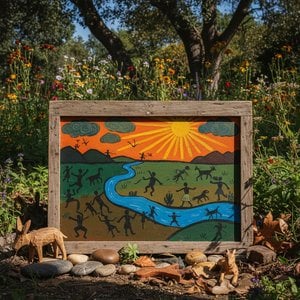
The Untamed Vision: Exploring Naïve Art & Primitivism's Rejection of Convention
Explore the revolutionary world of Naïve Art & Primitivism! Discover how artists challenged academic traditions with raw emotion & unique styles. Learn about Picasso, Rousseau & more at ArtsDot.
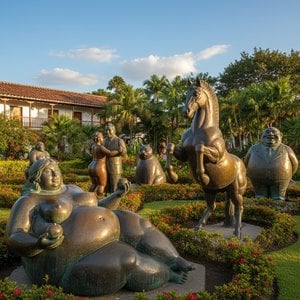
Fernando Botero: Celebrating Volume, Form & Colombian Identity
Explore the captivating world of Fernando Botero! Discover his iconic 'Boterismo' style, Colombian influences, investment potential & lasting legacy. Expert insights for art collectors.

Masterpieces of Nature: The Top 25 John Constable Artworks
Explore John Constable's iconic landscapes and Romantic masterpieces. Discover the full collection online at ArtsDot.com.

Romantic Landscapes: 10 Masterpieces for Your Home | ArtsDot
Journey through 10 Romantic landscape masterpieces by Friedrich, Turner & Cole. Explore emotional art, sublime nature scenes & iconic 19th-century paintings. Find museum-quality reproductions for your home at ArtsDot.com – discover the full collection online!

Evocations of Place: A Historical Journey Through Landscape Art
Explore the rich history of landscape art with ArtsDot. Discover renowned artists, movements like Impressionism & Romanticism, and expert guidance for collecting timeless pieces. Find your perfect serene escape today!


