Preview
 Send
Send Share
Share
 Details
 Guide
Guide

 Download
 Similars
 X-Ray
X-Ray Diaporama
 Stats
StatsIdleness
 Read More
Giclée / Art Print
Museum-quality giclée or canvas print with fast production and flexible finish options. ( Buy Hand Made Painting Switch to Digital Image)




































Pick from our preset sizes that match the artwork's original proportions.

Type the width and the height you need, to fit your frame or your wall. A print can only be cut, never made bigger than the picture, so a size with a different shape loses a part of the image. We send you a digital mockup to approve before we print anything. The picture shown on this page does not show the real cut — only the mockup does.
Worldwide Delivery () in 2 weeks instead of standard 4/5 weeks. (21 October)

Free Worldwide Express Shipping

High-Quality Linen Canvas

Full Shipping Insurance

Customs Tax Refund Guarantee

True Color Matching Guarantee

100-Day Return Policy (Defects Only)

100% Money-Back Guarantee

Bulk Discount Offer
 Glass option is only available in size under 110 CM

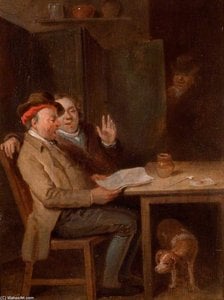
Idleness
Giclée / Art Print
Reproduction Size
-


Total Price
$ 63
Related Artworks


Artist Biography
A Life Rooted in Craft: The Early Years of Edward Bird
Born in the industrial heartland of Wolverhampton in 1772, Edward Bird’s artistic journey began not amidst canvases and oils, but within the practical world of a carpenter's workshop – his father’s trade. This grounding in craftsmanship would prove unexpectedly formative. Initially apprenticed as a japanning artist, young Edward honed his skills painting decorative designs onto tea trays, a meticulous process demanding precision and an eye for detail. It was this early discipline, far removed from the grand narratives of history painting he would later embrace, that laid the foundation for his artistic future. In 1794, seeking broader horizons, Bird relocated to Bristol, a burgeoning port city with a vibrant cultural scene. There, he married Martha Dodrell and embarked on a career as an independent artist, accepting commissions ranging from intimate portraiture to illustrative work for books and decorative paintings for local churches. This period was one of consolidation, where he refined his technique and began to establish himself within the artistic community.The Bristol School and Artistic Flourishing
Bristol proved to be more than just a place of employment; it became an intellectual and creative crucible. Bird quickly found himself at the heart of what would become known as the “Bristol School” – an informal collective of artists including Edward Villiers Rippingille and Nathan Cooper Branwhite, bound by a shared spirit of experimentation and mutual encouragement. This wasn’t a formally structured academy, but rather a dynamic network where ideas flowed freely, and artistic boundaries were gently pushed. A pivotal relationship for Bird was his friendship with George Cumberland, an art collector and connoisseur whose extensive library and collection provided invaluable access to a wealth of artistic inspiration. Cumberland's patronage opened doors to study works by the Old Masters, shaping Bird’s aesthetic sensibilities. The Bristol School championed a naturalistic style, prioritizing fresh color palettes and a keen observation of everyday life – qualities that would become hallmarks of Bird’s work and profoundly influence artists like Rippingille and, later, Francis Danby. Regular evening sketching sessions and excursions into the surrounding countryside fostered both technical skill and a shared artistic vision.Recognition in London and a Shift to Historical Themes
The year 1809 marked a turning point in Bird’s career. His submission to the Royal Academy, Good News, garnered immediate attention, its compelling narrative and skillful execution resonating with both critics and patrons. This success brought royal recognition, as the Prince Regent acquired his painting The Country Choristers and commissioned Blind Man’s Buff. These commissions not only solidified Bird's reputation but also provided financial stability, allowing him to explore more ambitious projects. He began a transition towards history painting, specializing in dramatic battle scenes – a genre that demanded both technical mastery and a powerful sense of narrative. Works like The Field of Chevy Chase and The Day After the Battle showcased his growing ability to capture the intensity and emotional weight of historical events. This burgeoning success culminated in significant accolades: election as an Associate of the Royal Academy in 1812, appointment as historical painter to Princess Charlotte in 1813, and full membership to the Royal Academy in 1815.Later Years, Legacy, and Artistic Style
Despite achieving considerable acclaim, Bird’s later years were shadowed by declining health and artistic challenges. His attempts at large-scale historical paintings proved more difficult than anticipated, and he struggled to maintain the momentum of his earlier successes. He passed away on November 2nd, 1819, leaving behind a diverse body of work that was celebrated in a retrospective exhibition held in Bristol shortly after his death. Edward Bird is remembered as a pivotal figure in British art history, particularly for his contributions to the development of the Bristol School and his unique ability to seamlessly blend genre painting with historical themes. His influence extended beyond his immediate circle, inspiring subsequent generations of artists who embraced naturalism and sought to capture the authenticity of everyday life. Influences and Artistic Style:- Early Influences: The precision and decorative skills honed through japanning techniques.
- George Cumberland’s Collection: Exposure to a broad range of artistic styles and masters, broadening his aesthetic horizons.
- Sir David Wilkie: Initially, Bird sought to challenge Wilkie's dominance in genre painting, though their relationship evolved into one of complex rivalry and mutual respect.
- Artistic Style: Characterized by naturalism, fresh colors, and detailed depictions of both everyday life and significant historical events. He skillfully combined elements of genre and history painting, creating works that were both emotionally resonant and technically accomplished.

Edward Bird
1772 - 1819 , United Kingdom
Quick Facts
- Full Name: Edward Bird
- Nationality: British
- Date Of Birth: 1772
- Date Of Death: 1819
- Place Of Birth: Wolverhampton, United Kingdom
- Notable Artworks:
- Good News
- The Country Choristers
- Blind Man's Buff
- Field of Chevy Chase
- Day After the Battle
- Artistic Movement Or Style: Bristol School, Genre painting
- Artists Who Influenced This Artist:
- George Cumberland
- Sir David Wilkie
- Artists Or Movements Influenced By This Artist:
- Edward Villiers Rippingille
- Francis Danby