


 Preview
 Send
Send Share
Share
 Details

 Download
 Similars
 X-Ray
X-Ray Diaporama
Coquillages
 Surrealism
 1926
1926 54.0 x 40.0 cm
 The Whitworth
 Read More
Giclée / Art Print
Museum-quality giclée or canvas print with fast production and flexible finish options. ( Buy Hand Made Painting Buy Image)




P118B $10

P118H $10

P118W $10

P438Z $10

P508JH $12

P508YH $12

P805H $10

P805Z $10

P919BZ $10

P919G $10

P919XJ $10

P959ZH $10

P968JZ $12

W106C $8

W218G $10

W218JH $8

W218Y $10

W307PJ $10

W316G $10

W316PJ $8

W316Y $10

W398PJ $8

W4111J $10

W500HY $15

W500JH $15

W692G $12

W849H $8

W940BG $15

W953PJ $8




Pick from our preset sizes that match the artwork's original proportions.

You may enter your own dimensions to fit a specific frame or space. If your selected size does not match the original image's proportions, we will either crop the artwork or extend the image with a mirrored or solid-fill edge. A digital mockup will be sent for your approval before production begins.
Please note that the on-screen preview does not reflect the actual cropping or extension. Only the mockup will accurately show the final composition.
While custom sizes are available, we recommend selecting a dimension from the predefined list to preserve the original proportions.
Worldwide Delivery () in 2 weeks instead of standard 4/5 weeks. (26 August)

Free Worldwide Express Shipping

High-Quality Linen Canvas

Full Shipping Insurance

Customs Tax Refund Guarantee

True Color Matching Guarantee

60-Day Return Policy (Defects Only)

100% Money-Back Guarantee

Bulk Discount Offer
 Glass option is only available in size under 110 CM

Coquillages
Giclée / Art Print
Reproduction Size
-


Total Price
$ 63
Collectible Description
Coquillages: A Study in Surrealist Still Life
The painting “Coquillages” by Edward Alexander Wadsworth, completed in 1926, stands as a quintessential example of British Surrealism—a movement that sought to liberate art from rational constraints and tap into the subconscious mind. More than just a depiction of seashells scattered across a tabletop, it’s an exploration of form, texture, and mood, reflecting Wadsworth's fascination with modernist aesthetics while simultaneously embracing dreamlike imagery.The Artist and His Context
Born in Cleckheaton, West Yorkshire, in 1889, Edward Alexander Wadsworth experienced early loss when his mother succumbed to puerperal sepsis shortly after childbirth. This formative experience instilled a contemplative spirit that would permeate his artistic vision throughout his life. Initially drawn to engineering—a profession dictated by paternal expectations—Wadsworth swiftly abandoned it for the transformative embrace of art during his time in Munich, where he discovered the burgeoning currents of Cubism and Futurism. His exposure to these influential movements profoundly shaped his stylistic sensibilities, propelling him toward a distinctive blend of abstraction and observation.Composition and Technique
“Coquillages” showcases Wadsworth’s masterful command of tempera on board—a medium known for its luminous quality and ability to capture subtle tonal variations. The painting's composition is deliberately understated yet meticulously balanced. Two columns dominate the background, anchoring the scene against a backdrop of muted blues and greens evocative of the ocean. At the forefront sits a woman seated calmly on the edge of a cliff overlooking the sea—a pose that conveys both vulnerability and resilience. Scattered amongst the columns are seashells—their irregular shapes and textures providing textural contrast and adding an element of organic beauty to the scene. Wadsworth’s meticulous attention to detail is evident in every brushstroke, creating a surface imbued with palpable atmosphere.Symbolism and Emotional Resonance
Beyond its formal qualities, “Coquillages” resonates with deeper symbolic meanings. Shells are traditionally associated with protection, rebirth, and contemplation—themes that align seamlessly with Wadsworth’s artistic ethos. The woman's posture suggests introspection and acceptance of fate, mirroring the broader Surrealist preoccupation with confronting anxieties and exploring hidden desires. The ocean itself represents vastness, mystery, and the subconscious—a realm where reason yields to intuition. Ultimately, “Coquillages” invites viewers to engage in a meditative contemplation of beauty, fragility, and the enduring power of nature.Legacy and Recognition
Currently housed at The Whitworth museum in Manchester, United Kingdom, “Coquillages” exemplifies Wadsworth’s contribution to British Modernism—a movement that championed innovation and challenged conventional artistic conventions. Its inclusion in The Whitworth's collection underscores its significance as a landmark achievement of Surrealist art and serves as an inspiration for collectors and interior designers seeking pieces that embody both intellectual depth and aesthetic elegance.- Artist: Edward Alexander Wadsworth
- Year: 1926
- Medium: Tempera on Board
- Location: The Whitworth Museum, Manchester
Related Artworks


Artist Biography
Early Life and Artistic Awakening
Edward Alexander Wadsworth, born in Cleckheaton, West Yorkshire, in 1889, entered a world shadowed by early loss. The death of his mother shortly after his birth profoundly shaped his upbringing, leaving him largely raised by an aunt while his father managed the family’s wool-spinning business. This somewhat solitary childhood fostered a contemplative nature, perhaps laying the groundwork for the introspective quality that would later characterize his art. His formal education began at Fettes College in Edinburgh, but it was a sojourn to Munich in 1906 that proved pivotal. Initially enrolled to study engineering – a path dictated by paternal expectations – Wadsworth found himself irresistibly drawn to the artistic currents swirling within the city. At the Knirr School, he discovered a passion for drawing and woodcut printing, igniting a creative spark that would ultimately lead him away from the world of mechanics and towards a life dedicated to visual expression. This marked not merely a change in academic pursuit but a fundamental shift in his identity, a turning toward the realm of aesthetic exploration. Further honing his skills at Bradford School of Art and then the prestigious Slade School of Art in London, Wadsworth found himself amongst a remarkable cohort of future luminaries – Stanley Spencer, Mark Gertler, and others who would define British art for generations to come.The Vortex and Wartime Innovation
Wadsworth’s artistic trajectory took a dramatic turn with his introduction to Wyndham Lewis and the burgeoning Vorticist movement. Initially influenced by Roger Fry's groundbreaking Post-Impressionist exhibitions, he quickly embraced the radical energy of Vorticism, an avant-garde aesthetic that sought to capture the dynamism of the modern age through abstraction and geometric forms. He became a key contributor to the movement, signing the Vorticist Manifesto in 1914 and exhibiting works that embodied its bold, fragmented style. However, Wadsworth’s engagement with modernity wasn't confined to the canvas. The outbreak of World War I saw him enlist in the Royal Naval Volunteer Reserve, where he put his artistic principles to an unexpectedly practical use. Tasked with designing dazzle camouflage – also known as razzle dazzle – for Allied ships, he applied Vorticist concepts of abstraction and disruption to confuse enemy submarines. These striking patterns, a fusion of art and naval strategy, weren’t intended to render vessels invisible but rather to make it difficult to determine their course and speed, thereby hindering accurate targeting. This period demonstrated Wadsworth's unique ability to bridge the gap between artistic innovation and real-world application, showcasing the power of abstract thought in a time of conflict.Post-War Transformations and Maritime Visions
The aftermath of the war brought about a significant shift in Wadsworth’s artistic style. While he had been at the forefront of abstraction with Vorticism, he gradually moved towards a more representational approach, though one still imbued with a distinctive sensibility. His wartime experiences profoundly influenced his subject matter, leading to an enduring fascination with maritime themes. Ships – symbols of both conflict and exploration – became recurring motifs in his work, often depicted with a haunting stillness or set within dreamlike, surreal landscapes. He explored still life compositions and landscapes as well, frequently incorporating elements of the uncanny and employing muted color palettes that evoked a sense of melancholy and introspection. In 1934, Wadsworth joined Unit One, a group dedicated to promoting modern British art, further solidifying his position within the evolving artistic landscape of the time. This association reflected his commitment to pushing boundaries while remaining rooted in a distinctly British aesthetic tradition.Surreal Echoes and Lasting Legacy
In his later years, Wadsworth’s work became increasingly infused with surrealist undertones, though he never formally aligned himself with the Surrealist movement. His paintings from this period often feature enigmatic juxtapositions of objects and spaces, creating a sense of unease and mystery. Works like Dazzle-ships in Drydock at Liverpool (1919), The Perspective of Idleness II (1942), and Sussex Pastoral (1941) exemplify his evolving style, showcasing a unique blend of abstraction, realism, and surrealism. He died in 1949, leaving behind a body of work that continues to captivate and intrigue. Wadsworth’s legacy extends beyond his paintings; his dazzle camouflage designs have experienced a resurgence of interest in contemporary graphic design, demonstrating the enduring relevance of his innovative visual language. He remains a pivotal figure in the development of modern British art, celebrated for his pioneering role in Vorticism, his wartime contributions, and his distinctive artistic vision that seamlessly blended abstraction with evocative realism. His ability to find beauty and meaning in both the mechanical world and the natural landscape ensures his place as one of the most compelling artists of his generation.
Edward Alexander Wadsworth
1889 - 1949 , United Kingdom
Quick Facts
- Artistic Movement Or Style: Vorticism, Surrealism
- Artists Or Movements Influenced By This Artist: ['Contemporary design']
- Artists Who Influenced This Artist:
- Roger Fry
- Wyndham Lewis
- Date Of Birth: October 29, 1889
- Date Of Death: June 21, 1949
- Full Name: Edward Alexander Wadsworth
- Nationality: British
- Notable Artworks:
- Dazzle-ships in Drydock
- The Perspective of Idleness II
- Sussex Pastoral
- Pendent
- Gasteropoda
- Place Of Birth: Cleckheaton, UK
Related Articles

Silent Narratives: Exploring the Enduring Appeal of Still Life Painting Across Centuries
Explore the rich history of still life painting with ArtsDot. Discover Dutch Masters, decode vanitas symbolism & learn about collecting timeless art. Expert insights and museum-quality reproductions.

Illuminating Surfaces: A Comprehensive Exploration of Tempera on Panel Painting Techniques & Historical Significance
Explore the rich history & techniques of tempera painting! Discover Renaissance masters like Botticelli & Fra Angelico, conservation insights, and the enduring legacy of this captivating art form. Learn more now!

Illuminating History: A Comprehensive Exploration of Tempera Painting Techniques & Artistic Legacy
Explore the rich history & techniques of tempera painting! Discover Renaissance masters like Botticelli & Fra Angelico, conservation insights, and the enduring legacy of this captivating art form.
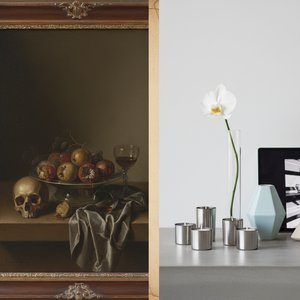
The Enduring Appeal of Still Life: A Historical & Contemporary Exploration
Explore the rich history & symbolism of still life painting with ArtsDot. Discover masterpieces from the Dutch Golden Age, learn about vanitas art, and find expert guidance for collecting timeless artworks.

Clyfford Still's Abstract Expressionism: A Study of Color, Form & the Existential Landscape
Explore the profound world of Clyfford Still's Abstract Expressionism with ArtsDot. Discover his unique style, existential themes & investment potential. Expert analysis for discerning collectors.



