

 Send
Send Share
Share
 Details
 Guide
Guide

 Download
 Similars
 Diaporama
 Q&A
Q&A Stats
StatsSt George (detail)


 Read More
Giclée / Art Print
Museum-quality giclée or canvas print with fast production and flexible finish options. ( Buy Hand Made Painting Switch to Digital Image)




































Pick from our preset sizes that match the artwork's original proportions.

Type the width and the height you need, to fit your frame or your wall. A print can only be cut, never made bigger than the picture, so a size with a different shape loses a part of the image. We send you a digital mockup to approve before we print anything. The picture shown on this page does not show the real cut — only the mockup does.
Worldwide Delivery () in 2 weeks instead of standard 4/5 weeks. (5 November)

Free Worldwide Express Shipping

High-Quality Linen Canvas

Full Shipping Insurance

Customs Tax Refund Guarantee

True Color Matching Guarantee

100-Day Return Policy (Defects Only)

100% Money-Back Guarantee

Bulk Discount Offer
 Glass option is only available in size under 110 CM

St George (detail)
Giclée / Art Print
Reproduction Size
-


Total Price
$ 63
Donatello’s St. George: A Renaissance Knight of Faith and Form
The marble figure of St. George, sculpted by Donatello around 1416, stands as more than just a depiction of a saint; it's a pivotal moment in the evolution of Renaissance sculpture – a testament to the artist’s innovative spirit and his profound understanding of human form and narrative. Originally gracing the north wall of Orsanmichele, Florence’s imposing guildhall, this statue immediately captivated viewers with its dynamic energy and strikingly realistic portrayal, marking a decisive shift away from the more stylized conventions of the preceding Gothic period.
Donatello, already establishing himself as a leading figure in Florentine art, was at the peak of his creative powers when he undertook this commission for the guild of armourers. The subject itself – St. George slaying the dragon – is a potent symbol deeply rooted in Christian iconography and medieval legend. This wasn’t merely a historical narrative; it represented the triumph of good over evil, faith over darkness, and the unwavering defense of Christendom. Donatello masterfully translated this complex symbolism into a tangible form, imbuing the statue with an almost palpable sense of urgency and heroic resolve.
A Study in Movement and Technique
What immediately distinguishes St. George is not simply its subject matter but the way Donatello renders movement within a static medium. The figure isn’t rigidly posed; instead, he appears poised for action, his right leg subtly shifted forward as if bracing himself for a decisive thrust. This subtle contrapposto – a shift in weight and balance that creates an illusion of life – is revolutionary for its time, demonstrating Donatello's mastery of anatomy and his ability to capture the dynamism of human movement. The careful attention to detail—the glint of armor, the determined expression on the face, the powerful musculature beneath the fabric—all contribute to this remarkable sense of realism.
Donatello’s technique is equally noteworthy. He employed a technique known as “stiacciato,” or low relief, which allowed him to create a remarkably shallow surface. This wasn't simply a stylistic choice; it was a deliberate strategy for conveying depth and atmosphere. The background landscape—a distant cave, a colonnade, and a grove of trees—is rendered with astonishing subtlety, using the stiacciato technique to suggest perspective and distance. The figures themselves are sculpted in higher relief, drawing the viewer’s eye to the central drama of the scene – St. George confronting his formidable foe.
Symbolism and Context
Beyond its immediate visual impact, St. George embodies a complex web of symbolic meanings. As the patron saint of England, he represented courage, chivalry, and military virtue—qualities highly valued by the Florentine armourers who commissioned the statue. The dragon itself symbolizes evil, temptation, and all that opposes Christian faith. The inclusion of the princess rescued from the dragon further reinforces this narrative of salvation and redemption.
Furthermore, St. George’s placement within Orsanmichele—a building dedicated to the guilds—highlights the statue's significance as a symbol of civic pride and religious devotion. The guild of armourers sought to honor their patron saint, not only through artistic representation but also by associating themselves with his virtues and ideals. The statue served as a constant reminder of their commitment to both craftsmanship and faith.
A Legacy in Marble
Donatello’s St. George is more than just a beautiful sculpture; it's a landmark achievement in the history of Renaissance art. It demonstrated a new approach to sculpting, one that prioritized realism, dynamism, and expressive emotion. The statue’s influence can be seen in countless subsequent works of art, solidifying Donatello’s place as one of the most important sculptors of his era. Today, a faithful replica stands proudly at the Bargello Museum in Florence, allowing viewers to appreciate the enduring power and beauty of this remarkable masterpiece.
Questions & Answers
What mood does "St George (detail)" by Donatello express within Early Renaissance?
The reflective emotion of "St George (detail)" accompanies its Early Renaissance style.
Who created "St George (detail)" and what style is it in?
Behind "St George (detail)" stand Donatello and the Early Renaissance movement.
What is "St George (detail)" made with, and in which style?
"St George (detail)" is made in marble, in the Early Renaissance style.
Related Artworks


Artist Biography
early life and career
donato di niccolò di betto bardi, known as donatello, was born in florence, italy around 1386. he studied classical sculpture, which heavily influenced his development of an early renaissance style. this new approach to art and culture would eventually become the hallmark of the florentine renaissance.key works and innovations
donatello's most famous work, david, was the first freestanding nude male sculpture since antiquity. commissioned by the medici family, it showcased his innovative style and technical expertise. other notable works include:- st. louis of toulouse (now in the museum of the basilica di santa croce), which featured a classical frame designed by donatello.
- the sacrifice of isaac, created for the campanile of santa maria del fiore in florence, characterized by strong portrait details.
- crucifix (1425) for santa croce, which portrayed christ in a moment of agony.
artistic style and legacy
donatello's style can be divided into broad phases, beginning with the development of expressiveness and classical monumentality. his work was not immediately accepted by the community but eventually became the most popular, influencing other italian courts and european artists. key art movements:personal life and working style
donatello was known for being amiable and well-liked, but poor at the business side of his career. he tended to accept more commissions than he could handle, often completing works late or handing them over to other sculptors. notable artworks and artists:- leonardo da vinci: annunciation (detail)
- amico aspertini: statua di pan/leone che azzanna un cavallo
- michelangelo buonarroti: tondo pitt
museums and art collections:
- museo della collegiata (empoli, italy): a hidden gem of the renaissance, featuring works by francesco botticini and raffaello botticini.
- the early italian renaissance art movement

Donatello
1386 - 1466 , Italy
Quick Facts
- Full Name: Donatello di Niccolò
- Nationality: Italian
- Date Of Birth: 1386
- Date Of Death: 1466
- Place Of Birth: Florence, Italy
- Notable Artworks:
- David
- St. Louis of Toulouse
- Sacrifice of Isaac
- Crucifix
- Artistic Movement Or Style: Early Renaissance
- Artists Who Influenced This Artist: ['Classical sculpture']
- Artists Or Movements Influenced By This Artist:
- Italian Renaissance
- Early Renaissance
- Florentine Renaissance
Related Articles

Bronze Sculptures That Defined Art History | ArtsDot
Journey through art history with our Top 10 bronze sculptures! Explore masterpieces by Rodin, Michelangelo & more. Discover stories behind iconic statues and find museum-quality reproductions for your home decor at ArtsDot.com.

The Enduring Form: Exploring Themes & Techniques in Sculpture Across Historical Periods
Explore the rich history of sculpture from ancient masterpieces to contemporary innovations. Discover key techniques, influential artists & investment potential for discerning art collectors.
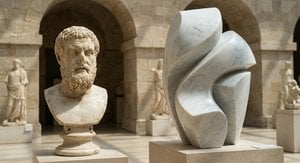
The Enduring Allure of Marble in Art History: From Classical Sculpture to Modern Abstraction
Explore the captivating history of marble sculpture from ancient Greece to modern art. Discover renowned artists like Canova & Michelangelo, carving techniques, and investment insights at ArtsDot.

Mastering Cubism: The Top 25 Georges Braque Artworks
Explore 25 iconic Georges Braque masterpieces and the birth of Cubism. Discover museum-quality art on ArtsDot.com.

Georges Seurat's Masterpieces: 25 Paintings That Defined Pointillism | ArtsDot
Explore 25 iconic Georges Seurat paintings & discover the brilliance of Pointillism. From 'La Grande Jatte' to his harbor scenes, delve into art history with ArtsDot.com. Find museum-quality reproductions for your home decor. Explore the full collection online!


