


 Send
Send Share
Share
 Details
 Guide
Guide

 Download
 Similars
 Diaporama
 Stats
StatsCantoria
 Marble
- Sculpture
- Early Renaissance
 1439
1439- Renaissance
 348.0 x 570.0 cm
 Museo dell'Opera del Duomo
 Read More
Hand Made Oil Reproduction
Hand-painted oil on canvas in your size and frame, made to order by our artists. ( Switch to Print Switch to Digital Image)




































Pick from our preset sizes that match the artwork's original proportions.

Type the width and the height you need, to fit your frame or your wall. This is hand-painted, so for a size with a different shape the artist can paint a bit more around the picture, or cut a bit — you choose. We send you a digital mockup to approve before the painting starts. The picture shown on this page does not show the real result — only the mockup does.
After order, ArtsDot.com team will email client for instructions and provide a mockup preview
Worldwide Delivery () in 3/4 weeks instead of standard 5 weeks. (25 October). No compromise on quality.

Free Worldwide Express Shipping

High-Quality Linen Canvas

Full Shipping Insurance

Customs Tax Refund Guarantee

True Color Matching Guarantee

100-Day Return Policy (Defects Only)

100% Money-Back Guarantee

Bulk Discount Offer
 Glass option is only available in size under 110 CM

Cantoria
Reproduction Medium
Reproduction Size
-


Total Price
$ 263
A Symphony in Marble: The Divine Energy of Donatello’s Cantoria
To stand before Donatello’s Cantoria is to witness the very moment the Renaissance found its pulse. Completed around 1439 for the Cathedral of Santa Maria del Fiore in Florence, this monumental marble relief is far more than a functional singers' gallery; it is a breathtaking explosion of movement and spiritual ecstasy. While much of the era’s sculpture remained tethered to the static, formal traditions of the Byzantine style, Donatello broke free, injecting his marble with a vitality that feels almost cinematic. The work captures a celestial choir—a group of putti or dancing angels—caught in a moment of unbridled joy, their limbs intertwined in a rhythmic celebration of divine glory.
The technical mastery displayed in this relief is nothing short of miraculous. Donatello utilized the medium of marble not merely to carve figures, but to breathe life into stone. Through a sophisticated application of high and low relief, he created a sense of profound depth and three-dimensionality that draws the viewer into the scene. The composition is anchored by five pairs of columns supported by elegant consoles, creating a structural rhythm that guides the eye across the frieze. Behind these architectural elements, the figures emerge with such anatomical precision and fluid motion that one can almost hear the echoes of choral music rising from the stone. This interplay of light and shadow, achieved through meticulous carving, lends a shimmering quality to the surface, as if the marble itself were illuminated by an unseen, heavenly radiance.
Humanism and the Rebirth of Classical Grandeur
The Cantoria serves as a profound manifesto of Early Renaissance humanism. Drawing deep inspiration from the rediscovered aesthetics of ancient Greece and Rome, Donatello moved away from rigid iconography toward a style defined by psychological depth and physical realism. This was a period of intense intellectual ferment in Florence, where the principles of Brunelleschi and the influence of classical antiquity were reshaping the human understanding of the world. In the Cantoria, we see this transition embodied; the figures are not distant, symbolic icons, but fleshy, emotive beings whose gestures—reaching, dancing, and leaning—convey a palpable sense of human emotion and spiritual fervor.
For the modern collector or interior designer, a reproduction of this masterpiece offers more than mere decoration; it provides a focal point of historical gravity and artistic sophistication. The piece embodies a harmonious balance between classical restraint and exuberant energy, making it an ideal inspiration for spaces that seek to blend timeless elegance with dynamic character. Whether placed in a curated gallery setting or used to anchor a grand architectural space, the Cantoria invites contemplation of the enduring beauty found in the union of technical perfection and raw, human emotion.
Questions & Answers
Can I see an X-ray view of "Cantoria" by Donatello?
"Cantoria" can be examined layer by layer on the artwork's X-Ray page, a viewer inspired by a conservator's light bench with eleven optical readings of the image.
What is "Cantoria" about, and what atmosphere does it have?
"Cantoria" by Donatello depicts marble sculpture, renaissance art, religious iconography, classical influence, dance angels, frieze relief, florence cathedral, in an elegant mood. Subject and atmosphere together describe the work.
What national origin stands behind the Early Renaissance of "Cantoria"?
"Cantoria" was created by Donatello, born in Italy, within the Early Renaissance movement. The artist's origin links the work to Early Renaissance as practiced by artists from Italy.
Related Artworks


Artist Biography
early life and career
donato di niccolò di betto bardi, known as donatello, was born in florence, italy around 1386. he studied classical sculpture, which heavily influenced his development of an early renaissance style. this new approach to art and culture would eventually become the hallmark of the florentine renaissance.key works and innovations
donatello's most famous work, david, was the first freestanding nude male sculpture since antiquity. commissioned by the medici family, it showcased his innovative style and technical expertise. other notable works include:- st. louis of toulouse (now in the museum of the basilica di santa croce), which featured a classical frame designed by donatello.
- the sacrifice of isaac, created for the campanile of santa maria del fiore in florence, characterized by strong portrait details.
- crucifix (1425) for santa croce, which portrayed christ in a moment of agony.
artistic style and legacy
donatello's style can be divided into broad phases, beginning with the development of expressiveness and classical monumentality. his work was not immediately accepted by the community but eventually became the most popular, influencing other italian courts and european artists. key art movements:personal life and working style
donatello was known for being amiable and well-liked, but poor at the business side of his career. he tended to accept more commissions than he could handle, often completing works late or handing them over to other sculptors. notable artworks and artists:- leonardo da vinci: annunciation (detail)
- amico aspertini: statua di pan/leone che azzanna un cavallo
- michelangelo buonarroti: tondo pitt
museums and art collections:
- museo della collegiata (empoli, italy): a hidden gem of the renaissance, featuring works by francesco botticini and raffaello botticini.
- the early italian renaissance art movement

Donatello
1386 - 1466 , Italy
Quick Facts
- Full Name: Donatello di Niccolò
- Nationality: Italian
- Date Of Birth: 1386
- Date Of Death: 1466
- Place Of Birth: Florence, Italy
- Notable Artworks:
- David
- St. Louis of Toulouse
- Sacrifice of Isaac
- Crucifix
- Artistic Movement Or Style: Early Renaissance
- Artists Who Influenced This Artist: ['Classical sculpture']
- Artists Or Movements Influenced By This Artist:
- Italian Renaissance
- Early Renaissance
- Florentine Renaissance
Related Articles

Bronze Sculptures That Defined Art History | ArtsDot
Journey through art history with our Top 10 bronze sculptures! Explore masterpieces by Rodin, Michelangelo & more. Discover stories behind iconic statues and find museum-quality reproductions for your home decor at ArtsDot.com.

Bronze Age to Modern Masters: 10 Sculptures That Redefined Art | ArtsDot
Journey through art history with 10 legendary bronze sculptures – from Michelangelo's David to Rodin’s Thinker. Explore the stories, techniques & timeless beauty of these masterpieces. Find museum-quality reproductions & elevate your home decor on ArtsDot.com.

The Enduring Form: Sculpture Across History, Technique & Emotional Resonance
Explore the rich history of sculpture with ArtsDot. Discover key techniques, influential artists & investment potential for discerning collectors. Expert insights into valuing and collecting timeless masterpieces.
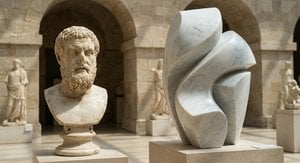
The Enduring Allure of Marble in Art History: From Classical Sculpture to Modern Abstraction
Explore the captivating history of marble sculpture from ancient Greece to modern art. Discover renowned artists like Canova & Michelangelo, carving techniques, and investment insights at ArtsDot.

The Enduring Form: Exploring Themes & Techniques in Sculpture Across Historical Periods
Explore the rich history of sculpture from ancient masterpieces to contemporary innovations. Discover key techniques, influential artists & investment potential for discerning art collectors.


