


 Preview
 Send
Send Share
Share
 Details
 Guide
Guide

 Download
 Similars
 X-Ray
X-Ray Diaporama
 Stats
StatsUntitled
 Minimalist Modernism
 60.0 x 40.0 cm
 Oscar Niemeyer Museum
 Read More
The artwork displayed on this page is protected by copyright law, which means we cannot legally create or sell an identical reproduction. This protection is enforced under international agreements such as the Berne Convention and by national laws, including those outlined by the U.S. Copyright Law - Title 17.
This method fully complies with copyright regulations because it does not involve copying or duplicating the protected artwork. Instead, it is a creative reinterpretation - a new painting that is influenced by the original but not identical to it.
Giclée / Art Print
Museum-quality giclée or canvas print with fast production and flexible finish options. ( Buy Hand Made Painting Switch to Digital Image)




































Pick from our preset sizes that match the artwork's original proportions.

Type the width and the height you need, to fit your frame or your wall. A print can only be cut, never made bigger than the picture, so a size with a different shape loses a part of the image. We send you a digital mockup to approve before we print anything. The picture shown on this page does not show the real cut — only the mockup does.
Worldwide Delivery () in 2 weeks instead of standard 4/5 weeks. (24 October)

Free Worldwide Express Shipping

High-Quality Linen Canvas

Full Shipping Insurance

Customs Tax Refund Guarantee

True Color Matching Guarantee

100-Day Return Policy (Defects Only)

100% Money-Back Guarantee

Bulk Discount Offer
 Glass option is only available in size under 110 CM

Untitled
Giclée / Art Print
Reproduction Size
-


Total Price
$ 63
Questions & Answers
Do the colors of "Untitled" appear strong or soft?
The color intensity of "Untitled" is monochromatic. Intensity describes how strong the colors appear.
What level of contrast does "Untitled" by Dico Kremer show?
The light-dark contrast of "Untitled" is recorded as gentle. Contrast describes how strongly light and dark areas differ.
How many people view "Untitled"?
Statistics about "Untitled" by Dico Kremer are on the artwork's Stats page: monthly visits of the artwork, visits of the artist's works, and country and language breakdowns of recent visitors.
Related Artworks


Artist Biography
A Life in Moments: The Attentive Lens of Dico Kremer
Dico Kremer, a Brazilian photographer born in Curitiba in 1947, has quietly dedicated over five decades to the art of capturing human experience. His work isn’t about grand spectacle or constructed narratives; instead, it resides in the fleeting, often unnoticed moments that reveal our shared humanity. For Kremer, the camera is not a tool for imposing vision but rather an instrument for attentive observation, a means of recording spontaneous reactions and subtle emotions as they unfold before his lens. He doesn’t seek to *create* images so much as to *collect* them – fragments of life offered freely by those who pass through his frame. This approach has resulted in a remarkably intimate and sensitive body of work that speaks volumes about the human condition, often without a single word exchanged between artist and subject.The Oscar Niemeyer Museum Project: A Chronicle of Connection
While Kremer’s career spans many years and diverse subjects, he is perhaps best known for his extensive photographic series created at the Oscar Niemeyer Museum in Curitiba between March 2016 and November 2019. This ambitious project involved photographing thousands of visitors as they interacted with the museum's architecture and exhibitions. The resulting images are a powerful testament to the interplay between art, space, and the individual. Kremer’s photographs aren’t portraits in the traditional sense; they are studies of presence – people lost in thought before a painting, sharing a moment of wonder with a sculpture, or simply navigating the museum's iconic curves. The project, curated by Professor Fernando Bini, titled 'People at MON', became an exhibition itself, immortalizing striking moments of connection and contemplation. It’s a unique chronicle of how individuals engage with art, revealing as much about themselves as it does about the artworks they encounter.Influences and Artistic Development
Kremer's artistic journey hasn’t been defined by adherence to specific movements or schools but rather by a consistent pursuit of authenticity. While rooted in contemporary realism, his work transcends simple categorization. He draws inspiration from street photography traditions, valuing the unposed and unpredictable nature of everyday life. However, unlike many street photographers who actively seek out dramatic scenes, Kremer’s approach is more passive – he creates an environment where genuine moments can emerge organically. His use of grayscale tones further emphasizes the emotional weight of his images, stripping away distractions and focusing attention on form, texture, and human expression. There's a quiet echo of humanist photography in his work, reminiscent of artists who believed in the power of portraiture to reveal universal truths about the human spirit.Technique and Style: The Art of Subtlety
Kremer’s technical skill is evident not in flashy effects or elaborate compositions, but in his mastery of light and shadow, and his ability to capture fleeting expressions with remarkable clarity. He favors natural lighting whenever possible, allowing the environment to shape the mood of each photograph. His compositions are often minimalist, focusing on a single subject or a small group of people within a larger space. This deliberate simplicity draws attention to the nuances of human interaction – a subtle gesture, a thoughtful gaze, a shared smile. He doesn’t manipulate his images; instead, he allows them to speak for themselves, preserving the raw honesty of the moment. The result is a body of work that feels both timeless and deeply personal.Historical Significance and Legacy
Dico Kremer's contribution lies in his ability to elevate the ordinary to the extraordinary. In an age saturated with images, he reminds us of the power of slow observation and genuine connection. His 'People at MON' project is not merely a documentation of museum visitors; it’s a meditation on the human experience itself – our innate desire for beauty, our capacity for wonder, and our shared need for connection. As a Brazilian artist, Kremer also offers a unique perspective on national identity and cultural expression. He has captured a slice of contemporary life in Brazil, preserving moments that would otherwise be lost to time. His work serves as an important reminder that art isn’t confined to galleries and museums; it exists in the everyday interactions that shape our lives, waiting to be discovered by an attentive eye.
Dico Kremer
1947 - , Brazil
Quick Facts
- Artistic Movement Or Style: Contemporary realism
- Date Of Birth: 1947
- Full Name: Dico Kremer
- Nationality: Brazilian
- Notable Artworks: ['Untitled']
- Place Of Birth: Curitiba, Brazil
Related Articles

Beyond the Lens: Photography's Enduring Influence on Modern & Contemporary Art
Explore photography's pivotal role in shaping modern & contemporary art. Discover key movements, influential artists like Stieglitz, and expert collecting advice from ArtsDot.

Pictorialism: A Search for Artistic Photography's Soul – Aesthetics, Techniques & Legacy
Explore the captivating world of Pictorialism – a pivotal movement that transformed photography into fine art. Discover key artists like Stieglitz & Käsebier, techniques, and collecting tips from experts.

White on Canvas: 10 Masterpieces & Timeless Elegance for Your Home Decor
Explore 10 iconic white paintings by Monet, Whistler & Rothko! Discover the stories behind these serene masterpieces and their impact on art history. Find museum-quality reproductions for your home decor at .

Monochrome Visions: Exploring the Aesthetic & Historical Significance of Black & White Photography
Explore the rich history & artistic power of black and white photography. From early techniques to iconic masters like Ansel Adams, discover why monochrome continues to captivate art lovers today. Expert insights for collectors.
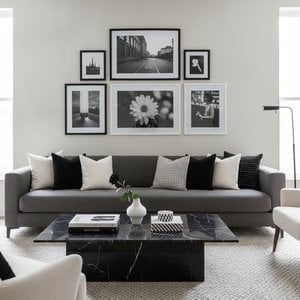
Timeless & Chic: Elevating Your New Home with the Sophistication of Black and White Photography
Transform your new home with the timeless allure of black and white photography. ArtsDot.com specializes in elegant monochrome decor and custom hand-painted wedding portraits that turn cherished milestones into lasting, soulful masterpieces. Elevate your space with ease.
