


 Send
Send Share
Share
 Details
 Guide
Guide

 Download
 Similars
 Diaporama
 Stats
StatsA Little Boy


 Read More
Giclée / Art Print
Museum-quality giclée or canvas print with fast production and flexible finish options. ( Buy Hand Made Painting Switch to Digital Image)




































Pick from our preset sizes that match the artwork's original proportions.

You may enter your own dimensions to fit a specific frame or space. If your selected size does not match the original image's proportions, we will either crop the artwork or extend the image with a mirrored or solid-fill edge. A digital mockup will be sent for your approval before production begins.
Please note that the on-screen preview does not reflect the actual cropping or extension. Only the mockup will accurately show the final composition.
While custom sizes are available, we recommend selecting a dimension from the predefined list to preserve the original proportions.
Worldwide Delivery () in 2 weeks instead of standard 4/5 weeks. (25 September)

Free Worldwide Express Shipping

High-Quality Linen Canvas

Full Shipping Insurance

Customs Tax Refund Guarantee

True Color Matching Guarantee

100-Day Return Policy (Defects Only)

100% Money-Back Guarantee

Bulk Discount Offer
 Glass option is only available in size under 110 CM

A Little Boy
Giclée / Art Print
Reproduction Size
-


Total Price
$ 63
A Window into Renaissance Innocence: Desiderio da Settignano’s “A Little Boy”
Desiderio da Settignano's "A Little Boy," a marble bust sculpted around 1460, isn’t merely a portrait; it’s a poignant distillation of the Florentine Renaissance spirit – a fleeting capture of youthful beauty and an exploration of idealized innocence. This exquisite piece, currently housed at the National Gallery of Art in Washington D.C., offers a rare glimpse into the artistic sensibilities of a master sculptor who, despite his relatively short career, left an indelible mark on the era.
The sculpture depicts a young boy, likely between the ages of four and six, seated upon a simple rectangular pedestal. His gaze, subtly directed off-center to the left, invites quiet contemplation, suggesting a thoughtful awareness beyond his years. The details are remarkably rendered: the delicate curve of his cheekbone, the slight furrow in his brow, the suggestion of a playful smile – all meticulously carved from pristine white marble. It’s a testament to Desiderio's skill that he manages to imbue this static form with such palpable life and emotion.
The Sculptor’s Craft: Technique and Materials
Desiderio da Settignano was a sculptor deeply rooted in the traditions of his hometown, Settignano, just outside Florence. He honed his skills under the tutelage of Bernardo Rossellino, a key figure in the Florentine workshop that shaped much of the early Renaissance aesthetic. His mastery lies primarily in subtractive sculpting – a painstaking process of carefully removing marble to reveal the desired form. This technique, demanding immense patience and precision, is evident in the flawlessly smooth surfaces and the remarkably realistic portrayal of the boy’s features.
The choice of marble itself is crucial. The purity and luminosity of white marble allowed Desiderio to emphasize the boy's youthful complexion and create a sense of ethereal beauty. Furthermore, the subtle variations in tone within the stone – from the palest highlights to deeper shadows – contribute significantly to the sculpture’s three-dimensionality and depth. It’s a masterful demonstration of how light and material can be manipulated to evoke emotion.
A Renaissance Portrait: Symbolism and Context
“A Little Boy” is more than just a likeness; it's a product of its time, reflecting the prevailing artistic and philosophical currents of the Florentine Renaissance. During this period, portraiture was evolving beyond simple representations of power and status to encompass a deeper exploration of human psychology and emotion. The depiction of children in art became increasingly popular, often serving as symbols of innocence, purity, and hope – virtues highly valued during the tumultuous political landscape of Florence.
Interestingly, scholars have debated whether these youthful portraits were intended as literal representations of individual children or as idealized embodiments of these qualities. Some believe that they served a didactic purpose, reminding viewers of the importance of virtue and piety. The placement of the boy on a pedestal further reinforces this symbolic reading, elevating him to a position of reverence and suggesting his inherent worth.
Legacy and Emotional Resonance
Despite his tragically short life – he died at the age of 34 – Desiderio da Settignano’s influence on Renaissance sculpture is undeniable. His work, particularly “A Little Boy,” exemplifies the era's fascination with realism, naturalism, and the depiction of human emotion. The sculpture’s enduring appeal lies in its ability to evoke a sense of nostalgia for a lost innocence—a timeless reminder of the beauty and vulnerability inherent in childhood.
Today, reproductions of “A Little Boy” continue to captivate audiences worldwide, offering a tangible connection to one of Florence's most talented sculptors. Its delicate beauty and profound symbolism make it an ideal addition to any art collection or interior space, inviting contemplation and sparking the imagination.
Related Artworks


Artist Biography
Desiderio da Settignano: A Sculptor Shaped by Florentine Tradition
Desiderio da Settignano (c. 1430 – 1464) stands as a testament to the dynamism of Renaissance sculpture, particularly within the vibrant artistic milieu of Florence. Born in Settignano, nestled on the slopes overlooking Lake Como, he emerged from a family deeply rooted in stonemasonry and craftsmanship—a lineage that profoundly shaped his artistic trajectory. While biographical details remain somewhat sparse, scholarly consensus points to training primarily under Bernardo Rossellino and Antonio Rossellino’s workshop, establishing him firmly within the epicenter of Florentine artistic innovation. His matriculation into the arte dei maestri di pietra e legname, Florence's guild of stone and woodworkers, in 1453 solidified his connection to this influential institution and signaled his commitment to mastering the techniques of sculptural excellence.Early Influences and Artistic Style
Desiderio’s artistic style bears unmistakable marks of Donatello's pioneering approach to sculpture—specifically, his masterful use of low relief. This stylistic choice reflects a broader trend toward naturalism and expressive detail prevalent during the period, prioritizing tactile realism over idealized grandeur. However, Desiderio wasn’t merely imitating his predecessor; he possessed an innate sensitivity to form and composition that distinguished him as an independent artist. His works demonstrate meticulous attention to surface texture and subtle nuances of expression—qualities indicative of a profound understanding of sculptural principles.Notable Commissions and Masterpieces
Desiderio’s career gained considerable momentum through prestigious commissions, notably the monumental tomb of Carlo Marsuppini for Santa Croce Basilica. This ambitious undertaking showcased his ability to synthesize stylistic precedents—drawing inspiration from Bernardo Rossellino's earlier tomb of Leonardo Bruni—into a cohesive and emotionally resonant artwork. The tomb’s design deliberately mirrored Rossellini’s approach, emphasizing an elevated triumphal arch incorporating a sarcophagus and effigy bier, thereby honoring the mentor’s legacy while simultaneously elevating Marsuppini’s memorial to new heights of artistic sophistication.The Tomb of Carlo Marsuppini: A Synthesis of Tradition
Perhaps Desiderio's most enduring achievement lies in his masterful reimagining of Rossellini’s tomb design. Recognizing the importance of precedent, he adopted the fundamental compositional scheme—the triumphal arch and sarcophagus—but infused it with a distinctly expressive quality. He skillfully positioned standing children flanking the sarcophagus, adorned with elaborate festoons cascading from an ornate candelabra, reflecting a deliberate homage to Rossellini’s artistic vision. This careful consideration of stylistic influences underscores Desiderio's intellectual engagement with Renaissance art history and his commitment to upholding artistic standards.Legacy and Historical Significance
Desiderio da Settignano’s relatively brief but impactful career cemented his place as a pivotal figure in Florentine sculpture. His work exemplifies the humanist spirit of the Renaissance, prioritizing human dignity and emotional depth alongside technical virtuosity. Though overshadowed by larger contemporaries like Michelangelo and Leonardo da Vinci, Desiderio's contributions to sculptural art—particularly his innovative approach to tomb design and his unwavering dedication to mastering traditional techniques—continue to inspire admiration and scholarly study. His legacy resides not merely in individual artworks but also in the transmission of artistic principles that shaped the course of Renaissance sculpture.
Desiderio da Settignano
1430 - 1464 , Italy
Quick Facts
- Artistic Movement Or Style: Renaissance Sculpture
- Artists Who Influenced This Artist:
- Donatello
- Bernardo Rossellino
- Date Of Birth: c. 1430
- Date Of Death: 1464
- Full Name: Desiderio de Bartolomeo di Francesco detto Ferro
- Nationality: Italian
- Notable Artworks:
- Meeting of Christ and St John the Baptist as Youth
- Virgin and Child
- The Christ Child (.)
- Place Of Birth: Settignano, Italy
Related Articles

Bronze Sculptures That Defined Art History | ArtsDot
Journey through art history with our Top 10 bronze sculptures! Explore masterpieces by Rodin, Michelangelo & more. Discover stories behind iconic statues and find museum-quality reproductions for your home decor at ArtsDot.com.

The Enduring Form: Sculpture Across History, Technique & Emotional Resonance
Explore the rich history of sculpture with ArtsDot. Discover key techniques, influential artists & investment potential for discerning collectors. Expert insights into valuing and collecting timeless masterpieces.

Leonardo da Vinci's Masterpieces: Explore 25 Iconic Artworks for Your Home | ArtsDot
Journey through Leonardo da Vinci's genius with our curated selection of 25 iconic artworks. Explore the stories behind Mona Lisa, The Last Supper & more Renaissance masterpieces. Find museum-quality art reproductions for your home at ArtsDot.com.
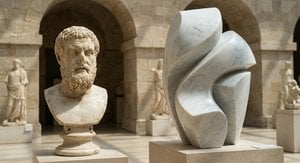
The Enduring Allure of Marble in Art History: From Classical Sculpture to Modern Abstraction
Explore the captivating history of marble sculpture from ancient Greece to modern art. Discover renowned artists like Canova & Michelangelo, carving techniques, and investment insights at ArtsDot.

The Enduring Form: Exploring Themes & Techniques in Sculpture Across Historical Periods
Explore the rich history of sculpture from ancient masterpieces to contemporary innovations. Discover key techniques, influential artists & investment potential for discerning art collectors.


