

 Preview
 Send
Send Share
Share
 Details
 Guide
Guide

 Download
 Similars
 X-Ray
X-Ray Diaporama
 Q&A
Q&A Stats
StatsSelf Portrait (verso)

- 61.0 x 51.0 cm


 Read More
The artwork displayed on this page is protected by copyright law, which means we cannot legally create or sell an identical reproduction. This protection is enforced under international agreements such as the Berne Convention and by national laws, including those outlined by the U.S. Copyright Law - Title 17.
This method fully complies with copyright regulations because it does not involve copying or duplicating the protected artwork. Instead, it is a creative reinterpretation - a new painting that is influenced by the original but not identical to it.
Giclée / Art Print
Museum-quality giclée or canvas print with fast production and flexible finish options. ( Buy Hand Made Painting Switch to Digital Image)




































Pick from our preset sizes that match the artwork's original proportions.

Type the width and the height you need, to fit your frame or your wall. A print can only be cut, never made bigger than the picture, so a size with a different shape loses a part of the image. We send you a digital mockup to approve before we print anything. The picture shown on this page does not show the real cut — only the mockup does.
Worldwide Delivery () in 2 weeks instead of standard 4/5 weeks. (2 November)

Free Worldwide Express Shipping

High-Quality Linen Canvas

Full Shipping Insurance

Customs Tax Refund Guarantee

True Color Matching Guarantee

100-Day Return Policy (Defects Only)

100% Money-Back Guarantee

Bulk Discount Offer
 Glass option is only available in size under 110 CM

Self Portrait (verso)
Giclée / Art Print
Reproduction Size
-


Total Price
$ 63
A Window into the Soul: The Raw Intensity of David Bomberg
In the quiet, brooding depths of David Bomberg’s 1937 Self Portrait (verso), we encounter more than just a likeness; we meet a psyche laid bare. This evocative work serves as a profound testament to the power of Expressionism, capturing a moment of intense introspection that transcends the boundaries of time. The subject, a man with eyes that pierce through the canvas, possesses a gaze so heavy with melancholy and wisdom that it commands the viewer's immediate attention. There is no attempt at vanity here; instead, Bomberg presents a raw, psychological exploration, where the furrowed brow and shadowed features suggest a lifetime of complex emotion and unyielding thought.
The mastery of the piece lies in its visceral technique. Utilizing a heavy impasto method, Bomberg applies oil paint with such thickness that the canvas itself becomes a sculptural landscape. Each brushstroke is visible, gestural, and unapologetically bold, creating a textured surface that catches the light and adds a sense of physical immediacy to the portrait. The palette is a somber, sophisticated arrangement of warm ochres, deep umbers, and earthy browns, punctuated by sudden, dramatic flashes of dark reds and bruised purples in the shadows. This interplay of light and shadow—a technique reminiscent of the dramatic chiaroscuro found in classical masters but reimagined through a modern, fractured lens—creates a sense of depth and movement within an otherwise flattened, two-dimensional space.
The Legacy of the Whitechapel Boys
To understand the emotional weight of this portrait, one must look to the historical currents that shaped Bomberg’s hand. As a prominent member of the 'Whitechapel Boys', an influential group of East End artists, Bomberg was part of a movement that sought to redefine British modernism. His training under Walter Sickert and his exposure to the radical shifts of Cubism and Post-Impressionism are subtly woven into the fabric of this work. While the composition avoids the rigid geometry of his earlier avant-garde experiments, it retains that same structural energy, using loose, expressive lines to define form through suggestion rather than precise outlines.
For the discerning collector or interior designer, Self Portrait (verso) offers a sophisticated focal point that brings a sense of historical gravity and intellectual depth to any space. It is a piece that invites contemplation, making it an ideal addition to a gallery-style study, a contemporary living room, or a curated collection of early 20th-century modernism. The artwork does not merely decorate a wall; it anchors a room with its somber mood and commanding presence. Owning a high-quality reproduction of this masterpiece allows one to inhabit the same atmosphere of profound reflection that Bomberg captured in 1937, bringing the enduring spirit of British Expressionism into the modern home.
Questions & Answers
Where in David Bomberg's career does "Self Portrait (verso)" fall, given its date?
Given its 1937 date, "Self Portrait (verso)" falls in David Bomberg's Mature Period.
What is "Self Portrait (verso)" about, and what atmosphere does it have?
"Self Portrait (verso)" by David Bomberg depicts portrait painting, emotional expression, dark palette, impasto texture, british art, self-reflection, melancholy mood, in a dramatic mood. Subject and atmosphere together describe the work.
Do the colors of "Self Portrait (verso)" appear strong or soft?
The colors in "Self Portrait (verso)" by David Bomberg have a balanced intensity.
Related Artworks


Artist Biography
Early Life and Artistic Training
- Born: Birmingham, United Kingdom (December 5, 1890)
- Died: London, United Kingdom (August 19, 1957)
- One of the 'Whitechapel Boys' – a group of East End artists who emerged in the early 20th century.
Born to Polish-Jewish immigrant parents, Abraham and Rebecca Bomberg, initially studied at the City and Guilds Technical Art School before training as a lithographer in Birmingham.
Studied under Walter Sickert at Westminster School of Art (1908-1910), influenced by Sickert's focus on form and urban life. Significant exposure to Paul Cézanne through the 1910 Roger Fry exhibition "Manet and the Post-Impressionists." Attended the Slade School of Art (1911), winning the Tonks Prize for his drawing of fellow student Isaac Rosenberg.
The Avant-Garde Years: Cubism, Futurism, and Controversy
- At the Slade, Bomberg was part of a remarkable generation including Mark Gertler, Stanley Spencer, C.R.W. Nevinson, and Dora Carrington.
- Influenced by the 1912 London exhibitions of Italian Futurists and Fry's second Post-Impressionist exhibition (Picasso, Matisse, Fauvists, Wyndham Lewis).
- Developed a distinctive style combining Cubism and Futurism – characterized by geometric compositions, limited color palettes, angular figures, and grid-like structures.
- His radical approach led to expulsion from the Slade School of Art in 1913, deemed too audacious for the institution's conventional methods.
- Briefly associated with Bloomsbury Group’s Omega Workshops and exhibited with the Camden Town Group. Showed affinity with Wyndham Lewis’s Vorticist movement but remained independent, refusing full involvement.
From War to Landscape: A Shift in Style
Experiences as a private soldier during World War I profoundly impacted his artistic vision, leading to a move away from abstraction.
The 1920s saw Bomberg adopt a more figurative style, focusing on portraits and landscapes drawn directly from nature. Developed an increasingly expressionist technique, marked by textured impasto and emotional intensity.
Extensive travels through the Middle East (particularly Palestine) and Europe significantly influenced his later work. His depictions of Jerusalem are particularly notable.
Later Years and Legacy
- From 1945 to 1953, taught at Borough Polytechnic (now London South Bank University), influencing a generation of artists including Frank Auerbach, Leon Kossoff, Philip Holmes, Cliff Holden, Edna Mann, Dorothy Mead, Gustav Metzger, Dennis Creffield, Cecil Bailey and Miles Richmond.
- Married landscape painter Lilian Holt.
- Despite periods of relative obscurity during his lifetime, Bomberg's work has gained increasing recognition in recent decades as a significant contribution to British modern art.
- David Bomberg House at London South Bank University is named in his honor.
- His legacy lies in his unique synthesis of European avant-garde movements and his later development of a powerful, expressive landscape style that captured the essence of place and human experience.

David Bomberg
1890 - 1957 , United Kingdom
Quick Facts
- Full Name: David Garshen Bomberg
- Nationality: British
- Date Of Birth: 1890
- Date Of Death: 1957
- Place Of Birth: Birmingham, United Kingdom
- Notable Artworks:
- Self Portrait (1937)
- Kitty, the Artist’s Sister (1929)
- Study for a Painting
- Jerusalem
- Artistic Movement Or Style:
- Cubism
- Futurism
- Expressionism
- Artists Who Influenced This Artist:
- Paul Cézanne
- Walter Sickert
- Wyndham Lewis
- Artists Or Movements Influenced By This Artist:
- Frank Auerbach
- Leon Kossoff
Related Articles

David Bomberg: Reassessing the Pioneering Spirit of Early British Abstraction
Explore the groundbreaking work of David Bomberg, a pivotal figure in British abstraction. Discover his artistic evolution, influences, and lasting legacy through insightful analysis & expert commentary.

Sandy Brown Masterpieces: 10 Iconic Paintings & Timeless Decor Ideas
Explore 10 iconic paintings bathed in captivating sandy brown tones! From Rembrandt to Monet, discover the stories behind these timeless masterpieces & find museum-quality art reproductions for your home. Explore the full collection on ArtsDot.com.

The Echo of Self: Reflectivity as a Core Theme in Art History & Contemporary Practice
Explore the rich history of self-representation in art, from Renaissance masters to modern innovators. Discover how artists use portraiture to reveal identity, emotion & the depths of the human psyche. Expert insights for collectors.
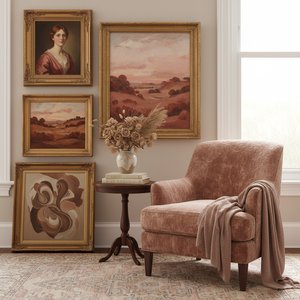
Rosy Brown Hues: 10 Master Paintings & Timeless Decor Ideas |
Explore 10 iconic paintings bathed in captivating rosy brown tones! From Rembrandt to Titian, discover the stories behind these masterpieces & their warm color palettes. Find museum-quality art reproductions and decor inspiration at .

Reflecting the Self: A History of Portraiture & Psychological Insight
Explore the fascinating history of self-portraiture from Renaissance masters like Dürer & Rembrandt to modern interpretations. Discover the psychological insights and artistic techniques behind these iconic works. Expert analysis for art enthusiasts.


