Preview
 Send
Send Share
Share
 Details
 Guide
Guide

 Download
 Similars
 X-Ray
X-Ray Diaporama
 Stats
StatsCzechoslovakia
 1957
1957 35.0 x 23.0 cm
 Read More
Giclée / Art Print
Museum-quality giclée or canvas print with fast production and flexible finish options. ( Buy Hand Made Painting Switch to Digital Image)




































Pick from our preset sizes that match the artwork's original proportions.

You may enter your own dimensions to fit a specific frame or space. If your selected size does not match the original image's proportions, we will either crop the artwork or extend the image with a mirrored or solid-fill edge. A digital mockup will be sent for your approval before production begins.
Please note that the on-screen preview does not reflect the actual cropping or extension. Only the mockup will accurately show the final composition.
While custom sizes are available, we recommend selecting a dimension from the predefined list to preserve the original proportions.
Worldwide Delivery () in 2 weeks instead of standard 4/5 weeks. (25 September)

Free Worldwide Express Shipping

High-Quality Linen Canvas

Full Shipping Insurance

Customs Tax Refund Guarantee

True Color Matching Guarantee

100-Day Return Policy (Defects Only)

100% Money-Back Guarantee

Bulk Discount Offer
 Glass option is only available in size under 110 CM

Czechoslovakia
Giclée / Art Print
Reproduction Size
-


Total Price
$ 63
Related Artworks


Artist Biography
Dan Weiner: A Chronicle of American Life in the Mid-Century
Dan Weiner (1919–1959) wasn’t a name that immediately resonates within the halls of photographic history, yet his work represents a crucial and profoundly humane chapter in the evolution of American documentary photography. Born into a modest family in New York City, Weiner's journey from aspiring painter to dedicated photojournalist is a testament to the transformative power of observation and a deep-seated empathy for the lives he captured. His career, tragically cut short by a plane crash in 1959, left behind a remarkable body of work—a poignant chronicle of America during the vibrant, often turbulent, years following World War II.
Weiner’s early artistic inclinations led him to study painting at the prestigious Art Students League and Pratt Institute. However, it was his exposure to the Photo League, a collective of socially conscious photographers, that truly ignited his passion for visual storytelling. This group, deeply influenced by the legacy of Jacob Riis and Lewis Hine, championed photography as a tool for social commentary and reform. He quickly absorbed their techniques and philosophies, learning to use the camera not merely as a recorder of events but as a means of understanding human experience. His time with the Photo League provided him with invaluable training and connections, shaping his approach to documenting everyday life.
Weiner’s military service during World War II further honed his skills. Assigned as a photographer and instructor in Georgia, he gained practical experience using the 35mm Contax camera – a compact and versatile tool that would become his signature instrument. This period instilled in him a disciplined eye for composition and an appreciation for capturing fleeting moments of truth. Returning to New York after the war, he established a commercial studio but soon realized his true calling lay in pursuing independent assignments for leading picture magazines like *This Week*, *Collier’s*, and *Fortune*. These publications provided a platform for his work, allowing him to reach a wider audience and contribute significantly to the visual landscape of the era.
The Essence of Mid-Century America
Weiner's photographs are inextricably linked to the specific social and cultural context of the 1950s. He wasn’t interested in grand narratives or heroic figures; instead, he focused on the ordinary people—factory workers, farmers, housewives, children—who constituted the backbone of American society. His images offer a remarkably intimate glimpse into their lives, revealing both the joys and struggles of this period. His subjects were often presented with a remarkable degree of respect and dignity, avoiding sensationalism or judgment.
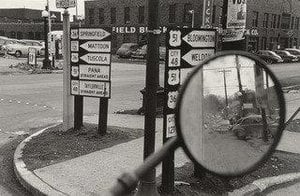
Notable among his early works is “Sunbathers, Czechoslovakia” (1957), a vibrant snapshot of leisure and community in post-war Europe. This photograph exemplifies Weiner’s ability to capture the essence of a scene with remarkable clarity and immediacy. Similarly, "Decataur, Illinois" (1953) provides a compelling portrait of small-town America, while “Orchard Street” (1949) offers a poignant meditation on urban life in New York City. These images, and countless others, reveal a keen eye for detail and an ability to convey complex emotions through simple compositions.
The Impact of Travel and Social Commentary
Weiner’s travels throughout the United States and abroad profoundly shaped his artistic vision. His extended stay in Nova Scotia in 1950 resulted in a series of evocative photographs documenting the lives of fishermen and their families, capturing a timeless connection to the sea and a deep sense of community. His assignment covering the Montgomery Bus Boycott in 1956 was particularly significant, providing crucial visual documentation of the burgeoning Civil Rights Movement. These images, published in *Collier’s*, brought the struggles of African Americans to national attention and cemented Weiner's reputation as a socially engaged photographer.
His work with Walker Evans at *Fortune* magazine further broadened his perspective, exposing him to diverse communities and challenging him to explore new photographic approaches. Weiner’s willingness to immerse himself in unfamiliar environments—from the Soviet Union to Romania and Poland—demonstrates a genuine curiosity about the world and a commitment to representing different cultures with honesty and respect.
Legacy and Historical Significance
Despite his tragically short career, Dan Weiner left an indelible mark on American photography. His work stands as a powerful testament to the potential of documentary photography to illuminate social issues and foster empathy. His images offer a nuanced and deeply human portrait of America during a transformative era—a time of economic prosperity, social upheaval, and cultural change.
Weiner’s photographs are now housed in major collections around the world, including the Metropolitan Museum of Art in New York City. His legacy continues to inspire photographers today who seek to use their craft as a tool for social justice and human understanding. He remains a vital voice from the mid-20th century, reminding us of the importance of looking closely at the lives of ordinary people and bearing witness to the complexities of the human experience.

dan weiner
1919 - 1959
Quick Facts
- Artistic Movement Or Style: Photojournalism
- Artists Or Movements Influenced By This Artist:
- Walker Evans
- Robert Capa
- Artists Who Influenced This Artist:
- Jacob Riis
- Lewis Hine
- Dorothea Lange
- Date Of Birth: 1919-10-12
- Date Of Death: 1959-01-26
- Full Name: Dan Weiner
- Nationality: American
- Notable Artworks:
- Sunbathers, Czechoslovakia
- Decataur, Illinois
- Orchard Street
- Place Of Birth: New York City, USA