


 Preview
 Send
Send Share
Share
 Details
 Guide
Guide

 Download
 Similars
 X-Ray
X-Ray Diaporama
 Stats
StatsSusannah and the Elders
 Oil On Canvas
- WallArt
- Baroque
 1661
1661- Early Modern
 125.0 x 145.0 cm
 Museo de Arte de Ponce
 Read More
Hand Made Oil Reproduction
Hand-painted oil on canvas in your size and frame, made to order by our artists. ( Switch to Print Switch to Digital Image)




P118B $10

P118H $10

P118W $10

P438Z $10

P508JH $12

P508YH $12

P805H $10

P805Z $10

P919BZ $10

P919G $10

P919XJ $10

P959ZH $10

P968JZ $12

W106C $8

W218G $10

W218JH $8

W218Y $10

W307PJ $10

W316G $10

W316PJ $8

W316Y $10

W398PJ $8

W4111J $10

W500HY $15

W500JH $15

W692G $12

W849H $8

W940BG $15

W953PJ $8




Pick from our preset sizes that match the artwork's original proportions.

You may enter your own dimensions to fit a specific frame or space. If your selected size does not match the original image's proportions, we will either crop the artwork or extend the painting with additional hand-painted elements. A digital mockup will be sent for your approval before production begins.
Please note that the on-screen preview does not reflect the actual cropping or extension. Only the mockup will accurately show the final composition.
While custom sizes are available, we recommend selecting a dimension from the predefined list to preserve the original proportions.
After order, ArtsDot.com team will email client for instructions and provide a mockup preview
Worldwide Delivery () in 3/4 weeks instead of standard 5 weeks. (24 September). No compromise on quality.

Free Worldwide Express Shipping

High-Quality Linen Canvas

Full Shipping Insurance

Customs Tax Refund Guarantee

True Color Matching Guarantee

100-Day Return Policy (Defects Only)

100% Money-Back Guarantee

Bulk Discount Offer
 Glass option is only available in size under 110 CM

Susannah and the Elders
Reproduction Medium
Reproduction Size
-


Total Price
$ 263
A Dramatic Encounter in the Spanish Baroque
In the heart of the seventeenth century, amidst the opulent yet somber atmosphere of the Spanish Golden Age, Claudio Coello captured a moment of profound tension and vulnerability. Susannah and the Elders is not merely a biblical illustration; it is a masterclass in the High Baroque style, where light and shadow dance to tell a story of intrusion and innocence. The scene depicts the harrowing moment from the Book of Daniel when two venerable men, driven by illicit desire, corner the virtuous Susanna while she bathes in her private garden. Coello utilizes a rich, dramatic palette to heighten the emotional stakes, inviting the viewer into a space that feels both intimate and dangerously exposed.
The composition is anchored by the central figure of Susanna, whose pale, luminous skin serves as the painting's focal point. As she twists away from her pursuers, her movement creates a dynamic energy that pulls the eye across the canvas. One elder’s hand rests heavily upon her shoulder, a physical manifestation of the encroaching threat, while another grips her clothing, attempting to strip away her dignity. This calculated use of physical contact creates an immediate sense of claustrophobia and urgency, making the viewer an unwilling witness to this highly eroticized yet harrowing scene of assault.
Mastery of Light and Texture
Technically, Coello demonstrates the breathtaking skill that earned him his place as a premier court painter. His ability to render the textures of the natural world—the soft sheen of skin, the heavy folds of fabric, and the lush greenery of the garden—is nothing short of extraordinary. The artist employs chiaroscuro to sculpt the figures out of the darkness, using sharp highlights to accentuate Susanna's panicked expression and the predatory gazes of the elders. This interplay of light does more than provide depth; it serves a symbolic purpose, representing the clash between the purity of the protagonist and the encroaching shadows of corruption.
For the discerning collector or interior designer, this piece offers a profound sense of narrative weight. The painting's scale and complexity allow it to serve as a commanding centerpiece in any curated collection. A high-quality reproduction of this work brings with it the grandeur of the Spanish court, offering a sophisticated way to introduce historical depth and dramatic flair into a room. It is a piece that demands conversation, prompting reflections on morality, power, and the enduring human condition.
A Timeless Legacy for the Modern Collector
Beyond its technical brilliance, Susannah and the Elders resonates because of its raw emotional impact. Coello captures the precise second where peace is shattered by malice, a theme that remains universally poignant. The painting’s ability to evoke empathy for the victim while illustrating the complexity of human frailty ensures its lasting relevance in contemporary art appreciation. Whether placed in a gallery setting or as a focal point in a luxurious residential space, this work serves as a window into a vanished era of Spanish splendor, offering an unparalleled opportunity to possess a fragment of Baroque history.
Related Artworks


Artist Biography
A Legacy in Light: The Life and Art of Claudio Coello
Claudio Coello, born in Madrid in 1642, stands as a pivotal figure bridging the High Baroque and the nascent Rococo styles in Spanish painting. Often hailed as the last great master of the 17th-century Spanish school, his career unfolded against a backdrop of shifting artistic tastes and political complexities. While many artists before him enjoyed widespread international renown, Coello’s significance lies not only in his technical prowess but also in his ability to capture the essence of a fading era—an age of courtly splendor and deeply held religious conviction.
Coello's lineage itself speaks volumes about the artistic currents that shaped his vision. His father, Faustino Coello, was a celebrated Portuguese sculptor, instilling within his son an early appreciation for form and craftsmanship. This foundation led him to the studio of Francisco Rizi, where he received formal training in drawing and painting. However, it was through a fortunate connection with Juan Carreño de Miranda that young Claudio gained access to the royal collections—a treasure trove of masterpieces by Titian, Rubens, and Van Dyck. These works proved transformative, igniting within him a passion for rich color palettes, dynamic compositions, and the nuanced portrayal of human character.
The Court Painter and Religious Devotion
Coello’s ascent was marked by a series of increasingly prestigious commissions. He initially garnered attention with altarpieces like that for San Plácido in Madrid, demonstrating an early mastery of Flemish and Venetian influences. His talent soon caught the eye of the Archbishop of Saragossa, leading to significant religious works within that region. Yet, it was his appointment as court painter to King Charles II in 1683 that truly cemented his reputation. This position afforded him unparalleled opportunities to depict the Spanish aristocracy, culminating in one of his most ambitious projects: the immense altarpiece for the sacristy of El Escorial.
The *Adoration of the Miraculous Host* at El Escorial is a testament to Coello’s skill and ambition. Spanning seven years of meticulous work, this monumental composition features over fifty portraits—a veritable who's who of Spanish royalty and prominent courtiers. More than just a display of portraiture, it’s a carefully constructed narrative imbued with religious fervor and symbolic weight. The painting seamlessly blends the sacred and the secular, reflecting the deeply intertwined nature of faith and power in 17th-century Spain. Coello's ability to capture not only likeness but also personality—the subtle nuances of expression and posture—elevates this work beyond mere representation.
Influences and Artistic Development
Coello’s style wasn’t born in isolation; it was a synthesis of diverse influences, skillfully adapted to his own unique vision. The dramatic chiaroscuro of Caravaggio resonated within his compositions, lending them a sense of theatrical intensity. However, he tempered this with the vibrant colorism and fluid brushwork characteristic of Venetian masters like Titian and Veronese. The elegance and refined portraiture of Anthony van Dyck also left an indelible mark on his work, particularly evident in his depictions of Charles II.
While deeply indebted to these predecessors, Coello wasn’t merely a copyist. He developed a distinctive approach characterized by bold compositions, meticulous detail, and a masterful use of light to create atmosphere and emotional impact. His frescoes, though many were tragically lost, reveal a penchant for *trompe l'oeil* effects—illusionistic architectural elements that expanded the perceived space of his paintings. He also possessed a remarkable ability to convey texture and materiality, bringing a tangible realism to fabrics, jewels, and skin tones.
A Disheartening Finale and Enduring Legacy
Despite his considerable talent and royal patronage, Coello’s later years were tinged with disappointment. The arrival of Luca Giordano in Spain in 1692 marked a turning point—the Italian painter's more flamboyant style quickly gained favor at court, overshadowing Coello’s refined approach. The commission for the grand staircase at El Escorial was awarded to Giordano, a decision that deeply mortified Coello and is often cited as a contributing factor to his untimely death in 1693.
However, Coello's legacy endures. He remains celebrated as one of the last great Spanish painters of the 17th century, bridging the gap between the Baroque grandeur of Velázquez and the emerging Rococo sensibilities. His works—found in museums like the Museo del Prado and Pembroke College Oxford—continue to captivate viewers with their technical brilliance, emotional depth, and evocative portrayal of a bygone era. His influence can be traced in the work of later Spanish artists, solidifying his place as a pivotal figure in the history of Spanish art.

claudio coello
1642 - 1693 , Spain
Quick Facts
- Artistic Movement Or Style: Baroque painting
- Artists Or Movements Influenced By This Artist: ['Later Spanish painters']
- Artists Who Influenced This Artist:
- Diego Velázquez
- Peter Paul Rubens
- Titian
- Juan Carreño de Miranda
- Date Of Birth: March 2, 1642
- Date Of Death: April 20, 1693
- Full Name: Claudio Coello
- Nationality: Spanish-Portuguese
- Notable Artworks:
- Adoration of the Host
- Portrait of Charles II
- Place Of Birth: Madrid, Spain
Related Articles

The Golden Age Reforged: Dramatic Realism & Religious Zeal in Spanish Baroque Art
Explore the dramatic world of Spanish Baroque art! Discover masters like Zurbarán & the powerful influence of religious zeal on painting techniques – a guide for collectors and enthusiasts.

Baroque Drama: Bringing Opulence & Emotion into Contemporary Interiors
Explore the opulent world of Baroque interior design! Discover key elements, modern applications & how to bring dramatic elegance into your home with ArtsDot.com's authentic reproductions.

The Dramatic Flourish: Exploring the Baroque Movement's Enduring Legacy in Art History
Explore the dramatic world of Baroque art! Discover iconic artists like Caravaggio & Rubens, defining techniques, and its lasting impact on art history. Expert insights for collectors & enthusiasts at ArtsDot.

Baroque Masterpieces: 10 Paintings That Defined an Era |
Journey through the drama & grandeur of Baroque art! Explore 10 masterpieces by Caravaggio, Rembrandt, Rubens & more. Discover stunning oil paintings, rich colors & timeless stories. Find museum-quality reproductions at .
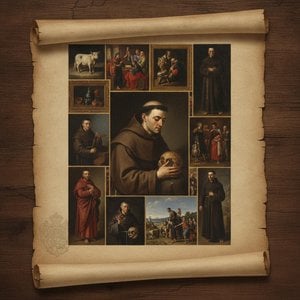
25 Masterpieces by Francisco de Zurbarán: The King of Spanish Baroque Tenebrism
Immerse yourself in the dramatic world of Francisco de Zurbarán. Explore 25 iconic Spanish Baroque masterpieces defined by intense tenebrism and spiritual realism. Find inspiration for museum-quality art reproductions and decor. Discover all masterpieces on ArtsDot.com.


