

 Preview
 Send
Send Share
Share
 Details
 Guide
Guide

 Download
 Similars
 X-Ray
X-Ray Diaporama
 Q&A
Q&A Stats
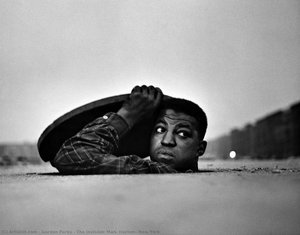
StatsThe devil

- 73.0 x 110.0 cm


 Read More
The artwork displayed on this page is protected by copyright law, which means we cannot legally create or sell an identical reproduction. This protection is enforced under international agreements such as the Berne Convention and by national laws, including those outlined by the U.S. Copyright Law - Title 17.
This method fully complies with copyright regulations because it does not involve copying or duplicating the protected artwork. Instead, it is a creative reinterpretation - a new painting that is influenced by the original but not identical to it.
Giclée / Art Print
Museum-quality giclée or canvas print with fast production and flexible finish options. ( Buy Hand Made Painting Switch to Digital Image)




































Pick from our preset sizes that match the artwork's original proportions.

Type the width and the height you need, to fit your frame or your wall. A print can only be cut, never made bigger than the picture, so a size with a different shape loses a part of the image. We send you a digital mockup to approve before we print anything. The picture shown on this page does not show the real cut — only the mockup does.
Worldwide Delivery () in 2 weeks instead of standard 4/5 weeks. (11 November)

Free Worldwide Express Shipping

High-Quality Linen Canvas

Full Shipping Insurance

Customs Tax Refund Guarantee

True Color Matching Guarantee

100-Day Return Policy (Defects Only)

100% Money-Back Guarantee

Bulk Discount Offer
 Glass option is only available in size under 110 CM

The devil
Giclée / Art Print
Reproduction Size
-


Total Price
$ 63
Questions & Answers
Which museum holds the original "The devil"?
The original "The devil" by Claudia Andujar is held at the Instituto Moreira Salles, Rio de Janeiro, Brazil. A reproduction allows the work to be displayed at home.
How light is "The devil" overall?
The perceived brightness of "The devil" by Claudia Andujar is bright. It can be matched to the light of the intended space.
What stage of Claudia Andujar's career does "The devil" (1969) belong to?
"The devil", created in 1969, belongs to the Mature Period of Claudia Andujar's career.
Related Artworks




Artist Biography
A Life Etched in Light: The World of Claudia Andujar
Claudia Andujar’s journey is one of displacement, discovery, and unwavering dedication—a life profoundly shaped by the shadows of history and illuminated by a fierce commitment to social justice. Born Claudine Haas in 1931 in Neuchâtel, Switzerland, her early years were marked by the tumultuous currents of pre-war Europe. The family’s flight from Hungary, escaping the rising tide of persecution, instilled within her a deep awareness of vulnerability and loss. This formative experience, tragically culminating in the death of her father at Dachau, would become a defining force in her artistic vision, fueling a lifelong empathy for marginalized communities. After studies in humanities at Hunter College in New York City, where she met her future husband Julio Andujar, she arrived in Brazil in 1956, a pivotal moment that set the course for her extraordinary career. It was here, amidst the vastness of the Amazon rainforest and the rich cultures of its indigenous peoples, that she found her true calling.Embracing the Yanomami: A Collaborative Vision
Andujar’s initial foray into photography began with documenting the Karajá people, but it was her encounter with the Yanomami in the Amazon Basin that irrevocably transformed her work. What started as a photojournalistic assignment evolved into a decades-long immersion—a profound collaboration built on respect and understanding. She didn't approach the Yanomami as subjects to be observed from afar; instead, she sought to become a witness *with* them, learning their cosmology, participating in their rituals, and advocating for their rights. This commitment led her to experiment with photographic techniques that moved beyond simple documentation. Rejecting conventional approaches, Andujar embraced infrared film, capturing the spiritual dimension of Yanomami life—the unseen forces they believe permeate the forest. Multiple exposures became a tool to represent the layered realities of their existence, blending the tangible and the ethereal. Her portraits are particularly striking, featuring individuals adorned with intricate body paint and feathers, not as exoticized figures but as powerful expressions of cultural identity.Beyond Documentation: Activism and Artistic Innovation
Andujar’s work transcends mere aesthetic beauty; it is inherently political. She recognized the imminent threats facing the Yanomami—the encroachment of miners, loggers, and government projects that jeopardized their land, their health, and their way of life. Her photographs became a powerful form of advocacy, raising awareness about the plight of this vulnerable community on an international stage. This activism culminated in her crucial role in establishing the Yanomami Park, a protected area designed to safeguard their ancestral lands. Her dedication earned her significant recognition, including the Lannan Foundation’s Cultural Freedom Prize in 2000 and Brazil's Ordem do Mérito Cultural in 2008. But perhaps the most poignant acknowledgement came with the Goethe Medal in 2018, solidifying her legacy as a visionary artist and tireless defender of indigenous rights. Yanomami: The House, The Forest, The Invisible, published in 1998, stands as a seminal work—a testament to her deep connection with the Yanomami and a profound exploration of their worldview.A Lasting Legacy: Echoes of Resilience
Claudia Andujar’s influence extends far beyond the realm of photography. She challenged conventional notions of documentary practice, demonstrating that representation could be both aesthetically innovative and ethically responsible. Her experimental techniques paved the way for a new generation of photographers interested in exploring social justice issues with sensitivity and nuance. Her work serves as a potent reminder of the importance of listening to marginalized voices and respecting cultural diversity. By giving visibility to the Yanomami, she not only documented their existence but also empowered them to tell their own stories. Her legacy is one of unwavering commitment—a testament to the power of art to inspire change and advocate for a more just and equitable world. She continues to live and work, her dedication undiminished, ensuring that the voices of the Yanomami continue to resonate across continents.
Claudia Andujar
1931 - , Switzerland
Quick Facts
- Full Name: Claudia Andujar
- Nationality: Swiss-Brazilian
- Date Of Birth: 1931
- Place Of Birth: Neuchâtel, Switzerland
- Notable Artworks:
- Yanomami: The House...
- Identity, Wakatha u
- The devil
- Waterfall of Santo...
- Artistic Movement Or Style: Documentary photography, Experimental
- Artists Or Movements Influenced By This Artist: Contemporary photographers
Related Articles
Witnessing History Through Lens & Light: Documentary Photography's Enduring Legacy
Explore the powerful history of documentary photography – from its origins to contemporary masters like Gordon Parks & W. Eugene Smith. Discover how this art form shapes our understanding of society and witness pivotal moments in time.

Beyond the Lens: Photography's Enduring Influence on Modern & Contemporary Art
Explore photography's pivotal role in shaping modern & contemporary art. Discover key movements, influential artists like Stieglitz, and expert collecting advice from ArtsDot.

Documentary Photography's Defining Moments: 10 Masterpieces for Your Home |
Explore 10 defining documentary photography masterpieces – from Dorothea Lange to Robert Capa. Discover powerful stories, iconic images & timeless art for your home. Museum-quality prints at .

Pictorialism: A Search for Artistic Photography's Soul – Aesthetics, Techniques & Legacy
Explore the captivating world of Pictorialism – a pivotal movement that transformed photography into fine art. Discover key artists like Stieglitz & Käsebier, techniques, and collecting tips from experts.

Monochrome Visions: Exploring the Aesthetic & Historical Significance of Black & White Photography
Explore the rich history & artistic power of black and white photography. From early techniques to iconic masters like Ansel Adams, discover why monochrome continues to captivate art lovers today. Expert insights for collectors.


