


 Preview
 Send
Send Share
Share
 Details
 Guide
Guide

 Download
 Similars
 X-Ray
X-Ray Diaporama
 Stats
StatsTangiers
 Oil On Canvas
- WallArt
 1914
1914- Early Modern
 29.0 x 38.0 cm
 Llyfrgell Genedlaethol Cymru / The National Library of Wales
 Read More
Giclée / Art Print
Museum-quality giclée or canvas print with fast production and flexible finish options. ( Buy Hand Made Painting Switch to Digital Image)




P118B $10

P118H $10

P118W $10

P438Z $10

P508JH $12

P508YH $12

P805H $10

P805Z $10

P919BZ $10

P919G $10

P919XJ $10

P959ZH $10

P968JZ $12

W106C $8

W218G $10

W218JH $8

W218Y $10

W307PJ $10

W316G $10

W316PJ $8

W316Y $10

W398PJ $8

W4111J $10

W500HY $15

W500JH $15

W692G $12

W849H $8

W940BG $15

W953PJ $8




Pick from our preset sizes that match the artwork's original proportions.

Type the width and the height you need, to fit your frame or your wall. A print can only be cut, never made bigger than the picture, so a size with a different shape loses a part of the image. We send you a digital mockup to approve before we print anything. The picture shown on this page does not show the real cut — only the mockup does.
Worldwide Delivery () in 2 weeks instead of standard 4/5 weeks. (23 October)

Free Worldwide Express Shipping

High-Quality Linen Canvas

Full Shipping Insurance

Customs Tax Refund Guarantee

True Color Matching Guarantee

100-Day Return Policy (Defects Only)

100% Money-Back Guarantee

Bulk Discount Offer
 Glass option is only available in size under 110 CM

Tangiers
Giclée / Art Print
Reproduction Size
-


Total Price
$ 63
A Vibrant Glimpse into North African Life
To stand before this depiction of Tangiers is to be instantly transported across continents and through the veil of time. Christopher Williams has captured not merely a location, but a palpable moment—the very breath of a bustling marketplace in early 20th-century Morocco. The scene explodes with life; one can almost hear the calls of vendors mingling with the clatter of hooves from the horse visible in the background. It is a rich tapestry woven from human interaction and exotic architecture, inviting the viewer to step directly into its vibrant chaos.
Mastery of Light and Daily Ritual
Williams’s technique here showcases an impressive ability to render depth and atmosphere simultaneously. The composition draws the eye through the foreground activity toward the intriguing archway, which acts as a visual portal into a more secluded courtyard setting. Notice the interplay between the solid, detailed architecture framing the scene and the softer textures of the tents and gathered crowds. This masterful handling of light suggests an intense Mediterranean sun filtering through narrow alleyways, illuminating faces caught in moments of conversation or commerce. The sheer number of figures—at least thirteen visible souls—lends a documentary quality to the piece, celebrating the enduring rhythm of daily life.
Historical Echoes and Cultural Resonance
Painted in 1914, this work sits at a fascinating historical juncture, capturing Tangiers before the sweeping changes that would define the decades to come. For collectors and those drawn to global narratives, it offers an intimate window into a specific cultural moment. Williams, while celebrated for his Welsh identity, possessed an eye capable of absorbing and interpreting the universal human experience through diverse locales. The marketplace itself becomes a microcosm of cross-cultural exchange—a place where goods, stories, and people from disparate backgrounds converged.
Bringing Exotic Spirit Home
For interior designers or art lovers seeking to infuse a space with worldly character, this reproduction offers unparalleled depth. It moves beyond mere decoration; it acts as an emotional anchor, suggesting adventure and warmth. The rich palette—the earthy tones of the buildings contrasted with the varied colors of clothing and goods—will provide a stunning focal point in any room. Owning this piece is not just acquiring art; it is curating a narrative of travel, history, and enduring human vitality for your walls.
Questions & Answers
What medium is "Tangiers" by Christopher Williams executed in?
The medium of "Tangiers" by Christopher Williams is oil on canvas. Reproductions aim to render the appearance of this technique.
What does the 1914 date of "Tangiers" correspond to in Christopher Williams's career?
"Tangiers", created in 1914, belongs to the Early 20th Century of Christopher Williams's career.
When was "Tangiers" made?
The creation of "Tangiers" by Christopher Williams is dated 1914.
Related Artworks


Artist Biography
Christopher Williams: A Life in Art
Christopher David Williams (1873-1934) was a celebrated Welsh artist whose career spanned the late Victorian and early 20th centuries. He is particularly remembered for his evocative portraits, allegorical scenes, and landscapes that often reflected a strong sense of Welsh identity and the spirit of the Celtic Revival.
Early Life and Education
Born in Maesygwrath, Wales, Williams initially faced opposition from his father, Evan Williams, who envisioned a medical career for him. However, a transformative visit to the Walker Art Gallery in Liverpool in 1892, where he was deeply moved by Frederick Leighton’s *Perseus and Andromeda*, ignited his passion for art. This experience solidified his determination to pursue a life as an artist.
Artistic Development and Influences
- Early Training: Williams began his formal artistic training at the Neath Technical Institute under Mr. Kerr in 1892-1893.
- Royal College of Art & Royal Academy Schools: He continued his studies at the Royal College of Art for three years, followed by further education at the Royal Academy Schools from 1896 to 1901.
- Key Influences: Frederick Leighton was a significant early influence, inspiring Williams’s academic approach and attention to detail. He also drew inspiration from Pre-Raphaelite aesthetics and the broader artistic currents of the Celtic Revival.
Major Achievements and Recognition
- Royal Academy Exhibitions: Williams first exhibited at the Royal Academy in 1902 with *Paolo and Francesca*, followed by a portrait of his father in 1903. He went on to exhibit eighteen paintings there throughout his career.
- Royal Society of British Artists: In 1910, he was invited to join the Royal Society of British Artists, exhibiting thirty-seven paintings with them over the next decade.
- Royal Commission: A pivotal moment came in 1911 when King George V commissioned Williams to create a commemorative painting of the investiture of Edward, Prince of Wales at Caernarfon Castle. He completed two versions of this important work.
- Portraiture: Williams became highly sought after as a portraitist, creating likenesses of prominent figures such as David Lloyd George, Sir John Williams, and Sir Henry Jones.
Themes and Style
Williams’s work is characterized by:
- Portraiture: His portraits are known for their psychological depth and realistic rendering of his subjects.
- Celtic Revival: He frequently explored themes from Welsh mythology and folklore, particularly in paintings like *Ceridwen* and *Branwen*, inspired by the Mabinogion.
- Landscape Painting: Williams painted landscapes extensively throughout Wales, as well as during travels to Switzerland, Italy, France, Spain, Morocco, and Holland.
- Allegorical Scenes: He often incorporated allegorical elements into his work, imbuing it with symbolic meaning.
Historical Significance and Legacy
Christopher Williams played a significant role in promoting Welsh art and culture during his lifetime. He actively participated in the National Eisteddfod as an adjudicator and served on committees for the National Museum of Wales and the Honourable Society of Cymmrodorion. His work reflects a strong sense of national identity and contributed to the artistic flourishing of Wales in the early 20th century.
His paintings are held in numerous public collections, including the National Museum of Wales, the Royal Collection, and the Glynn Vivian Art Gallery, ensuring his legacy continues to inspire and captivate audiences today. He was a brother-in-law to fellow artist Fred Appleyard, and father to astronomer Evan Gwyn Williams and artist Ivor Williams.

Christopher Williams
1873 - 1934 , United States of America
Quick Facts
- Name: Christopher Williams
- Movement: Celtic Revival, Victorian painting
- Birth Date: 1873
- Death Date: 1934
- Birth Place: Maesygwrath, Wales
- Nationality: Welsh
- Date Of Birth: 1873
- Date Of Death: 1934
- Influenced By: Frederick Leighton
- Notable Works: The Awakening of Wales, Paolo and Francesca, portraits of David Lloyd George
- Place Of Birth: Maesygwrath, United States of America
Related Articles
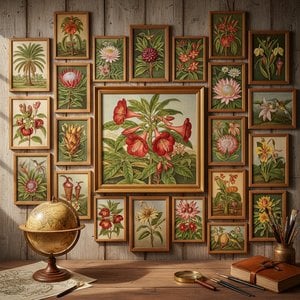
Marianne North's Masterpieces: 25 Botanical Paintings That Bloom With Adventure | ArtsDot
Journey through the vibrant world of Marianne North’s botanical paintings! Explore 25 iconic artworks from this Victorian artist, celebrating exotic flora & travel. Find museum-quality reproductions and curated decor ideas at ArtsDot.com.

John Frederick Lewis: Orientalism, Detail & Genre Painting in 19th-Century British Art
Explore the captivating Orientalist paintings of John Frederick Lewis! Discover his mastery of detail, genre scenes & influence on 19th-century British art. Learn about his life, techniques & legacy at ArtsDot.

Beyond Graffiti: Exploring the Evolution & Cultural Impact of Street Art for Collectors
Explore the evolution of street art from rebellious origins to a respected fine art form. Discover key artists like Banksy & learn how to collect urban art with confidence. Expert insights for discerning investors.

Beyond the Gallery Walls: The Rise of Contemporary Street Art
Explore the captivating world of contemporary street art! Discover its history, influential artists like Banksy, and evolving role in urban culture. Expert insights & analysis.

Scenes of Daily Life: A Comprehensive Exploration of Genre Painting Through History
Explore the rich history of genre painting! Discover Dutch Masters & European artists who captured everyday life with stunning realism. Learn about symbolism, techniques & lasting influence.


