


 Preview
 Send
Send Share
Share
 Details
 Guide
Guide

 Download
 Similars
 X-Ray
X-Ray Diaporama
 Stats
StatsProject for
 50.0 x 55.0 cm
 MAGA - Museo Arte Gallarate
 Read More
The artwork displayed on this page is protected by copyright law, which means we cannot legally create or sell an identical reproduction. This protection is enforced under international agreements such as the Berne Convention and by national laws, including those outlined by the U.S. Copyright Law - Title 17.
This method fully complies with copyright regulations because it does not involve copying or duplicating the protected artwork. Instead, it is a creative reinterpretation - a new painting that is influenced by the original but not identical to it.
Giclée / Art Print
Museum-quality giclée or canvas print with fast production and flexible finish options. ( Buy Hand Made Painting Switch to Digital Image)




































Pick from our preset sizes that match the artwork's original proportions.

Type the width and the height you need, to fit your frame or your wall. A print can only be cut, never made bigger than the picture, so a size with a different shape loses a part of the image. We send you a digital mockup to approve before we print anything. The picture shown on this page does not show the real cut — only the mockup does.
Worldwide Delivery () in 2 weeks instead of standard 4/5 weeks. (22 October)

Free Worldwide Express Shipping

High-Quality Linen Canvas

Full Shipping Insurance

Customs Tax Refund Guarantee

True Color Matching Guarantee

100-Day Return Policy (Defects Only)

100% Money-Back Guarantee

Bulk Discount Offer
 Glass option is only available in size under 110 CM

Project for
Giclée / Art Print
Reproduction Size
-


Total Price
$ 63
Related Artworks


Artist Biography
Bruno Munari: A Life in Art and Design
Early Life and Education
- Born on October 24, 1907, in Milan, Italy, Bruno Munari was a pivotal figure in 20th-century art, design, and graphics.
- His childhood was spent largely in Badia Polesine after his family relocated to run a hotel. This rural upbringing likely fostered an early sense of observation and resourcefulness.
- He returned to Milan in 1926 and initially worked with his engineer uncle before dedicating himself to artistic pursuits.
Futurism and Early Artistic Development
- In 1927, Munari embraced the principles of Futurism, aligning himself with Filippo Marinetti and participating in numerous exhibitions. This early exposure to the movement’s dynamism and rejection of traditional forms profoundly shaped his aesthetic sensibility.
- From 1930 to 1938, he collaborated with Riccardo Castagnedi (Ricas) as a graphic designer, honing his skills in visual communication.
- A trip to Paris in 1933 brought him into contact with influential figures like Louis Aragon and André Breton, broadening his artistic horizons.
Mid-Career: Design, Publishing & War Years
- Between 1938 and 1943, Munari served as a press graphic designer for Mondadori publishing house, also acting as art director for the magazines Tempo and Grazia.
- During this period, he began designing books for children, initially inspired by his son Alberto. This marked the beginning of a lifelong interest in pedagogy and accessible design.
- The experience of World War II led Munari to disassociate himself from Italian Futurism due to its increasingly proto-fascist leanings.
Concrete Art & Post-War Innovation
- In 1948, Munari co-founded Movimento Arte Concreta (MAC), the Italian movement for Concrete Art, alongside Gillo Dorfles, Gianni Monnet, and Atanasio Soldati. This signaled a shift towards abstraction and geometric forms.
- The 1940s and 50s saw Munari designing a wide range of objects for Italian industry – from light fixtures and ashtrays to televisions, espresso machines, and toys. He believed in the integration of art and everyday life.
Later Life & Legacy
- Concerned about misinterpretations of his diverse body of work, Munari enlisted art historian Miroslava Hajek in 1969 to curate a selection of his most important pieces. This collection aimed to showcase the thematic coherence and evolution of his artistic philosophy.
- Munari’s work extended beyond traditional art forms; he explored games, didactic methods, movement, tactile learning, and creativity, demonstrating a holistic approach to design and education.
- He died in Milan on September 29, 1998, leaving behind a vast and influential legacy.
Major Achievements & Historical Significance
- Pioneering multidisciplinary artist: Munari seamlessly blended art, design, and pedagogy, challenging conventional boundaries.
- Influence on Italian Design: His industrial designs helped shape the aesthetic of post-war Italy.
- Advocate for Tactile Learning: He developed innovative educational materials that emphasized hands-on experience and sensory exploration.
- Champion of Concrete Art: Munari’s contribution to MAC solidified his place in the history of abstract art.
- Lasting Impact on Graphic Design: His graphic work remains influential for its clarity, simplicity, and innovative use of typography.
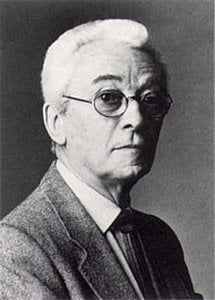
Bruno Munari
1907 - 1998 , Italy
Quick Facts
- Name: Bruno Munari
- Movement:
- Futurism
- Concrete Art
- Birth Date: 1907-10-24
- Death Date: 1998-09-29
- Birth Place: Milan, Italy
- Nationality: Italian
- Date Of Birth: 1907
- Date Of Death: 1998
- Influenced By: Marinetti
- Notable Works:
- Otto colori in un quadrato
- Progetto grafico di tessuto per la X Triennale di Milano
- Place Of Birth: Milan, Italy


