

 Preview
 Send
Send Share
Share
 Details
 Guide
Guide

 Download
 Similars
 X-Ray
X-Ray Diaporama
 Q&A
Q&A Stats
StatsThe Annunciation

- 145.0 x 120.0 cm


 Read More
Giclée / Art Print
Museum-quality giclée or canvas print with fast production and flexible finish options. ( Buy Hand Made Painting Switch to Digital Image)




P118B $10

P118H $10

P118W $10

P438Z $10

P508JH $12

P508YH $12

P805H $10

P805Z $10

P919BZ $10

P919G $10

P919XJ $10

P959ZH $10

P968JZ $12

W106C $8

W218G $10

W218JH $8

W218Y $10

W307PJ $10

W316G $10

W316PJ $8

W316Y $10

W398PJ $8

W4111J $10

W500HY $15

W500JH $15

W692G $12

W849H $8

W940BG $15

W953PJ $8




Pick from our preset sizes that match the artwork's original proportions.

Type the width and the height you need, to fit your frame or your wall. A print can only be cut, never made bigger than the picture, so a size with a different shape loses a part of the image. We send you a digital mockup to approve before we print anything. The picture shown on this page does not show the real cut — only the mockup does.
Worldwide Delivery () in 2 weeks instead of standard 4/5 weeks. (17 November)

Free Worldwide Express Shipping

High-Quality Linen Canvas

Full Shipping Insurance

Customs Tax Refund Guarantee

True Color Matching Guarantee

100-Day Return Policy (Defects Only)

100% Money-Back Guarantee

Bulk Discount Offer
 Glass option is only available in size under 110 CM

The Annunciation
Giclée / Art Print
Reproduction Size
-


Total Price
$ 63
The Divine Encounter: An Examination of The Annunciation
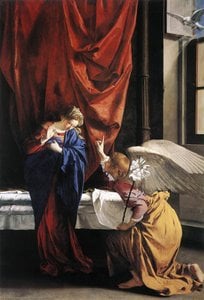
To stand before this depiction of The Annunciation is to step across the threshold into a moment suspended between the earthly and the divine. Bernardo Strozzi, master of the Italian Baroque, has captured not merely an event, but a profound spiritual resonance. The scene unfolds with breathtaking narrative tension: the Virgin Mary, poised in contemplation, receiving the monumental news that will alter the course of human history. Her gentle focus upon the book she holds suggests a life already steeped in sacred knowledge, grounding the miraculous within the realm of scholarly devotion.
The composition is richly populated, drawing the viewer into its intimate drama. The angel, an embodiment of celestial messenger, extends his hand with palpable grace toward Mary. This gesture is more than mere communication; it is a conduit for divine will, rendered with Strozzi’s characteristic dramatic flair. Observe the surrounding figures—those witnesses on either side—whose varied gazes and postures serve to amplify the gravity of the moment, creating a vibrant tapestry of human reaction to the sublime.
Baroque Drama and Venetian Light
Painted in 1643, this work sits squarely within the heart of the Baroque period, an era defined by emotional intensity, dramatic movement, and heightened theatricality. Strozzi, whose career saw him traverse Genoa and ultimately flourish in Venice, masterfully employs the techniques that characterize this style. While his early training provided a solid foundation, it is here that his mature handling of light and shadow—the very essence of Baroque drama—shines through. The interplay between illuminated skin tones and the deeper, more shadowed folds of drapery gives the scene an almost tangible dimensionality.
The technique itself speaks to skilled craftsmanship. Strozzi’s ability to render textures—from the soft fall of Mary's garments to the implied sheen on the angel's robes—is remarkable. It is a painting that demands close viewing, rewarding the observer with details that reveal layers of artistic intention.
Symbolism Woven into Sacred Space
Every element within this canvas seems imbued with symbolic weight. The book Mary studies represents scripture and divine law, suggesting that her acceptance of God's plan is an act both miraculous and intellectually understood. The presence of the decorative object near the bottom right corner, perhaps a vase or altar piece, anchors the sacred narrative within a recognizable, richly furnished domestic or chapel setting. These details prevent the scene from feeling purely ethereal; instead, they root the divine mystery in a tangible, beautiful reality.
The overall emotional impact is one of hushed awe. It is not the bombast of pure ecstasy, but rather the profound quietude that follows revelation—a moment where the soul stills itself before the infinite. This balance between dramatic action and serene contemplation makes it endlessly captivating to the modern eye.
A Statement for the Collector's Space
For those seeking an artwork that transcends mere decoration, this reproduction offers a window into Counter-Reformation spirituality rendered with unparalleled artistic vigor. Its scale (145 x 120 cm) allows it to command attention in a grand hall or a richly appointed study, serving as the focal point for contemplation. Owning a piece echoing Strozzi’s genius means acquiring not just pigment on canvas, but a narrative of faith, drama, and masterful technique—a timeless conversation starter that speaks volumes about an appreciation for history's greatest artistic achievements.
Questions & Answers
When and with what materials was "The Annunciation" made?
"The Annunciation" was created in 1643 using the oil on canvas technique. Material and date describe how and when the original was made.
Who is the artist behind "The Annunciation"?
"The Annunciation" is attributed to Bernardo Strozzi.
What kind of colors does "The Annunciation" use?
The colors of "The Annunciation" form an earthy palette. This classification describes the dominant color families.
Related Artworks




Artist Biography
early life and training
bernardo strozzi, also known as il cappuccino and il prete genovese, was a prominent italian baroque painter and engraver born in 1581 in genoa, italy. his early training took place in the workshop of cesare corte, a minor genoese painter, under whose guidance strozzi developed his skills until 1596. he then joined the workshop of pietro sorri, an innovative sienese painter, who led strozzi towards a more naturalistic style.artistic career
strozzi's career can be divided into two main periods: his early years in genoa and his later work in venice. in genoa, he worked on various projects, including the frescoes in the choir of the san domenico church, commissioned by members of the doria family.- key works:
- the vision of saint dominic (paradise) ( preparatory oil bozzetto for the vault, located at the museo dell’accademia ligustica in genoa)
- portrait of doge francesco erizzo (painted soon after his arrival in venice)
influence and legacy
strozzi's powerful art, characterized by rich colors and broad brushstrokes, had a significant impact on the artistic developments in both genoa and venice. he is considered one of the principal founders of the venetian baroque style.- notable patrons:
- doge francesco erizzo
- catholic cardinal and patriarch of venice federico baldissera
- prominent venetian artists, including claudio monteverdi and barbara strozzi
later life and death
strozzi's later years were marked by his work as an engineer. he died in venice in 1644, leaving behind a legacy as a versatile and prolific artist. view more works by bernardo strozzi on ArtsDot: [https://ArtsDot.com/@/bernardo-strozzi](https://ArtsDot.com/@/bernardo-strozzi) explore the pinacoteca di vicenza, italy, featuring works from various periods and styles: /en/art/show/art-d3afpd-en/
Bernardo Strozzi
1581 - 1644 , Italy
Quick Facts
- Artistic Movement Or Style: Baroque
- Artists Or Movements Influenced By This Artist: ['Venetian Baroque']
- Artists Who Influenced This Artist:
- Cesare Corte
- Pietro Sorri
- Date Of Birth: 1581
- Date Of Death: 1644
- Full Name: Bernardo Strozzi
- Nationality: Italian
- Notable Artworks:
- Vision of St. Dominic
- Portrait of Doge Erizzo
- St Lawrence Giving Alms
- Place Of Birth: Genoa, Italy
Related Articles

Sacred Narratives: Decoding the Iconography and Artistry of the Annunciation
Explore the profound symbolism and mastery behind Renaissance Annunciation paintings. Discover the secrets of these sacred masterpieces now.

Mastering the Divine: The Top 25 Artworks by Duccio di Buoninsegna
Journey through the divine elegance of Duccio di Buoninsegna. Explore 25 iconic masterpieces of the Sienese School, from gold-leafed icons to humanized sacred narratives. Find museum-quality art reproductions and decor inspiration. Discover all masterpieces on ArtsDot.com.

Dutch Baroque Masters: 10 Paintings That Shaped an Era | ArtsDot
Journey through the Golden Age with our guide to the Top 10 Dutch Baroque masterpieces! Explore iconic paintings by Rembrandt, Vermeer & Frans Hals. Find museum-quality art reproductions and elevate your home decor at ArtsDot.com.

Shadows of Piety: The Artistry of Prayer and Devotion in the Classical Canon
Explore the profound mastery of Baroque religious art through masters like Zurbarán. Journey into the divine with our expert guide.

Divine Masterpieces: The Top 25 Artworks by Fra Angelico
Explore 25 iconic Fra Angelico masterpieces of the Early Renaissance. Discover the divine beauty of these sacred works on ArtsDot.com.


