


 Preview
 Send
Send Share
Share
 Details
 Guide
Guide

 Download
 Similars
 X-Ray
X-Ray Diaporama
 Stats
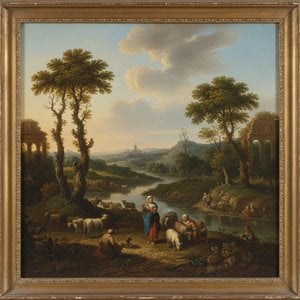
StatsLandscape with Quarries
 Romanticism
 32.0 x 45.0 cm
 Read More
Hand Made Oil Reproduction
Hand-painted oil on canvas in your size and frame, made to order by our artists. ( Switch to Print Switch to Digital Image)




































Pick from our preset sizes that match the artwork's original proportions.

You may enter your own dimensions to fit a specific frame or space. If your selected size does not match the original image's proportions, we will either crop the artwork or extend the painting with additional hand-painted elements. A digital mockup will be sent for your approval before production begins.
Please note that the on-screen preview does not reflect the actual cropping or extension. Only the mockup will accurately show the final composition.
While custom sizes are available, we recommend selecting a dimension from the predefined list to preserve the original proportions.
After order, ArtsDot.com team will email client for instructions and provide a mockup preview
Worldwide Delivery () in 3/4 weeks instead of standard 5 weeks. (23 September). No compromise on quality.

Free Worldwide Express Shipping

High-Quality Linen Canvas

Full Shipping Insurance

Customs Tax Refund Guarantee

True Color Matching Guarantee

100-Day Return Policy (Defects Only)

100% Money-Back Guarantee

Bulk Discount Offer
 Glass option is only available in size under 110 CM

Landscape with Quarries
Reproduction Medium
Reproduction Size
-


Total Price
$ 263
Related Artworks


Artist Biography
A Brush with Tranquility: The Life and Landscapes of Benjamin Barker II
Benjamin Barker II, born in 1776 and passing in 1838, occupies a fascinating, yet often understated, position within the constellation of English landscape painters. While not as widely celebrated as his contemporaries like Turner or Constable, Barker’s idyllic scenes of Wales, rural England, and captivating coastal views offer a poignant glimpse into the romantic sensibility that permeated early 19th-century art. His life, though relatively undocumented, reveals a familial connection to artistic practice – he was the brother of Thomas Barker ‘of Bath’, himself a respected landscape artist – suggesting an environment steeped in creative encouragement. This sibling relationship likely played a crucial role in shaping Benjamin’s initial artistic direction and providing access to networks within the burgeoning art market.Early Influences and Artistic Development
The precise details of Barker's formal training remain elusive, but it is reasonable to assume he benefited from the established traditions of English landscape painting prevalent at the time. Artists like Richard Wilson, renowned for his Claude-esque depictions of Welsh scenery, undoubtedly exerted an influence on Barker’s early work. The emphasis on atmospheric perspective, soft light, and a harmonious composition – hallmarks of Wilson's style – are readily apparent in many of Barker’s paintings. However, unlike Wilson’s often idealized and classical approach, Barker seemed drawn to a more intimate and realistic portrayal of the countryside. He possessed a keen eye for detail, capturing the nuances of rural life with remarkable sensitivity. His brother Thomas, known for his picturesque views around Bath, likely provided guidance in technique and composition during these formative years. The shared aesthetic sensibilities between the two brothers suggest a period of close collaboration or at least mutual artistic exchange.Welsh Landscapes and Rural Idylls: A Defining Style
Barker’s most recognizable works are undoubtedly his depictions of Wales. He wasn't merely documenting topography; he was crafting an emotional response to the land. His paintings evoke a sense of tranquility, peace, and a deep connection with nature. Rolling hills bathed in golden light, meandering rivers reflecting the sky, and quaint villages nestled amongst verdant valleys – these are recurring motifs in his oeuvre. He skillfully captured the atmospheric conditions unique to Wales, often employing a soft palette and delicate brushwork to convey the subtle shifts in weather and mood. Beyond Wales, Barker also painted scenes of rural England, focusing on idyllic farm life and picturesque coastal views. These works share a similar aesthetic sensibility – an emphasis on harmony, balance, and a celebration of the simple beauty found in everyday life. His paintings were popular with collectors seeking to evoke a sense of nostalgia for a vanishing rural world.Technique and Materials
Barker primarily worked in oil on canvas, employing a technique that prioritized subtlety and atmospheric effect. He wasn’t known for bold experimentation or dramatic brushstrokes; instead, he favored a layered approach, building up tones and textures to create a sense of depth and realism. His palette was typically restrained, dominated by earth tones – greens, browns, ochres, and blues – which contributed to the overall harmonious quality of his paintings. He demonstrated a particular skill in rendering light and shadow, creating a luminous effect that draws the viewer into the scene. While not extensively documented, it is likely he utilized traditional varnishes and mediums common during the period to achieve the desired finish and protect his work.Historical Significance and Legacy
Although Benjamin Barker II did not achieve the same level of fame as some of his contemporaries, his paintings remain valuable historical documents and aesthetically pleasing works of art. They offer a fascinating insight into the romantic sensibility that characterized early 19th-century England, particularly its fascination with the beauty of nature and the idyllic rural lifestyle. His work provides a counterpoint to the more dramatic and experimental landscapes of artists like Turner, offering a quieter, more intimate perspective on the English countryside.- Barker’s paintings are representative of a specific moment in art history – a transition between the classical traditions of landscape painting and the emergence of new artistic styles.
- His depictions of Wales contribute to our understanding of how the Welsh landscape was perceived and valued during this period.
- The enduring appeal of his work lies in its ability to evoke a sense of tranquility, peace, and connection with nature – qualities that continue to resonate with viewers today.

benjamin barker ii
1776 - 1838
Quick Facts
- Artistic Movement Or Style: Landscape painting
- Artists Or Movements Influenced By This Artist: ['Romanticism']
- Artists Who Influenced This Artist: ['Thomas Barker']
- Date Of Birth: 1776
- Date Of Death: 1838
- Full Name: Benjamin Barker II
- Nationality: English
- Notable Artworks:
- Italianate Landscape
- Landscape with Cattle
- Alpine Scene
Related Articles

Romantic Landscapes: 10 Masterpieces for Your Home | ArtsDot
Journey through 10 Romantic landscape masterpieces by Friedrich, Turner & Cole. Explore emotional art, sublime nature scenes & iconic 19th-century paintings. Find museum-quality reproductions for your home at ArtsDot.com – discover the full collection online!
Nicolaes Berchem: Dutch Golden Age Pastoralism & the Evolution of Landscape Painting
Explore the captivating world of Nicolaes Berchem, a leading Dutch Golden Age painter. Discover his idyllic landscapes, masterful technique & lasting influence on art history. Learn more at ArtsDot.

Charles Leickert: Capturing the Dutch Golden Age Light – A Comprehensive Study of Technique, Context, and Legacy
Explore the captivating winter landscapes of Charles Leickert, a master of Dutch Golden Age light & atmosphere. Discover his techniques, symbolism, and lasting legacy – a comprehensive study for art enthusiasts and collectors.

Golden Light & Dutch Skies: Bringing the Magic of Dutch Golden Age Landscapes into Your Home
Transform your home with the breathtaking light of Dutch Golden Age landscapes. Discover how hand-painted oil reproductions of masterworks like Ruisdael and Vermeer bring timeless elegance, atmosphere, and soulful texture to modern interiors. Elevate your space with museum-quality art.

Dutch Masters: 10 Golden Age Paintings That Still Inspire |
Journey into the Dutch Golden Age! Explore 10 iconic paintings by Rembrandt, Vermeer & Hals. Discover the stories behind these Baroque masterpieces and find museum-quality art reproductions to elevate your home decor on .


