
 Oil On Copper
- Italianate Landscape
 1629
1629 21.0 x 21.0 cm
 Fitzwilliam College

The picture follows your choices: , .
Collectible Description
Bartholomeus Breenbergh (before 13 November 1598 – after 3 October 1657) was a Dutch Golden Age painter of Italian and Italianate landscapes, in Rome (1619-1630) and Amsterdam (1630-1657). He bridged styles between Bril and Lastman, inspiring artists like Claude Lorrain. His painting 'Classical Landscape with Rocks' showcases a tranquil mountain scene with figures gathered around a fire.
 Read More
Artist Biography
Bartholomeus Breenbergh (1598-1657): Dutch Golden Age painter of Italianate landscapes & biblical scenes. Influenced by Bril, Poelenburgh & Lastman, he bridged styles and inspired artists like Claude Lorrain.
Hand Made Oil Reproduction
Hand-painted oil on canvas in your size and frame, made to order by our artists. ( Switch to Print Switch to Digital Image)
More about this painting
 Preview
 Send
Send Share
Share
 Details
 Guide
Guide

 Download
 Similars
 X-Ray
X-Ray Diaporama
 Q&A
Q&A Stats
StatsOrder your painting in four simple steps
Take your time. You can change any answer; the price in your order card follows each choice.
1 Step one of four
Which size would you like?
These sizes keep the proportions of the original painting. The drawing shows your choice on a wall, above a two-metre sofa.
Or give your own measurements
Pick from our preset sizes that match the artwork's original proportions.

Type the width and the height you need, to fit your frame or your wall. This is hand-painted, so for a size with a different shape the artist can paint a bit more around the picture, or cut a bit — you choose. We send you a digital mockup to approve before the painting starts. The picture shown on this page does not show the real result — only the mockup does.
2 Step two of four
How should it be prepared: rolled, stretched or framed?
The prices below are for the size you chose in step one.
Choose the edges of the stretched canvas
Choose your frame

White $1

Blurside $1

Extended $1

P118B $10

P118H $10

P118W $10

P438Z $10

P508JH $12

P508YH $12

P805H $10

P805Z $10

P919BZ $10

P919G $10

P919XJ $10

P959ZH $10

P968JZ $12

W106C $8

W218G $10

W218JH $8

W218Y $10

W307PJ $10

W316G $10

W316PJ $8

W316Y $10

W398PJ $8

W4111J $10

W500HY $15

W500JH $15

W692G $12

W849H $8

W940BG $15

W953PJ $8

H24-GOLD $30

H24-SILVER $30

H36-GOLD $45

H36-SILVER $45
Framed
Moulding: . Overall size with the frame: .
3 Step three of four
Would you like anything changed in the painting?
Most people answer no. Because each painting is made by hand, our artist can also adapt it for you.
After order, ArtsDot.com team will email client for instructions and provide a mockup preview
4 Step four of four
A few finishing options
All of them are optional. The answers already selected cost nothing extra.
Who paints it?
Worldwide Delivery () in 3/4 weeks instead of standard 5 weeks. (30 October). No compromise on quality.
A nameplate, as in a museum?
Engraved Bronze Plaque Details
This elegant plaque features the artist's name and the title of the artwork, finely engraved for a timeless presentation.
It is made from bronze with a refined, elegant finish. The text is precisely laser-engraved for a sharp and permanent result. Measuring 9x2 cm, the plaque is compact yet easy to read. It's built to be durable and scratch-resistant, offering a professional, museum-quality look. Mounting is simple thanks to the included adhesive backing.
Transparent Acrylic Plaque Details
The plaque includes essential engraved details such as the artist's name, the title of the artwork, the date it was created, the type of media used-like oil on canvas or watercolor-a brief description of the piece, and a QR code that links to the complete artwork information.
It is crafted from clear acrylic, offering a sleek, modern appearance. The text is UV-engraved in black to ensure strong visual contrast. With a size of 10x15 cm, it ensures optimal readability. It comes equipped with two metal hooks for secure wall mounting. The plaque is designed to be weather-resistant, making it suitable for various environments, and it includes interactive features that work seamlessly with smartphone scanning.
Black Acrylic Plaque Details
This elegant plaque includes engraved information such as the artist's name, the title of the artwork, the date it was created, the type of media used (like oil on canvas or watercolor), a short description of the artwork, and a QR code for quick access to more information.
The plaque itself is made from refined black acrylic with a premium finish. The text is laser-engraved in white for high contrast and readability. Its size is 10x15 cm, designed to be easy to read. It comes with two metal hooks for professional mounting. The design is sleek and fits any interior style. It is also weather-resistant and durable, with built-in digital integration for mobile compatibility.
A protective varnish?
When do you need it?
✓ Check and order
Your painting, as you ordered it

Classical Landscape with Rocks
Reproduction Medium
Reproduction Size
-

Elite Senior Artist
More detail, finesse, and extra production time
-

Reproduction Frame
-
-
For artworks or reproductions larger than 105 cm (approximately 41 inches) on any side, the frame will be shipped as a kit, disassembled. This method ensures safe delivery and prevents damage during transport.
Professional assembly required - this is not a DIY product.
The kit must be assembled and the canvas stretched by an experienced professional framer, using wood glue (not supplied), a canvas stretching plier and clamps to hold the bars square while the glue dries. Incorrect assembly or uneven canvas tension can permanently damage the artwork and is not covered by our warranty.
 For artworks or reproductions larger than 105 cm (approximately 41 inches) on any side, the frame will be shipped as a kit, disassembled. This method ensures safe delivery and prevents damage during transport.
All solid wood bars are included, precisely cut to size.
Assembled with the screws provided, plus wood glue for the corner joints, which is not supplied and must be sourced by your framer.
Professional tools are required and not included: a canvas stretching plier (tensioner) and clamps to hold the bars square while the glue dries.
Important:
The corner joints require wood glue, the bars must be held with clamps until the glue is fully dry, and tightening the canvas on the assembled frame requires a canvas stretching plier. None of these are included in the kit. Please arrange an experienced professional framer before ordering this size.

Nameplate
-
-

Protective Varnish
Glossy Varnish (enhances colors, protects against light/moisture)
-

Customize My Artwork
Examples of what can be changed: Replace face with customer photo; Add pet (e.g., replace cat with dog); Include hidden message in background; Change background landscape or elements.
-

Urgent
Worldwide Delivery () in 3/4 weeks instead of standard 5 weeks. (30 October). No compromise on quality.
-
Express Shipping
Worldwide Delivery () in 5 weeks. (6 November).
Included
Total Price
$ 263
Glass option is only available in size under 110 CM
Included with every order
- Free Worldwide Express Shipping
- High-Quality Linen Canvas
- Full Shipping Insurance
- Customs Tax Refund Guarantee
- True Color Matching Guarantee
- 100-Day Return Policy (Defects Only)
- 100% Money-Back Guarantee
- Bulk Discount Offer


Classical Landscape with Rocks by Bartholomeus Breenbergh
Bartholomeus Breenbergh (1598–1657), a Dutch Golden Age painter, stands as an emblem of artistic innovation during his era. Born before November 13, 1598, likely in Deventer, Netherlands, his early life remains shrouded in relative obscurity—a fact that fueled the fervent curiosity of scholars like Arnold Houbraken who tirelessly sought to illuminate Breenbergh’s biography.
His artistic journey commenced with formative training under Pieter Lastman and Jacob Symonsz Pynas in Amsterdam, absorbing influences from the burgeoning landscape movement. Notably, Lastman's dramatic narrative style subtly permeated Breenbergh’s oeuvre, shaping his approach to portraying scenes of human activity interwoven with the grandeur of nature.
Roman Sojourn and the Italianate Style
A pivotal moment arrived in 1619 when Breenbergh embarked on a transformative voyage to Rome—a city renowned for its artistic patronage and stylistic experimentation. This immersion within the Roman landscape profoundly impacted his artistic sensibilities, propelling him toward an Italianate style characterized by idealized forms and luminous color palettes. He diligently studied the works of Claude Lorrain and Andrea Pozzo, absorbing their mastery of atmospheric perspective and compositional grandeur.
Technique and Composition
Breenbergh’s technique was meticulous—primarily employing oil paint on copper—a medium favored for its durability and ability to capture subtle tonal variations. The painting's composition is deliberately balanced, featuring a prominent mountain dominating the horizon line against which figures are positioned in the foreground. Careful attention was paid to detail, particularly in rendering rocks and foliage, reflecting the prevailing artistic conventions of his time.
Symbolism and Emotional Impact
“Classical Landscape with Rocks” transcends mere visual representation; it embodies a deeper symbolic resonance. The depiction of people gathered around a fire speaks to themes of human resilience and communal spirit—a poignant reminder of humanity’s connection to the natural world. Furthermore, the cloudy sky contributes to an atmosphere of contemplative solemnity, inviting viewers to contemplate the sublime beauty and enduring power of nature.
Fitzwilliam Museum Reproduction
Currently housed in the Fitzwilliam Museum in Cambridge, England (Accession number 431), this artwork exemplifies the artistic achievements of the Dutch Golden Age. Its reproduction offers a captivating glimpse into Breenbergh’s vision—a testament to his skill as a painter and his contribution to the legacy of European art history.
Questions & Answers
Which artist and which style stand behind "Classical Landscape with Rocks"?
Bartholomeus Breenbergh created "Classical Landscape with Rocks" within the Italianate Landscape movement.
What size and orientation are recommended for a print of "Classical Landscape with Rocks" by Bartholomeus Breenbergh?
A print of "Classical Landscape with Rocks" by Bartholomeus Breenbergh is recommended at a medium size in square orientation.
What is the perceived brightness of "Classical Landscape with Rocks" by Bartholomeus Breenbergh?
In terms of perceived brightness, "Classical Landscape with Rocks" by Bartholomeus Breenbergh is brilliant.
Related Artworks


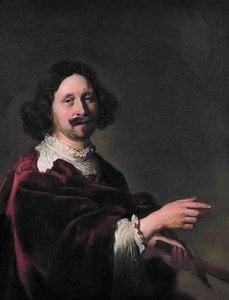
Bartholomeus Breenbergh
1598 - 1657, Netherlands
Artist Biography
Early Life and Formation
The story of Bartholomeus Breenbergh, a pivotal figure in the Dutch Golden Age, begins shrouded in some mystery. Born before November 13, 1598, likely in Deventer, Netherlands, his early years are sparsely documented. A significant shift occurred in young Breenbergh’s life with the passing of his father in 1607, prompting a family relocation to Hoorn. It was here, amidst the bustling port town, that he first encountered the world of art, becoming a contemporary of Jacques Waben and receiving initial training – though from one of the many lesser-known landscape painters active in Amsterdam during those years. Formal instruction followed under the tutelage of Pieter Lastman and Jacob Symonsz Pynas, laying the groundwork for his future artistic explorations. These early influences would subtly weave their way into his mature style, particularly Lastman’s dramatic narrative flair.Roman Sojourn and the Italianate Style
In 1619, Breenbergh embarked on a transformative journey to Rome, a city that would indelibly shape his artistic vision. For approximately eleven years, he immersed himself in the vibrant Roman art scene, collaborating with Flemish painter Frans van de Kasteele and falling under the spell of Paul Bril’s luminous landscapes. It was during this period that Breenbergh began developing his signature Italianate style – idealized depictions of the Roman Campagna, bathed in a warm, golden light. He keenly observed the classical ruins scattered across the countryside, incorporating them into compositions that evoked a sense of timeless beauty and melancholic grandeur. His work increasingly resonated with that of Cornelis van Poelenburgh, so much so that distinguishing between their paintings could prove challenging at times. Breenbergh’s embrace of this style wasn't merely aesthetic; it reflected a broader European fascination with classical antiquity and the allure of the Italian landscape. He became one of the founding members of the Bentvueghels, a society of Dutch and Flemish painters in Rome known for their boisterous camaraderie and often satirical nicknames – Breenbergh earned the moniker “het fret” (the ferret).Return to Amsterdam and Artistic Maturity
Around 1630, Breenbergh returned to Amsterdam, bringing with him the artistic sensibilities honed during his Roman years. He quickly established himself as a sought-after painter, marrying in 1633 and even securing an annual stipend from King Charles I of Britain – a testament to his growing reputation. However, his work began to evolve beyond pure landscape painting. Influenced by artists like Pieter Lastman once more, he started integrating mythological and biblical figures into his Italianate settings, creating scenes that were both visually captivating and rich in narrative depth. This fusion of northern European storytelling with southern European landscapes resulted in a monumental style characterized by expressive figure types and dramatic lighting effects. While Breenbergh accepted only one registered pupil, Jan de Bisschop, who studied with him during the 1640s, his influence extended to a wider circle of artists including Jan Linsen, Scipione Compagno, Laurens Barata, Charles Cornelisz. de Hooch and others.Legacy and Historical Significance
Bartholomeus Breenbergh’s contribution to Dutch Golden Age painting lies in his pioneering role in establishing the Italianate landscape style within the Northern European artistic tradition. He masterfully synthesized influences from Pieter Lastman, Nicolaes Moeyaert, Paul Bril, and Cornelis van Poelenburgh, forging a unique and recognizable artistic voice. His ability to seamlessly blend classical ruins, idealized landscapes, and compelling narratives captivated audiences and inspired subsequent generations of landscape painters. He bridged the gap between earlier Dutch masters and later, more refined practitioners like Claude Lorrain, paving the way for a new appreciation of Italianate scenery in Northern European art. Breenbergh’s work helped popularize depictions of classical antiquity and idealized landscapes, shaping the aesthetic preferences of his time and leaving an enduring mark on the history of landscape painting. His paintings continue to resonate today, offering viewers a glimpse into a world where myth, religion, and nature converge in harmonious beauty.


Related Articles

Golden Age Reflections: Dutch Baroque Painting & Cultural Innovation
Explore the Dutch Golden Age of painting! Discover key artists like Vermeer & ter Borch, their innovative techniques, and the rich cultural context behind these Baroque masterpieces. Learn about collecting & appreciating this iconic art period.

Golden Light & Dutch Skies: Bringing the Magic of Dutch Golden Age Landscapes into Your Home
Transform your home with the breathtaking light of Dutch Golden Age landscapes. Discover how hand-painted oil reproductions of masterworks like Ruisdael and Vermeer bring timeless elegance, atmosphere, and soulful texture to modern interiors. Elevate your space with museum-quality art.

Dutch Masters: 10 Golden Age Paintings That Still Inspire |
Journey into the Dutch Golden Age! Explore 10 iconic paintings by Rembrandt, Vermeer & Hals. Discover the stories behind these Baroque masterpieces and find museum-quality art reproductions to elevate your home decor on .