


The picture follows your choices: , .
Collectible Description
Admire 'Standard Bearer,' a powerful Aztec sculpture embodying leadership and military might. This sandstone masterpiece reflects the empire's rich culture & symbolic artistry.
 Read More
Artist Biography
Explore the stunning art of the Aztec Empire! Discover intricate sculptures, vibrant codices & symbolic mosaics reflecting their rich culture & religious beliefs. #AztecArt #Mexico
Hand Made Oil Reproduction
Hand-painted oil on canvas in your size and frame, made to order by our artists. ( Switch to Print Switch to Digital Image)
More about this painting
 Send
Send Share
Share
 Details
 Guide
Guide

 Download
 Similars
 Diaporama
 Q&A
Q&A Stats
StatsOrder your painting in four simple steps
Take your time. You can change any answer; the price in your order card follows each choice.
1 Step one of four
Which size would you like?
These sizes keep the proportions of the original painting. The drawing shows your choice on a wall, above a two-metre sofa.
Or give your own measurements
Pick from our preset sizes that match the artwork's original proportions.

Type the width and the height you need, to fit your frame or your wall. This is hand-painted, so for a size with a different shape the artist can paint a bit more around the picture, or cut a bit — you choose. We send you a digital mockup to approve before the painting starts. The picture shown on this page does not show the real result — only the mockup does.
2 Step two of four
How should it be prepared: rolled, stretched or framed?
The prices below are for the size you chose in step one.
Choose the edges of the stretched canvas
Choose your frame

White $1

Blurside $1

Extended $1

P118B $10

P118H $10

P118W $10

P438Z $10

P508JH $12

P508YH $12

P805H $10

P805Z $10

P919BZ $10

P919G $10

P919XJ $10

P959ZH $10

P968JZ $12

W106C $8

W218G $10

W218JH $8

W218Y $10

W307PJ $10

W316G $10

W316PJ $8

W316Y $10

W398PJ $8

W4111J $10

W500HY $15

W500JH $15

W692G $12

W849H $8

W940BG $15

W953PJ $8

H24-GOLD $30

H24-SILVER $30

H36-GOLD $45

H36-SILVER $45
Framed
Moulding: . Overall size with the frame: .
3 Step three of four
Would you like anything changed in the painting?
Most people answer no. Because each painting is made by hand, our artist can also adapt it for you.
After order, ArtsDot.com team will email client for instructions and provide a mockup preview
4 Step four of four
A few finishing options
All of them are optional. The answers already selected cost nothing extra.
Who paints it?
Worldwide Delivery () in 3/4 weeks instead of standard 5 weeks. (3 November). No compromise on quality.
A nameplate, as in a museum?
Engraved Bronze Plaque Details
This elegant plaque features the artist's name and the title of the artwork, finely engraved for a timeless presentation.
It is made from bronze with a refined, elegant finish. The text is precisely laser-engraved for a sharp and permanent result. Measuring 9x2 cm, the plaque is compact yet easy to read. It's built to be durable and scratch-resistant, offering a professional, museum-quality look. Mounting is simple thanks to the included adhesive backing.
Transparent Acrylic Plaque Details
The plaque includes essential engraved details such as the artist's name, the title of the artwork, the date it was created, the type of media used-like oil on canvas or watercolor-a brief description of the piece, and a QR code that links to the complete artwork information.
It is crafted from clear acrylic, offering a sleek, modern appearance. The text is UV-engraved in black to ensure strong visual contrast. With a size of 10x15 cm, it ensures optimal readability. It comes equipped with two metal hooks for secure wall mounting. The plaque is designed to be weather-resistant, making it suitable for various environments, and it includes interactive features that work seamlessly with smartphone scanning.
Black Acrylic Plaque Details
This elegant plaque includes engraved information such as the artist's name, the title of the artwork, the date it was created, the type of media used (like oil on canvas or watercolor), a short description of the artwork, and a QR code for quick access to more information.
The plaque itself is made from refined black acrylic with a premium finish. The text is laser-engraved in white for high contrast and readability. Its size is 10x15 cm, designed to be easy to read. It comes with two metal hooks for professional mounting. The design is sleek and fits any interior style. It is also weather-resistant and durable, with built-in digital integration for mobile compatibility.
A protective varnish?
When do you need it?
✓ Check and order
Your painting, as you ordered it

Standard Bearer
Reproduction Medium
Reproduction Size
-

Elite Senior Artist
More detail, finesse, and extra production time
-

Reproduction Frame
-
-
For artworks or reproductions larger than 105 cm (approximately 41 inches) on any side, the frame will be shipped as a kit, disassembled. This method ensures safe delivery and prevents damage during transport.
Professional assembly required - this is not a DIY product.
The kit must be assembled and the canvas stretched by an experienced professional framer, using wood glue (not supplied), a canvas stretching plier and clamps to hold the bars square while the glue dries. Incorrect assembly or uneven canvas tension can permanently damage the artwork and is not covered by our warranty.
 For artworks or reproductions larger than 105 cm (approximately 41 inches) on any side, the frame will be shipped as a kit, disassembled. This method ensures safe delivery and prevents damage during transport.
All solid wood bars are included, precisely cut to size.
Assembled with the screws provided, plus wood glue for the corner joints, which is not supplied and must be sourced by your framer.
Professional tools are required and not included: a canvas stretching plier (tensioner) and clamps to hold the bars square while the glue dries.
Important:
The corner joints require wood glue, the bars must be held with clamps until the glue is fully dry, and tightening the canvas on the assembled frame requires a canvas stretching plier. None of these are included in the kit. Please arrange an experienced professional framer before ordering this size.

Nameplate
-
-

Protective Varnish
Glossy Varnish (enhances colors, protects against light/moisture)
-

Customize My Artwork
Examples of what can be changed: Replace face with customer photo; Add pet (e.g., replace cat with dog); Include hidden message in background; Change background landscape or elements.
-

Urgent
Worldwide Delivery () in 3/4 weeks instead of standard 5 weeks. (3 November). No compromise on quality.
-
Express Shipping
Worldwide Delivery () in 5 weeks. (10 November).
Included
Total Price
$ 263
Glass option is only available in size under 110 CM
Included with every order
- Free Worldwide Express Shipping
- High-Quality Linen Canvas
- Full Shipping Insurance
- Customs Tax Refund Guarantee
- True Color Matching Guarantee
- 100-Day Return Policy (Defects Only)
- 100% Money-Back Guarantee
- Bulk Discount Offer


A Sentinel of Power: Exploring the Majesty of “Standard Bearer”
The Aztec sculpture titled "Standard Bearer," a remarkable testament to the artistry and symbolic depth of the pre-Columbian civilization, stands as more than just a carved stone figure. It’s a window into a complex society—a warrior, a leader, a conduit between the earthly realm and the divine. Dating back to approximately 1450-1521 CE, this piece, originating from the region of Veracruz, offers a tangible connection to a world both familiar and profoundly distant, revealing the sophisticated artistic traditions that flourished within the heart of the Aztec Empire.
The sculpture itself is strikingly direct in its composition. A seated figure, rendered with an almost austere formality, dominates the scene. The posture is upright, conveying authority and a sense of unwavering presence. Notice the deliberate simplicity of the form – a testament to the Aztec preference for clarity and symbolic resonance over elaborate ornamentation. The figure’s body is sculpted with powerful lines, suggesting strength and resilience, while the details—the meticulously carved loincloth knot, the carefully positioned ears and nose ornaments—speak volumes about status and ritual significance. These aren't merely decorative elements; they are visual markers of rank within a rigidly structured society.
The Weight of Symbolism: A Banner of Leadership
At first glance, “Standard Bearer” might appear to be a straightforward depiction of a warrior. However, closer examination reveals a profound layer of symbolism woven into every aspect of the sculpture. The central element—the banner or standard held aloft in the figure’s right hand—is not simply a flag; it represents leadership, authority, and connection to the divine. In Aztec culture, such standards were carried by high-ranking officials during ceremonies and military campaigns, serving as a visible symbol of their power and legitimacy.
The specific details surrounding the standard itself are particularly significant. The absence of elaborate decoration suggests a focus on its functional role—a clear visual signal for allies and enemies alike. Furthermore, the figure’s posture – direct and unwavering – reinforces this sense of command. It's as if he is not merely holding the banner but embodying it; projecting an image of strength, stability, and unwavering resolve.
Craftsmanship and Materials: Echoes of Stone
The sculpture’s remarkable quality speaks to the exceptional skill of Aztec artisans working with stone—likely sandstone or a similar durable material. The surface texture is deliberately rough and granular, reflecting the nature of stone carving – a process demanding immense patience and precision. This tactile quality invites us to consider the hands that shaped this piece, connecting us directly to the artists who labored over its creation centuries ago.
The choice of stone itself—a material readily available in the region—reflects both practicality and cultural significance. Stone was a fundamental building block of Aztec society, used extensively in monumental architecture and religious structures. By employing this familiar material, the artisans created a work that resonated with the values and traditions of their people.
A Legacy Etched in Stone: Context and Significance
“Standard Bearer” was produced during a pivotal period in Aztec history—the late Post-Classic era, just before the arrival of the Spanish conquistadors. This context is crucial to understanding the sculpture’s significance. It represents a civilization on the cusp of transformation, grappling with internal conflicts and external threats. The figure's stoic demeanor reflects this sense of impending change, while simultaneously embodying the enduring values of leadership, honor, and resilience.
The sculpture’s journey from its original context to its current presence in museums like the Metropolitan Museum of Art is a poignant reminder of the fragility of cultural heritage. It serves as a powerful symbol of the Aztec Empire's artistic legacy—a legacy that continues to inspire awe and wonder centuries after its creation. Reproductions offer a way to bring this remarkable piece into homes and spaces, allowing us to connect with a civilization both ancient and profoundly relevant.
Questions & Answers
How does "Standard Bearer" by Aztec Empire connect Aztec Empire to the artist's home country?
"Standard Bearer" connects the Aztec Empire movement with Mexico through its creator's birthplace.
How can I view "Standard Bearer" by Aztec Empire as a slideshow?
"Standard Bearer" by Aztec Empire can be viewed as a slideshow on the artwork's Diaporama page.
Can I examine "Standard Bearer" in more detail?
The X-Ray view of "Standard Bearer" by Aztec Empire is on the artwork's X-Ray page: an interactive examination of the image through eleven optical layers.
Related Artworks


Aztec Empire
1300 - 1521, Mexico
Artist Biography
The Echoes of Stone: Exploring the Art and Legacy of the Aztec Empire
The name “Aztec” – derived from the Nahuatl word *ātl-ce-tlācati–tlān*, meaning "people of many forms" – conjures images of a vast, complex empire that dominated Mesoamerica for centuries. More than just warriors and conquerors, the Aztecs were profoundly artistic individuals, weaving intricate beauty into every facet of their lives—from monumental architecture to delicate featherwork, from sacred rituals to daily objects. Their art wasn’t merely decorative; it was a vibrant language, communicating religious beliefs, political power, historical narratives, and social hierarchies within a society both rigidly structured and remarkably innovative.
Born in the early 14th century in Tenochtitlan, the heart of the Aztec Empire, the artistic traditions of the Aztecs were deeply rooted in the legacies of earlier Mesoamerican civilizations. The Olmecs, with their colossal heads and sophisticated calendar systems, the Teotihuacans, renowned for their massive pyramids and urban planning, and the Toltecs, masters of metalworking and sculpture, all contributed to the rich artistic tapestry that the Aztecs inherited. However, the Aztecs weren’t simply imitators; they synthesized these influences with their own unique aesthetic sensibilities, developing a distinctive style characterized by bold colors, intricate geometric patterns, and symbolic representations.
A Palette of Power: Materials and Techniques
Aztec art was remarkably diverse, employing an astonishing range of materials and techniques. Stone carving held a prominent place, exemplified by monumental sculptures depicting deities, rulers, and mythical creatures. The massive Sun Stone (Calendar Stone), discovered in 1946, stands as a testament to their mastery of this medium—a complex, layered stone relief that combined calendrical information with cosmological symbolism. Skilled artisans also worked with wood, clay, feathers – particularly the vibrant quetzal plumes – jade, turquoise, obsidian, and gold, reflecting both wealth and status.
Featherwork was perhaps the most visually arresting aspect of Aztec art. Intricately crafted headdresses, cloaks, shields, and other decorative items were created using thousands of meticulously arranged feathers—a process requiring immense skill and patience. These objects weren’t merely beautiful; they served as potent symbols of authority, religious devotion, and social rank. The colors themselves held specific meanings: blue represented the heavens, green symbolized fertility, red signified warfare, and yellow represented the sun.
Furthermore, Aztec artists were masters of mosaic work, creating stunning decorative panels using small, precisely cut stone tiles. These mosaics adorned temples, palaces, and private residences, adding a layer of visual richness to the built environment. Their pottery was equally impressive, featuring intricate geometric designs and depictions of animals and deities.
The Language of Symbols: Themes and Motifs
Aztec art is replete with symbolism, each image carrying layers of meaning that required careful interpretation by priests, scribes, and rulers. The central deity, Huitzilopochtli, the god of war and sun, was frequently depicted in elaborate headdresses adorned with feathers and precious stones. Quetzalcoatl, the feathered serpent god associated with knowledge, wisdom, and creation, held a prominent place in their pantheon and appeared in numerous artistic representations.
The calendar system—a remarkably sophisticated combination of solar and ritual cycles—was another recurring motif. Images of calendars, glyphs, and astronomical symbols were incorporated into sculptures, mosaics, and codices (illustrated books), reflecting the Aztecs’ deep understanding of time and cosmology. Representations of maize, the staple crop of their diet, symbolized sustenance and fertility. Animal imagery—particularly jaguars, eagles, snakes, and hummingbirds—carried symbolic significance related to power, courage, and divinity.
A Legacy in Fragments: Art and Historical Significance
The Aztec Empire’s sudden collapse at the hands of Spanish conquistadors in 1521 resulted in a devastating loss for Mesoamerican culture. Tragically, much of their artistic heritage was destroyed during the conquest—temples were razed, sculptures smashed, and codices burned. However, despite these losses, fragments of Aztec art survive today, offering invaluable insights into this remarkable civilization.
Notable examples include the Sun Stone, a monumental sculpture that showcases the Aztecs’ advanced knowledge of astronomy and mathematics; intricate featherwork headdresses and cloaks preserved in museums around the world; and surviving codices—handwritten books containing historical accounts, religious beliefs, and calendrical information. The *Colección Andrés Blaisten* in Mexico houses a significant collection of Latin American art, including examples that illuminate Aztec artistic traditions.
The influence of the Aztec Empire’s artistic legacy can still be seen today, inspiring contemporary artists and designers alike. Their innovative techniques, symbolic imagery, and profound connection to nature continue to resonate with audiences worldwide. Exploring the art of the Aztecs is not merely an exercise in historical appreciation; it's a journey into the heart of a complex and captivating civilization—a testament to human creativity, ingenuity, and spiritual depth.
To explore more artworks from the Aztec Empire and other notable artists, visit ArtsDot.com.


Related Articles

The Enduring Form: Sculpture Across History, Technique & Emotional Resonance
Explore the rich history of sculpture with ArtsDot. Discover key techniques, influential artists & investment potential for discerning collectors. Expert insights into valuing and collecting timeless masterpieces.

Bronze Age to Modern Masters: 10 Sculptures That Redefined Art | ArtsDot
Journey through art history with 10 legendary bronze sculptures – from Michelangelo's David to Rodin’s Thinker. Explore the stories, techniques & timeless beauty of these masterpieces. Find museum-quality reproductions & elevate your home decor on ArtsDot.com.
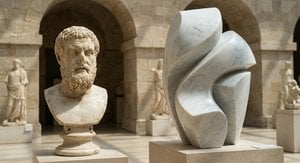
The Enduring Allure of Marble in Art History: From Classical Sculpture to Modern Abstraction
Explore the captivating history of marble sculpture from ancient Greece to modern art. Discover renowned artists like Canova & Michelangelo, carving techniques, and investment insights at ArtsDot.