


 Preview
 Send
Send Share
Share
 Details
 Guide
Guide

 Download
 Similars
 X-Ray
X-Ray Diaporama
 Stats
StatsHome From Sea
 Oil On Canvas
- WallArt
- Pre-Raphaelite Brotherhood
 1856
1856 51.0 x 65.0 cm
 Ashmolean Museum
 Read More
Giclée / Art Print
Museum-quality giclée or canvas print with fast production and flexible finish options. ( Buy Hand Made Painting Switch to Digital Image)




P118B $10

P118H $10

P118W $10

P438Z $10

P508JH $12

P508YH $12

P805H $10

P805Z $10

P919BZ $10

P919G $10

P919XJ $10

P959ZH $10

P968JZ $12

W106C $8

W218G $10

W218JH $8

W218Y $10

W307PJ $10

W316G $10

W316PJ $8

W316Y $10

W398PJ $8

W4111J $10

W500HY $15

W500JH $15

W692G $12

W849H $8

W940BG $15

W953PJ $8




Pick from our preset sizes that match the artwork's original proportions.

You may enter your own dimensions to fit a specific frame or space. If your selected size does not match the original image's proportions, we will either crop the artwork or extend the image with a mirrored or solid-fill edge. A digital mockup will be sent for your approval before production begins.
Please note that the on-screen preview does not reflect the actual cropping or extension. Only the mockup will accurately show the final composition.
While custom sizes are available, we recommend selecting a dimension from the predefined list to preserve the original proportions.
Worldwide Delivery () in 2 weeks instead of standard 4/5 weeks. (24 September)

Free Worldwide Express Shipping

High-Quality Linen Canvas

Full Shipping Insurance

Customs Tax Refund Guarantee

True Color Matching Guarantee

100-Day Return Policy (Defects Only)

100% Money-Back Guarantee

Bulk Discount Offer
 Glass option is only available in size under 110 CM

Home From Sea
Giclée / Art Print
Reproduction Size
-


Total Price
$ 63
A Moment of Quiet Reflection: Unpacking Arthur Hughes’ “Home From Sea”
Arthur Hughes' "Home From Sea," painted in 1856, isn’t merely a depiction of a sailor returning from the ocean; it’s a profound meditation on memory, loss, and the enduring pull of domesticity. This oil-on-canvas masterpiece, currently residing within the esteemed Ashmolean Museum in Oxford, immediately draws the viewer into a scene brimming with poignant emotion – a quiet drama unfolding beneath a dappled sky.
Hughes, a pivotal figure within the Pre-Raphaelite Brotherhood, masterfully employs his movement’s signature techniques: meticulous detail, vibrant color palettes, and an intense focus on narrative. The painting's composition is carefully orchestrated; a young woman, her face partially obscured by shadow, kneels before a mirror, her gaze fixed intently upon her reflection. This central figure dominates the canvas, radiating a palpable sense of melancholy and introspection. Around her, a small group – a sister, presumably, and perhaps other figures glimpsed in the background – suggests a community offering solace, yet the woman’s solitary focus speaks volumes about an internal struggle.
Pre-Raphaelite Sensibilities: Light, Color, and Symbolism
The Pre-Raphaelites rejected the academic conventions of their time, prioritizing direct observation of nature and a return to medieval artistic traditions. Hughes embodies this ethos perfectly. Notice the rich, saturated hues – the deep greens of the foliage, the warm browns of the wooden benches, and the subtle variations in the woman’s attire. These aren't simply colors; they are imbued with symbolic weight. The diffused sunlight filtering through the trees creates a hazy atmosphere, lending an ethereal quality to the scene, characteristic of the movement’s fascination with light and shadow.
The mirror itself is a crucial element. It’s more than just a reflective surface; it represents introspection, self-awareness, and perhaps even the burden of memory. The woman's gaze suggests she’s not simply observing her physical appearance but grappling with her past – with the loss represented by her journey from sea to shore. The inclusion of other figures in the background subtly reinforces this theme of shared experience and communal grief.
Historical Context and Artistic Legacy
Created during a period of significant social change and artistic experimentation, “Home From Sea” reflects the Pre-Raphaelite Brotherhood’s broader concerns with morality, spirituality, and the beauty of the natural world. Hughes' work aligns with the group's interest in depicting scenes from literature and mythology, often imbued with emotional depth and psychological complexity. The painting was initially rejected by the Royal Academy, a testament to its unconventional subject matter and emotionally charged atmosphere – a rejection that ultimately contributed to its enduring appeal.
Arthur Hughes’ artistic legacy extends beyond this single work. His exploration of human emotion, coupled with his technical skill and Pre-Raphaelite sensibilities, cemented his place as one of the movement's most significant figures. Reproductions of “Home From Sea” continue to resonate with viewers today, offering a glimpse into a bygone era and inviting contemplation on universal themes of loss, remembrance, and the search for connection.
A Timeless Masterpiece: Reproduction Considerations
When considering a high-quality reproduction of "Home From Sea," it’s important to select a print that accurately captures the painting's nuanced color palette and intricate details. Look for reproductions printed on archival-quality paper with pigment inks, ensuring long-lasting vibrancy and stability. The original dimensions are 51 x 65 cm (approximately 20 x 25 inches), so consider this when selecting a size for your home or office – allowing the artwork to command attention without overwhelming the space.
Related Artworks


Artist Biography
early life and training
arthur hughes, a british painter and illustrator associated with the pre-raphaelite brotherhood, was born in london on january 27, 1832. in 1846, he entered the art school at somerset house, where his first master was alfred stevens. later, he attended the royal academy schools, where he met john everett millais and holman hunt, becoming a part of the pre-raphaelite group of painters.notable works and style
hughes' first picture, musidora, was exhibited at the royal academy when he was just 17. he continued to contribute to the royal academy and later to the grosvenor and new gallery exhibitions almost annually. his best-known works include april love and the long engagement, which depict troubled couples contemplating the transience of love and beauty, inspired by john everett millais's earlier "couple" paintings.personal life and legacy
in 1855, hughes married tryphena foord, who was his model for april love. he died in kew green, london, on december 22, 1915, leaving behind approximately 700 known paintings and drawings, along with over 750 book illustrations. his daughter, emily, had to destroy his preparatory sketches and private papers due to a shortage of space after her mother's death in 1921.artistic style and influences
magical, glowing coloring and delicate draughtsmanship characterize hughes' works. he was also influenced by the writer george macdonald, for whom he illustrated some books, and produced numerous illustrations for norman macleod's monthly magazine, good words.- view more of arthur hughes' artworks on ArtsDot
- read more about arthur hughes on wikipedia
- explore the timeline of art movements to understand the context of pre-raphaelite art
key works and exhibitions
- april love, 1855 (exhibited at grosvenor gallery) - the long engagement, 1862 (exhibited at new gallery) - musidora, 1849 (exhibited at the royal academy)notable museums and collections
- toledo museum of art (features hughes' ophelia) - victoria and albert museum (holds several of hughes' illustrations)
Arthur Hughes
1832 - 1915 , United Kingdom
Quick Facts
- Artistic Movement Or Style: Pre-Raphaelite
- Artists Or Movements Influenced By This Artist: ['John Everett Millais']
- Artists Who Influenced This Artist:
- Alfred Stevens
- George Macdonald
- Date Of Birth: January 27, 1832
- Date Of Death: December 22, 1915
- Full Name: Arthur Hughes
- Nationality: British
- Notable Artworks:
- April Love
- The Long Engagement
- Musidora
- Place Of Birth: London, United Kingdom
Related Articles

Dante Gabriel Rossetti's 25 Masterpieces: A Journey Through Victorian Art & Symbolism | ArtsDot
Explore 25 iconic artworks by Dante Gabriel Rossetti, a leading Pre-Raphaelite artist. Discover the stories behind masterpieces like 'Proserpine' & 'Beata Beatrix'. Find museum-quality art reproductions and elevate your home decor with ArtsDot.com.

Sir John Everett Millais: Pre-Raphaelite Rebellion & Victorian Narrative Detail
Explore the revolutionary art of Sir John Everett Millais & the Pre-Raphaelite Brotherhood. Discover their radical realism, symbolic narratives, and lasting impact on Victorian aesthetics. A deep dive into 19th-century masterpieces.

The Pre-Raphaelite Brotherhood: Rebellion, Romance & Medieval Revival
Explore the captivating world of the Pre-Raphaelite Brotherhood! Discover their rebellious spirit, iconic masterpieces & lasting influence on art history. Learn about Rossetti, Millais & more.
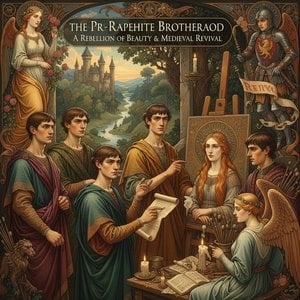
The Pre-Raphaelite Brotherhood: A Rebellion of Beauty & Medieval Revival
Explore the captivating world of the Pre-Raphaelite Brotherhood! Discover their rebellion against academic art, iconic masterpieces, and lasting influence on Victorian aesthetics. Learn about Rossetti, Burne-Jones & more.

Arthur Hughes: Pre-Raphaelite Visions of Beauty & Melancholy
Explore the captivating world of Arthur Hughes (1832-1915), a leading Pre-Raphaelite painter. Discover his dreamy landscapes, poetic narratives & iconic Victorian artworks. Learn about his life, style & collecting today.


