


 Preview
 Send
Send Share
Share
 Details

 Download
 Similars
 X-Ray
X-Ray Diaporama
Hunting by Candlelight
 Acrylic On Canvas
- WallArt
- Baroque Illusionism
 1630
1630 34.0 x 27.0 cm
 Szépmûvészeti Múzeum
 Read More
Giclée / Art Print
Museum-quality giclée or canvas print with fast production and flexible finish options. ( Buy Hand Made Painting Buy Image)




P118B $10

P118H $10

P118W $10

P438Z $10

P508JH $12

P508YH $12

P805H $10

P805Z $10

P919BZ $10

P919G $10

P919XJ $10

P959ZH $10

P968JZ $12

W106C $8

W218G $10

W218JH $8

W218Y $10

W307PJ $10

W316G $10

W316PJ $8

W316Y $10

W398PJ $8

W4111J $10

W500HY $15

W500JH $15

W692G $12

W849H $8

W940BG $15

W953PJ $8




Pick from our preset sizes that match the artwork's original proportions.

You may enter your own dimensions to fit a specific frame or space. If your selected size does not match the original image's proportions, we will either crop the artwork or extend the image with a mirrored or solid-fill edge. A digital mockup will be sent for your approval before production begins.
Please note that the on-screen preview does not reflect the actual cropping or extension. Only the mockup will accurately show the final composition.
While custom sizes are available, we recommend selecting a dimension from the predefined list to preserve the original proportions.
Worldwide Delivery () in 2 weeks instead of standard 4/5 weeks. (15 August)

Free Worldwide Express Shipping

High-Quality Linen Canvas

Full Shipping Insurance

Customs Tax Refund Guarantee

True Color Matching Guarantee

60-Day Return Policy (Defects Only)

100% Money-Back Guarantee

Bulk Discount Offer
 Glass option is only available in size under 110 CM

Hunting by Candlelight
Giclée / Art Print
Reproduction Size
-


Total Price
$ 63
Collectible Description
A Moment Frozen in Candlelight: Gerrit Dou’s Hunting by Candlelight
Gerrit Dou (1613-1675), a name perhaps less familiar than Rembrandt’s or Vermeer’s, nevertheless stands as one of the most remarkable and profoundly influential artists of the Dutch Golden Age. Born in Leiden, a city renowned for its artistic vibrancy, Dou’s career unfolded within a period of immense creative ferment, shaped by the legacy of Rembrandt but ultimately forging his own distinctive path – a path characterized by an extraordinary command of illusionism, meticulous detail, and a subtle mastery of light and shadow that continues to captivate viewers today. His life, though relatively short, was marked by both artistic apprenticeship and independent innovation, solidifying his place as a true master of his time. Early Years and the Shadow of Rembrandt Gerrit Dou’s early life was deeply intertwined with the burgeoning art scene of Leiden. Born into a family involved in glassmaking – his father, Douwe Jansz de Vries van Arentsvelt, wa The Painting's Narrative: Beyond Mere Representation “Hunting by Candlelight,” attributed to Gerrit Dou, transcends simple depiction; it’s an exercise in psychological realism that speaks volumes about the human condition. The scene portrays a group of men gathered around a naked man – likely a young apprentice – illuminated solely by flickering candlelight. This deliberate choice isn't accidental. Light and shadow are paramount to Dou’s technique, meticulously crafted to create an atmosphere of intimacy and suspense. Notice how the light dances across the man’s skin, highlighting contours and conveying vulnerability without resorting to overt melodrama. The figures surrounding him appear attentive, perhaps observing or discussing the situation with a mixture of seriousness and apprehension. This subtle interplay of emotion is precisely what distinguishes Dou's work from more overtly dramatic compositions prevalent during his era. Technical Mastery: Illusionism at Its Finest Dou’s genius resided in his unparalleled ability to achieve illusionistic effects—a technique championed by Rembrandt himself—that convincingly simulate reality. He employed a layering process known as sfumato, painstakingly blending colors and tones to soften edges and create an ethereal quality. This meticulous attention to detail extends beyond the illumination; observe the textures of the clothing, the subtle variations in skin tone, and the careful rendering of facial expressions. Dou’s palette is restrained yet masterful, favoring muted browns, ochres, and whites—colors that contribute to the painting's subdued mood and enhance its sense of depth. The artist skillfully utilizes chiaroscuro – dramatic contrasts between light and dark – to sculpt form and guide the viewer’s eye, drawing attention to key elements within the composition. Historical Context: Rembrandt’s Influence and Artistic Debate Gerrit Dou emerged during a period of considerable artistic debate following Rembrandt's groundbreaking innovations in portraying human emotion and psychological complexity. While Rembrandt embraced bold brushstrokes and dramatic lighting to convey profound feelings, Dou favored a more restrained approach—one that prioritized subtlety and nuance. This stylistic divergence reflects broader intellectual currents of the time, as artists wrestled with questions of representation and idealism versus realism. “Hunting by Candlelight” embodies this spirit of experimentation, demonstrating Dou’s commitment to exploring the boundaries of artistic expression while upholding Rembrandt's legacy of psychological insight. Symbolism: Intriguing Layers of Meaning The painting’s symbolism is equally compelling. The naked man represents innocence and vulnerability—a motif frequently explored in Renaissance art—but also serves as a reminder of mortality. The candlelight symbolizes enlightenment and spiritual contemplation, highlighting the importance of inner reflection amidst external circumstances. Furthermore, the presence of the baby adds an element of tenderness and familial devotion, reinforcing themes of compassion and nurturing. Dou’s masterful execution ensures that these symbolic layers resonate powerfully with viewers, inviting them to contemplate deeper questions about human experience. Emotional Impact: A Portrait of Quiet Intensity Ultimately, “Hunting by Candlelight” succeeds in capturing a moment of profound emotional intensity—albeit one conveyed through understated means. The painting evokes feelings of contemplation, unease, and perhaps even pity for the exposed figure at the center of the scene. Dou’s skillful manipulation of light and shadow creates an atmosphere that is both captivating and unsettling, prompting viewers to consider the complexities of human relationships and the fragility of existence. It's a testament to Dou’s artistic vision—a vision that continues to inspire admiration and provoke discussion centuries after its creation.Related Artworks


Artist Biography
Gerrit Dou: The Master of Subtle Illusions
Gerrit Dou (1613-1675), a name perhaps less familiar than Rembrandt’s or Vermeer’s, nevertheless stands as one of the most remarkable and profoundly influential artists of the Dutch Golden Age. Born in Leiden, a city renowned for its artistic vibrancy, Dou’s career unfolded within a period of immense creative ferment, shaped by the legacy of Rembrandt but ultimately forging his own distinctive path – a path characterized by an extraordinary command of illusionism, meticulous detail, and a subtle mastery of light and shadow that continues to captivate viewers today. His life, though relatively short, was marked by both artistic apprenticeship and independent innovation, solidifying his place as a true master of his time.
Early Years and the Shadow of Rembrandt
Gerrit Dou’s early life was deeply intertwined with the burgeoning art scene of Leiden. Born into a family involved in glassmaking – his father, Douwe Jansz de Vries van Arentsvelt, was a glazier – he displayed an early aptitude for visual arts, a passion nurtured by his father's encouragement and later formally recognized through apprenticeships. Initially, he studied under Bartholomeus Dolendo, an engraver, followed by Pieter Couwenhorn, a glass painter, both seeking to hone the skills necessary for creating intricate surfaces. Crucially, in 1628, at just fifteen years old, Dou entered the workshop of Rembrandt van Rijn, then a young and ambitious artist establishing his reputation in Leiden. This formative period proved pivotal; while he absorbed many of Rembrandt’s techniques – particularly his use of chiaroscuro and dramatic lighting – Dou quickly distinguished himself through an exceptional ability to render textures and create convincing illusions.
- Rembrandt's workshop provided a rigorous training, emphasizing meticulous observation and technical skill.
- Dou’s early works mirrored Rembrandt’s style, showcasing his talent for capturing realistic details.
- However, Dou soon developed a unique approach, prioritizing subtlety and illusionistic effects over overt theatricality.
A Distinctive Style: Illusionism and the Art of Deception
What truly set Gerrit Dou apart was his extraordinary skill in creating *trompe-l'oeil* – literally “fool the eye” – images. Unlike many artists who relied on straightforward representation, Dou employed a complex layering of techniques to generate an illusion of depth and three-dimensionality on a flat surface. He achieved this through meticulous attention to detail, using subtle variations in color, texture, and light to mimic the appearance of real objects. This wasn’t merely about creating realistic depictions; it was about constructing entirely new visual realities.
- Dou's paintings often feature seemingly three-dimensional objects – a loaf of bread, a still life arrangement, or even a portrait – that appear to extend beyond the canvas.
- He employed techniques such as *sfumato* (a blurring effect) and carefully rendered reflections to enhance the illusion of depth.
- His works are characterized by an almost enamel-like smoothness, achieved through painstaking layering of thin glazes—a technique inherited from his glass engraving background.
Themes and Subject Matter: Portraits, Still Lifes, and Everyday Scenes
Dou’s subject matter reflected the tastes of his time, encompassing portraits, genre scenes depicting everyday life, and meticulously rendered still lifes. However, he approached these subjects with a distinctive sensibility, imbuing them with an air of quiet contemplation and psychological depth. His portraits are not merely likenesses; they capture subtle nuances of character and emotion. Similarly, his still lifes—often featuring humble objects like fruit or household items—are imbued with a sense of atmosphere and narrative, suggesting stories beyond the immediate visual representation.
- He frequently depicted scenes of domestic life, offering glimpses into the routines and relationships of ordinary people.
- His portraits are notable for their psychological insight, capturing subtle expressions and conveying a sense of inner life.
- Still lifes were treated with an almost obsessive attention to detail, showcasing his mastery of texture and color.
Legacy and Historical Significance
Despite his considerable talent and the admiration of his contemporaries, Gerrit Dou’s reputation suffered a decline after his death in 1675. His meticulous technique and preference for subtlety were not always appreciated by audiences accustomed to more dramatic or overtly theatrical styles. However, in the late 19th century, a renewed interest in Dutch art led to a reassessment of Dou’s work, revealing its profound artistic merit and innovative techniques. Today, Gerrit Dou is recognized as one of the most important artists of the Dutch Golden Age, a master of illusionism whose subtle yet powerful works continue to fascinate and inspire.
His influence can be seen in later generations of painters, particularly those who explored the possibilities of creating realistic illusions on canvas. Gerrit Dou’s legacy lies not only in his individual masterpieces but also in his pioneering spirit—his willingness to challenge conventional artistic practices and forge a unique path that continues to resonate with viewers centuries after his death.

andries both
1613 - 1642 , Netherlands
Quick Facts
- Artistic Movement Or Style: Baroque (Illusionism)
- Artists Or Movements Influenced By This Artist: ['Caravaggisti']
- Artists Who Influenced This Artist: ['Rembrandt van Rijn']
- Date Of Birth: 1613
- Date Of Death: 1675
- Full Name: Gerrit Dou
- Nationality: Dutch
- Notable Artworks:
- The Letter
- Woman with a Wine Glass
- The Tanner's Shop
- Place Of Birth: Leiden, Netherlands
Related Articles
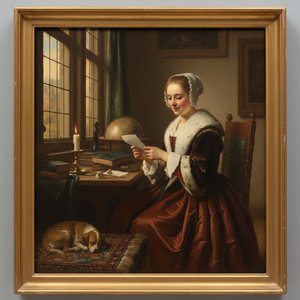
Gerrit Dou: Intimacy & Light in the Dutch Golden Age
Explore the exquisite world of Gerrit Dou, a master of Dutch Golden Age painting. Discover his intimate genre scenes, signature use of light, and lasting legacy. Learn about collecting Dou's works & their value.

Dutch Masters: 10 Golden Age Paintings That Still Inspire |
Journey into the Dutch Golden Age! Explore 10 iconic paintings by Rembrandt, Vermeer & Hals. Discover the stories behind these Baroque masterpieces and find museum-quality art reproductions to elevate your home decor on .

Golden Age Reflections: Dutch Baroque Painting & Cultural Innovation
Explore the Dutch Golden Age of painting! Discover key artists like Vermeer & ter Borch, their innovative techniques, and the rich cultural context behind these Baroque masterpieces. Learn about collecting & appreciating this iconic art period.
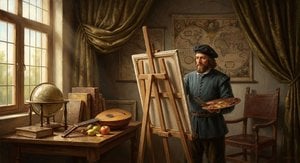
Illuminating Realism: Exploring the Dutch Golden Age of Painting (1600-1700)
Explore the Dutch Golden Age of painting (1600-1700) with ArtsDot. Discover Rembrandt, Vermeer & other masters. Learn about techniques, history & find museum-quality reproductions.

Illuminating Innovation: Exploring the Dutch Golden Age of Painting
Explore the Dutch Golden Age of painting with ArtsDot. Discover Rembrandt, Vermeer & other Masters. Learn about key characteristics, iconic artworks, and lasting influence. Expert insights for collectors & enthusiasts.



