

 Preview
 Send
Send Share
Share
 Details
 Guide
Guide

 Download
 Similars
 X-Ray
X-Ray Diaporama
 Q&A
Q&A Stats
StatsLily


 Read More
Giclée / Art Print
Museum-quality giclée or canvas print with fast production and flexible finish options. ( Buy Hand Made Painting Switch to Digital Image)




P118B $10

P118H $10

P118W $10

P438Z $10

P508JH $12

P508YH $12

P805H $10

P805Z $10

P919BZ $10

P919G $10

P919XJ $10

P959ZH $10

P968JZ $12

W106C $8

W218G $10

W218JH $8

W218Y $10

W307PJ $10

W316G $10

W316PJ $8

W316Y $10

W398PJ $8

W4111J $10

W500HY $15

W500JH $15

W692G $12

W849H $8

W940BG $15

W953PJ $8




Pick from our preset sizes that match the artwork's original proportions.

Type the width and the height you need, to fit your frame or your wall. A print can only be cut, never made bigger than the picture, so a size with a different shape loses a part of the image. We send you a digital mockup to approve before we print anything. The picture shown on this page does not show the real cut — only the mockup does.
Worldwide Delivery () in 2 weeks instead of standard 4/5 weeks. (7 November)

Free Worldwide Express Shipping

High-Quality Linen Canvas

Full Shipping Insurance

Customs Tax Refund Guarantee

True Color Matching Guarantee

100-Day Return Policy (Defects Only)

100% Money-Back Guarantee

Bulk Discount Offer
 Glass option is only available in size under 110 CM

Lily
Giclée / Art Print
Reproduction Size
-


Total Price
$ 63
The Lily: A Study in Alphonse Mucha's Art Nouveau
This exquisite reproduction captures the very essence of Alphonse Mucha’s iconic Art Nouveau style – a world of flowing lines, delicate ornamentation, and an idealized vision of feminine beauty. “Lily” isn’t merely a depiction of a flower; it’s a carefully constructed tableau designed to evoke a sense of serenity, grace, and timeless elegance. Mucha's work during this period was deeply influenced by the decorative arts movement, seeking to elevate everyday objects into works of art through meticulous detail and harmonious composition.
The central figure, draped in a luminous white gown, embodies the core tenets of Art Nouveau. Her pose is deliberately languid, mirroring the natural curves found throughout the lilies themselves. The use of warm, golden hues – yellows, golds, and creams – creates a halo-like effect around her head and shoulders, drawing the viewer’s eye to this focal point while simultaneously immersing them in the artwork's dreamlike atmosphere. Mucha frequently employed this technique of luminous halos to imbue his subjects with an ethereal quality, elevating them beyond simple representation.
Color & Composition: Harmony and Movement
The color palette is deliberately restrained yet profoundly effective. The stark white of the lilies provides a crucial counterpoint to the rich warmth of the background, creating visual tension and depth. Subtle greens within the foliage add another layer of complexity, grounding the composition while still maintaining its overall sense of fluidity. Much like the Impressionists before him, Mucha was keenly aware of how color could be used to create mood and atmosphere – in this case, a feeling of tranquil beauty.
The vertical orientation of the artwork is crucial to its impact. It emphasizes the elongated form of the woman and the cascading arrangement of lilies, creating a sense of movement and drawing the eye upwards. The composition follows a clear axis, guiding the viewer’s gaze through the intricate details of the floral design. This deliberate structuring reflects Mucha's meticulous approach to his work – a hallmark of his artistic practice.
Technique & Symbolism: Lithography & Pure Form
Likely created using color lithography, “Lily” exemplifies Mucha’s mastery of this technique. The process involved meticulously transferring ink from stone plates onto paper, allowing for the creation of multiple identical prints with subtle variations in tone and texture. This method was particularly well-suited to the decorative style he favored, enabling him to achieve a level of detail and richness that would have been difficult to attain through traditional painting.
The lilies themselves are laden with symbolic meaning – traditionally representing purity, innocence, rebirth, and devotion. Combined with the idealized figure, they create a powerful visual statement about beauty, grace, and spiritual aspiration. Mucha’s work frequently explored themes of mythology and folklore, often incorporating natural motifs to convey deeper meanings. This particular piece is a testament to his ability to seamlessly blend artistic skill with profound symbolism.
Questions & Answers
In what period was "Lily" by Alphonse Mucha made?
"Lily" belongs to the 19th-Century era.
From which country does the Art Nouveau work "Lily" come?
The Art Nouveau work "Lily" was made by an artist born in Czech Republic.
What is the perceived brightness of "Lily" by Alphonse Mucha?
Overall, "Lily" is recorded as brilliant. Perceived brightness describes how light or dark the work appears.


Artist Biography
Early Life and Education
- Born: July 15, 1860, in Ivanačice, Moravia (now part of the Czech Republic)
- Showed artistic talent from a young age.
- Studied at the Academy of Fine Arts in Prague but became disillusioned with traditional approaches.
- Moved to Paris in 1887 to pursue his own style.
Artistic Style and Notable Works
- Known for distinctive Art Nouveau style characterized by flowing lines, organic forms, and a sense of movement.
- Influenced by artists like Pierre-Auguste Renoir and Gustave Moreau.
- Notable Works:
- The Slavonic Uprising - Showcases blending traditional Czech motifs with modern Art Nouveau elements.
- Salon des Cent
- Paintings inspired by works like The Daughters of Tespio by Gustave Moreau, and La Ribambelle des Gobelins by Piero Dorazio.
- Illustrations based on Young Farmers Breaking Flax by Sir Hubert von Herkomer.
- Frequently featured idealized women in flowing robes surrounded by lush flowers.
Career Highlights and Major Commissions
- Sarah Bernhardt Collaboration: Created posters and designs for the actress Sarah Bernhardt, starting with the poster for Gismonda (1894), which launched his career.
- Universal Exhibition in Paris (1900): His Art Nouveau style gained international recognition at this exhibition. He decorated the Bosnia and Herzegovina Pavilion and collaborated on the Austrian Pavilion.
- Charles Richard Crane Patronage: Received support from Charles Richard Crane, which enabled him to create the monumental series The Slav Epic (1912-30).
- Post-Independence Czechoslovakia: Designed postage stamps, banknotes, and government documents for newly independent Czechoslovakia.
Influences and Legacy
- Influenced by Czech artistic traditions and modern European art movements.
- His unique style paved the way for future generations of artists in Art Nouveau and Secessionism.
- Inspired other artists like Eva Prokopcová.
- Legacy extends beyond his artwork to influence design and aesthetics.
Later Life and Death
- Married Maruska (Marie/Maria) Chytilová in 1906.
- Visited the United States from 1906-1910, where their daughter Jaroslava was born.
- Died on July 14, 1939, in Prague, Czechoslovakia.

Alphonse Mucha
1860 - 1939 , Czech Republic
Quick Facts
- Full Name: Alphonse Maria Mucha
- Nationality: Czech
- Date Of Birth: 1860
- Date Of Death: 1939
- Place Of Birth: Brno, Czech Republic
- Notable Artworks:
- Slavic Uprising
- Salon des Cent
- The Daughters of Tespio
- La Ribambelle des Gobelins
- Young Farmers Breaking Flax
- Artistic Movement Or Style: Art Nouveau
- Artists Who Influenced This Artist:
- Pierre-Auguste Renoir
- Gustave Moreau
- Dante Gabriel Rossetti
- Artists Or Movements Influenced By This Artist: ['Eva Prokopcová']
Related Articles
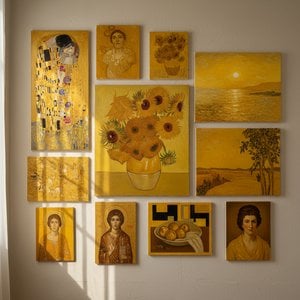
Golden Hues: Top 10 Paintings Dominated by Yellow Ochre |
Explore 10 iconic paintings bathed in golden yellow ochre! From Van Gogh's sunflowers to Monet’s haystacks, discover the stories behind these masterpieces. Find museum-quality art reproductions & elevate your home decor on .

Golden Glow: How to Use Metallic Gold Artworks to Elevate Your Home Decor with Timeless Luxury
Discover how to elevate your home with the timeless elegance of metallic gold artworks. From sculptural metal pieces to gilded oil paintings, learn expert interior design tips for integrating luxurious gold accents into your space with sophistication and grace.

White on Canvas: 10 Masterpieces & Timeless Elegance for Your Home Decor
Explore 10 iconic white paintings by Monet, Whistler & Rothko! Discover the stories behind these serene masterpieces and their impact on art history. Find museum-quality reproductions for your home decor at .
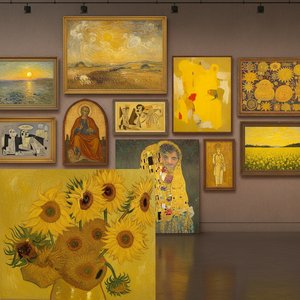
Golden Hues: 10 Masterpieces Dominated by Chrome Yellow | ArtsDot
Immerse yourself in golden light! Explore 10 famous paintings dominated by 'Chrome Yellow', from Van Gogh’s Sunflowers to Monet's Haystacks. Discover the stories behind these iconic Impressionist & Post-Impressionist masterpieces and find museum-quality art reproductions at ArtsDot.com.
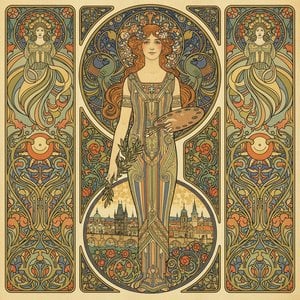
Alphonse Mucha: A Comprehensive Exploration of Art Nouveau's Master of Decorative Symbolism
Explore the life & art of Alphonse Mucha, master of Art Nouveau! Discover his iconic posters, stunning illustrations, and the monumental Slav Epic. A comprehensive guide for collectors & enthusiasts.


