


 Preview
 Send
Send Share
Share
 Details
 Guide
Guide

 Download
 Similars
 X-Ray
X-Ray Diaporama
 Stats
StatsÉtagère


 Read More
Hand Made Oil Reproduction
Hand-painted oil on canvas in your size and frame, made to order by our artists. ( Switch to Print Switch to Digital Image)




P118B $10

P118H $10

P118W $10

P438Z $10

P508JH $12

P508YH $12

P805H $10

P805Z $10

P919BZ $10

P919G $10

P919XJ $10

P959ZH $10

P968JZ $12

W106C $8

W218G $10

W218JH $8

W218Y $10

W307PJ $10

W316G $10

W316PJ $8

W316Y $10

W398PJ $8

W4111J $10

W500HY $15

W500JH $15

W692G $12

W849H $8

W940BG $15

W953PJ $8




Pick from our preset sizes that match the artwork's original proportions.

Type the width and the height you need, to fit your frame or your wall. This is hand-painted, so for a size with a different shape the artist can paint a bit more around the picture, or cut a bit — you choose. We send you a digital mockup to approve before the painting starts. The picture shown on this page does not show the real result — only the mockup does.
After order, ArtsDot.com team will email client for instructions and provide a mockup preview
Worldwide Delivery () in 3/4 weeks instead of standard 5 weeks. (21 October). No compromise on quality.

Free Worldwide Express Shipping

High-Quality Linen Canvas

Full Shipping Insurance

Customs Tax Refund Guarantee

True Color Matching Guarantee

100-Day Return Policy (Defects Only)

100% Money-Back Guarantee

Bulk Discount Offer
 Glass option is only available in size under 110 CM

Étagère
Reproduction Medium
Reproduction Size
-


Total Price
$ 263
Étagère: A Reflection of Rococo Elegance
The photograph captures Alexandre Roux’s étagère—a masterpiece of French Rococo Revival style—displayed within the hushed halls of The Metropolitan Museum of Art. More than just a decorative object, this table embodies an aesthetic ideal that flourished in mid-nineteenth century America, mirroring the opulent tastes of European aristocracy and signaling a revival of classical ornamentation after decades of neoclassical dominance. Its meticulous craftsmanship speaks volumes about the artistic sensibilities of its time.- Artist: Alexandre Roux
- Born Year: 1813
- Death Year: 1886
- Birth City: Paris
- Birth Country: France
Alexandre Roux’s journey began in the ateliers of Paris, where he honed his skills as a cabinetmaker—a tradition deeply rooted in French craftsmanship. However, his ambition propelled him westward to New York City in 1844, establishing himself as a pivotal figure in shaping American interior design. Roux wasn't merely replicating European styles; he interpreted them through the lens of his own artistic vision, resulting in furniture that possessed both grandeur and refined detail.
The étagère itself exemplifies Roux’s mastery of Rococo Revival. Characterized by curving lines—particularly prominent in the legs and decorative supports—the piece harkens back to the flamboyant elegance of eighteenth-century France’s Régence period. Elaborate floral displays adorn the surfaces, populated by cherubic figures that convey a sense of serenity and aristocratic grace. These stylistic choices were deliberate responses to prevailing artistic trends, reflecting a desire for beauty and ornamentation reminiscent of a bygone era.
Beyond its aesthetic appeal, the étagère carries symbolic weight. It represents not only wealth and status—a hallmark of Rococo Revival—but also an aspiration towards harmony and balance. The mirrored surface reflects light and expands the visual space, creating an illusion of grandeur that underscores the importance of decorative elements in shaping perception. Roux’s meticulous attention to detail—evident in the intricate carvings on the wood—demonstrates a commitment to upholding artistic standards.
Interestingly, Roux's work aligns with broader trends in American art history. The Met’s acquisition of this étagère underscores its significance as an exemplar of stylistic innovation and cultural exchange. It serves as a tangible reminder that artistic movements transcend geographical boundaries, influencing design sensibilities across continents.
The étagère’s enduring popularity testifies to Roux's ability to capture the spirit of his time—a period marked by both social upheaval and a fervent embrace of classical ideals. Its presence in The Metropolitan Museum of Art ensures that this exquisite piece continues to inspire admiration for its beauty and craftsmanship.
Questions & Answers
How is the palette of "Étagère" by Alexandre Roux described?
"Étagère" by Alexandre Roux uses a neutrals color palette. The palette summarizes the work's overall color character.
What emotional tone accompanies the Rococo Revival style of "Étagère"?
Within the Rococo Revival movement, "Étagère" is recorded with a calm tone.
How is the color composition of "Étagère" by Alexandre Roux built?
The color analysis of "Étagère" by Alexandre Roux records a statement contrast and a discordant palette harmony.
Related Artworks


Artist Biography
Alexandre Roux: The Parisian Cabinetmaker Who Shaped American Style
Born in the heart of Paris in 1813, Alexandre Roux’s journey from a skilled craftsman to a celebrated furniture maker in New York City is a testament to ambition, talent, and an astute understanding of evolving aesthetic tastes. Initially trained within the traditional workshops of his native France, Roux’s career took a pivotal turn when he immigrated to America in 1844, establishing himself as a prominent figure in the burgeoning world of American furniture design. His legacy isn't defined by grand, revolutionary movements but rather by a consistent dedication to exquisite detail and a masterful command of the Rococo Revival style – a style that profoundly influenced the interiors of wealthy homes across the United States during the mid-19th century.
Roux’s early life instilled in him a deep appreciation for craftsmanship. While specific details about his family are scarce, it's clear he was raised within a lineage of artisans, absorbing techniques and an inherent understanding of materials. This foundation proved invaluable as he navigated the challenges of establishing a business in a new country. New York City, with its rapid growth and influx of European immigrants, presented both opportunities and competition. Roux quickly distinguished himself through his commitment to quality, utilizing premium materials like black walnut and incorporating intricate carvings that echoed the elegance of 18th-century France. His workshops became renowned for producing furniture that was not merely functional but also a statement of refined taste – a direct reflection of the Rococo Revival’s emphasis on ornamentation, curves, and luxurious finishes.
Notable Works and Artistic Style
Roux's work is characterized by an almost obsessive attention to detail. He wasn’t simply replicating historical styles; he was interpreting them with a distinctly American sensibility. His pieces often featured elaborate motifs – shells, scrolls, floral patterns – meticulously carved into the wood and finished with lustrous varnish. The “Parlor Cabinet,” perhaps his most celebrated creation, exemplifies this perfectly. This stunning piece showcases Roux's ability to seamlessly blend intricate designs with exquisite materials, creating a work that is both visually arresting and remarkably tactile. The inclusion of a bowl on one side and a mirror on the other adds an element of surprise and sophistication, demonstrating Roux’s understanding of how furniture could function as a sculptural object within a room.
Beyond the Parlor Cabinet, works like “Still Life Fish” offer further insight into Roux's artistic approach. While categorized as an oil painting, this piece reveals his keen eye for texture and light – qualities he undoubtedly translated to his furniture designs. The meticulous rendering of scales and reflections suggests a desire to capture not just the appearance but also the essence of the subject matter. This attention to realism, combined with a subtle impressionistic touch, sets Roux apart from purely academic painters.
Influence and Historical Context
Alexandre Roux’s rise coincided with a significant shift in American interior design. Following the War of 1812, there was a renewed interest in European styles, particularly those of the French monarchy. The Rococo Revival, characterized by its ornate detailing and emphasis on luxury, became immensely popular among wealthy Americans seeking to emulate the elegance of European aristocracy. Roux’s furniture played a crucial role in shaping this trend, providing a tangible link to the past while simultaneously reflecting the aspirations of the burgeoning American elite.
His work was showcased at the 1853 New York Crystal Palace Exhibition, a pivotal event that brought together innovations from across the globe. This exposure undoubtedly solidified Roux’s reputation and contributed to the growing demand for his furniture. The commission from the Astor family—a testament to his skill—further elevated his status within the American design community.
Legacy and Recognition
While Alexandre Roux may not be as widely recognized as some of his contemporaries, his contributions to American furniture design are undeniable. His pieces can be found in prestigious collections such as the Musée Baron Gérard in Bayeux, France, a testament to their enduring quality and artistic merit. The Metropolitan Museum of Art also holds an example of his work – a sideboard that provides valuable insight into his craftsmanship and stylistic choices. His influence extends beyond individual pieces; Roux helped establish a precedent for American furniture makers who sought to blend European tradition with local sensibilities, ultimately shaping the evolution of American design.
Alexandre Roux’s story is one of transatlantic ambition, artistic dedication, and a profound understanding of the power of beauty. His legacy lives on in the exquisite furniture he created – pieces that continue to inspire admiration for their craftsmanship, elegance, and enduring appeal.

Alexandre Roux
1813 - 1886 , France
Quick Facts
- Full Name: Alexandre Roux
- Nationality: French
- Date Of Birth: 1813
- Date Of Death: 1886
- Place Of Birth: Paris, France
- Notable Artworks:
- Parlor Cabinet
- Still life fish
- Artistic Movement Or Style: Rococo Revival, Victorian Furniture
Related Articles

The Allure of Elegance in Art: A Historical & Aesthetic Exploration of Refinement & Grace
Explore the exquisite world of Rococo art! Discover its history, masters (Watteau, Boucher & more), and defining elegance. Expert insights for collectors seeking museum-quality reproductions & custom portraits.

The Rococo Aesthetic: Opulence, Rebellion & the Pursuit of Pleasure in 18th-Century Art
Explore the opulent world of Rococo art! Discover its origins, key artists like Watteau & Boucher, and lasting influence on design. Expert insights for collectors & enthusiasts.
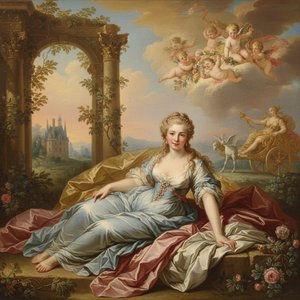
François Boucher: Rococo Master of Myth, Sensuality, and the French Court
Explore the captivating world of François Boucher, master of Rococo painting! Discover his iconic works, aristocratic patronage, and lasting influence on French art history. Learn more at ArtsDot.

Charles-André van Loo: A Study in Rococo Portraiture & the French Court's Artistic Dynamics
Explore the elegant world of Charles-André van Loo, a master of Rococo portraiture at the French court. Discover his life, techniques, and enduring influence on 18th-century art. Hand-painted reproductions available.

Rococo's Radiant Legacy: 10 Masterpieces for Your Home |
Indulge in the elegance of Rococo! Explore 10 masterpieces by Fragonard, Boucher & Watteau. Discover the stories behind these iconic paintings and bring timeless art to your home with museum-quality reproductions from .

