

 Preview
 Send
Send Share
Share
 Details
 Guide
Guide

 Download
 Similars
 X-Ray
X-Ray Diaporama
 Q&A
Q&A Stats
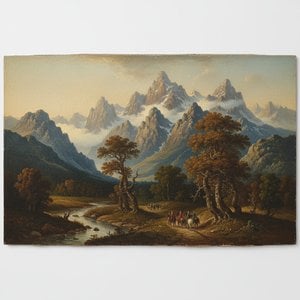
StatsStorm at Handeck

- 23.0 x 31.0 cm


 Read More
Giclée / Art Print
Museum-quality giclée or canvas print with fast production and flexible finish options. ( Buy Hand Made Painting Switch to Digital Image)




P118B $10

P118H $10

P118W $10

P438Z $10

P508JH $12

P508YH $12

P805H $10

P805Z $10

P919BZ $10

P919G $10

P919XJ $10

P959ZH $10

P968JZ $12

W106C $8

W218G $10

W218JH $8

W218Y $10

W307PJ $10

W316G $10

W316PJ $8

W316Y $10

W398PJ $8

W4111J $10

W500HY $15

W500JH $15

W692G $12

W849H $8

W940BG $15

W953PJ $8




Pick from our preset sizes that match the artwork's original proportions.

Type the width and the height you need, to fit your frame or your wall. A print can only be cut, never made bigger than the picture, so a size with a different shape loses a part of the image. We send you a digital mockup to approve before we print anything. The picture shown on this page does not show the real cut — only the mockup does.
Worldwide Delivery () in 2 weeks instead of standard 4/5 weeks. (31 October)

Free Worldwide Express Shipping

High-Quality Linen Canvas

Full Shipping Insurance

Customs Tax Refund Guarantee

True Color Matching Guarantee

100-Day Return Policy (Defects Only)

100% Money-Back Guarantee

Bulk Discount Offer
 Glass option is only available in size under 110 CM

Storm at Handeck
Giclée / Art Print
Reproduction Size
-


Total Price
$ 63
The Sublime Majesty of the Bernese Alps
In the heart of the nineteenth century, a profound shift occurred in the way humanity perceived the natural world, moving away from the orderly reason of the Enlightenment toward the raw, untamed emotion of Romanticism. Alexandre Calame’s 1838 masterpiece, Storm at Handeck, stands as a breathtaking testament to this era. The painting captures a moment of intense atmospheric drama within the Bernese Alps, specifically focusing on the perilous and awe-inspiring region of Handegg. As the viewer gazes upon the canvas, they are not merely observing a meteorological event; they are thrust into a confrontation with the sublime—that rare aesthetic experience where overwhelming beauty meets a paralyzing sense of terror. The composition is anchored by a colossal mountain massif that rises aggressively from a rugged foreground, its jagged peaks piercing through heavy, turbulent clouds to remind us of the sheer scale of the earth's untamed forces.
Calame, a pivotal figure of the Düsseldorf School of Painting, utilizes a sophisticated mastery of technique to breathe life into this alpine tempest. Through the careful application of atmospheric perspective, he layers muted shades of grey, charcoal, and earthy brown to simulate the thick, moisture-laden air that clings to the mountain faces. This creates an incredible sense of depth, making the distant peaks feel both unreachable and immense. The artist’s brushwork is intentionally expressive; rather than pursuing sterile precision, Calame employs loose, energetic strokes to define the fractured edges of boulders and the swaying needles of pine trees. These vertical elements serve a dual purpose: they guide the eye upward toward the heavens and provide a necessary sense of scale, highlighting the vulnerability of life when positioned against such monumental geological structures.
A Symphony of Light and Spiritual Symbolism
Beyond its physical grandeur, Storm at Handeck resonates with a deep, spiritual undertone that was characteristic of Calame’s personal worldview. A man of profound faith, Calame viewed the natural landscape as a divine canvas, an expression of God’s omnipresence. In this work, the dramatic lighting—emanating from an unseen source hidden behind the churning storm clouds—acts as a powerful symbol of transcendence and illumination. This sudden burst of light amidst the gloom suggests a moment of spiritual clarity or divine intervention, offering a glimmer of hope against the backdrop of nature's fury. The storm itself serves as a poignant metaphor for the human condition: the struggle to find resilience and faith when faced with the unpredictable and overwhelming forces of existence.
For the discerning collector or interior designer, this painting offers more than just a visual spectacle; it provides an emotional anchor for a space. The dark, somber palette and the heavy textures of the oil on canvas lend themselves to sophisticated, moody interiors, where the artwork can serve as a focal point of contemplation and strength. Whether placed in a quiet study or a grand living hall, Storm at Handeck invites a sense of introspection and wonder. It is a piece that does not merely decorate a wall but transforms an environment, bringing the timeless, dramatic energy of the Swiss Alps into the modern home through a high-quality reproduction that honors Calame's original vision.
Questions & Answers
How do I download the image of "Storm at Handeck" by Alexandre Calame?
"Storm at Handeck" by Alexandre Calame can be downloaded from the artwork's Download page, as a high-resolution digital image download.
What mood does "Storm at Handeck" by Alexandre Calame express within Romanticism?
The dramatic emotion of "Storm at Handeck" accompanies its Romanticism style.
What underlying hue runs through "Storm at Handeck" by Alexandre Calame?
"Storm at Handeck" leans toward a green to violet spectrum tone.
Related Artworks


Artist Biography
Alexandre Calame (1810 – 1864): Capturing Alpine Majesty
Alexandre Calame, born in Arabie (modern Vevey), Switzerland, in 1810, was a Swiss landscape painter who achieved considerable renown during the Romantic era and is considered a pivotal figure within the Düsseldorf School of Painting. His artistic journey began amidst challenging circumstances—his father’s financial ruin precluded him from pursuing formal education, forcing him to work as a bank clerk from adolescence. Yet, this pragmatic necessity fueled his passion for art, nurtured by an encounter with banker Diodati who secured him invaluable tuition under François Diday, a celebrated Düsseldorf landscape painter. Recognizing his innate talent and dedication, Calame swiftly abandoned clerical duties for the pursuit of artistic excellence.- Early Years & Patronage: Calame’s formative years were marked by diligent sketching of Swiss landscapes—primarily views of Bernese Oberland—a practice honed under Diday's guidance. This early focus established a lifelong preoccupation with Alpine scenery, reflecting the Romantic fascination for untamed wilderness and sublime beauty.
- The Düsseldorf School Connection: Calame’s association with the Düsseldorf School cemented his reputation as a master of atmospheric perspective and tonal modulation. Artists like Wilhelm Leibl and Anton Richter championed Calame's style, emphasizing meticulous observation and expressive brushwork to convey the emotional impact of nature.
Artistic Style & Technique
Calame’s artistic signature lay in his ability to translate the grandeur of the Alps onto canvas with remarkable accuracy and sensitivity. He employed a technique characterized by layered glazes—thin, translucent washes of pigment applied sequentially—to achieve luminous color palettes and capture subtle variations in light and shadow. This meticulous approach mirrored Diday's influence and distinguished Calame from many of his contemporaries who favored looser brushstrokes. His landscapes weren’t merely representations; they were imbued with palpable emotion, conveying the drama of storms, the serenity of glacial lakes, and the vibrant hues of alpine meadows. Notable works include “Handeck Fall,” “Torrent in the Alps,” and “Storm at Handeck,” each demonstrating his mastery of tonal harmony and compositional balance.- Lithography: Calame’s contribution extended beyond painting; he excelled as a lithographer, producing stunning prints that further disseminated his vision of Alpine landscapes.
Notable Achievements & Legacy
Calame gained considerable acclaim in Germany during the 1830s and 40s, becoming a favorite among collectors and critics alike. Exhibitions in Paris showcased his talent to a wider audience, solidifying his position as one of Switzerland’s foremost landscape artists. He taught at Geneva University, fostering the artistic development of students like Adolf Mosengel, who continued Calame's legacy. His journey to Italy yielded invaluable inspiration—particularly from Rome and Naples—resulting in paintings that captured the essence of Italian natural beauty alongside his beloved Alpine vistas. The enduring fascination with Calame’s depictions of glaciers and mountain streams testifies to their timeless appeal and continues to inspire artists today.Illustrative Works & Artistic Influence
Calame's artistic influence resonated throughout the Romantic movement, shaping the aesthetic sensibilities of subsequent generations. His meticulous observation and expressive technique served as a model for landscape painters striving to capture the sublime grandeur of nature. Furthermore, his lithographic prints played a crucial role in popularizing Alpine scenery and disseminating Romantic ideals across Europe. The enduring beauty and emotional depth of Calame’s paintings ensure that his contribution to art history remains firmly established.
Alexandre Calame
1810 - 1864 , Switzerland
Quick Facts
- Full Name: Alexandre Calame
- Nationality: Swiss
- Date Of Birth: 1810
- Date Of Death: 1864
- Place Of Birth: Saudi Arabia, Switzerland
- Notable Artworks:
- An Ancient Pine Forest with a Mountain Stream
- Torrent in the Alps
- Storm at Handeck
- Artistic Movement Or Style: Düsseldorf School
- Artists Who Influenced This Artist: ['François Diday']
- Artists Or Movements Influenced By This Artist: ['Romanticism']
Related Articles

Mastering the English Landscape: The Top 25 John Constable Artworks
Experience the soul of English landscapes through John Constable's top 25 works. Explore the full collection online at ArtsDot.com.

Evocations of Place: A Historical Journey Through Landscape Art
Explore the rich history of landscape art with ArtsDot. Discover renowned artists, movements like Impressionism & Romanticism, and expert guidance for collecting timeless pieces. Find your perfect serene escape today!

The Sublime and the Picturesque: Exploring Emotion & Nature in Romantic Landscape Painting
Explore the emotional power of Romantic landscape painting! Discover the sublime & picturesque traditions, key artists like Friedrich & Cole, and find your perfect artwork at ArtsDot.

Romantic Landscapes: 10 Masterpieces for Your Home | ArtsDot
Journey through 10 Romantic landscape masterpieces by Friedrich, Turner & Cole. Explore emotional art, sublime nature scenes & iconic 19th-century paintings. Find museum-quality reproductions for your home at ArtsDot.com – discover the full collection online!
Majestic Peaks on Canvas: A Historical & Artistic Exploration of Mountains in Fine Art
Explore the history of mountain painting! Discover Romantic masterpieces & key artists like Dahl & Calame. Learn about the Sublime & Picturesque aesthetics and find your perfect artwork at ArtsDot.


