

 Preview
 Send
Send Share
Share
 Details
 Guide
Guide

 Download
 Similars
 X-Ray
X-Ray Diaporama
 Q&A
Q&A Stats
StatsVersailles


 Read More
The artwork displayed on this page is protected by copyright law, which means we cannot legally create or sell an identical reproduction. This protection is enforced under international agreements such as the Berne Convention and by national laws, including those outlined by the U.S. Copyright Law - Title 17.
This method fully complies with copyright regulations because it does not involve copying or duplicating the protected artwork. Instead, it is a creative reinterpretation - a new painting that is influenced by the original but not identical to it.
Giclée / Art Print
Museum-quality giclée or canvas print with fast production and flexible finish options. ( Buy Hand Made Painting Switch to Digital Image)




































Pick from our preset sizes that match the artwork's original proportions.

Type the width and the height you need, to fit your frame or your wall. A print can only be cut, never made bigger than the picture, so a size with a different shape loses a part of the image. We send you a digital mockup to approve before we print anything. The picture shown on this page does not show the real cut — only the mockup does.
Worldwide Delivery () in 2 weeks instead of standard 4/5 weeks. (2 November)

Free Worldwide Express Shipping

High-Quality Linen Canvas

Full Shipping Insurance

Customs Tax Refund Guarantee

True Color Matching Guarantee

100-Day Return Policy (Defects Only)

100% Money-Back Guarantee

Bulk Discount Offer
 Glass option is only available in size under 110 CM

Versailles
Giclée / Art Print
Reproduction Size
-


Total Price
$ 63
Related Artworks


Artist Biography
Early Life and Artistic Roots
Alexandre Nikolayevich Benois, born on May 4th, 1870, in the vibrant cultural heart of St. Petersburg, Russia, was steeped in an environment of artistic legacy from his very beginnings. His family—the Benoises—represented a significant force within the Russian intelligentsia, a lineage deeply intertwined with architecture, painting, and intellectual discourse. His mother, Camilla (formerly Kavos), carried the influence of her aristocratic background, while his father, Nicholas Benois, was a respected architect known for his elegant designs. Alexandre’s brothers, Albert and Leon, continued this artistic tradition, further enriching the family's creative tapestry. His sister, Maria, married Nikolai Tcherepnin, a prominent composer and conductor—a connection that would later prove invaluable to Benois’s career. Unlike many of his siblings who embraced formal artistic training, Alexandre initially pursued a path in law at Saint Petersburg Imperial University, seemingly destined for a life outside the realm of art. However, fate intervened with a pivotal encounter: while visiting Versailles in 1897, he caught the eye of Sergei Diaghilev and Léon Bakst, two figures who were rapidly reshaping the landscape of Russian art and theatre. This chance meeting ignited a passion that would forever alter the course of his life, leading him away from legal studies and into the world of stage design and artistic innovation.- Family Influence:** The Benois family’s history of artistic achievement provided Alexandre with an inherent understanding of aesthetics and creative processes.
- Early Education:* His law studies offered a contrasting perspective, potentially shaping his analytical approach to design.
The Founding of Mir Iskusstva and the Ballets Russes
The meeting between Benois, Diaghilev, and Bakst marked the genesis of *Mir iskusstva* (World of Art), a magazine and artistic movement that would become a cornerstone of early 20th-century Russian culture. Rejecting the prevailing academic traditions and the conservative aesthetic of the Peredvizhniki Society, *Mir iskusstva* championed individualism, innovation, and a synthesis of Western European influences with traditional Russian folk art. Benois’s role within this movement was crucial; he served as editor alongside Diaghilev, shaping its intellectual direction and fostering a spirit of experimentation. The magazine quickly gained notoriety for its bold critiques and its promotion of avant-garde artists, attracting a diverse group of creatives—painters, sculptors, architects, writers, and designers—all united by a desire to break free from established norms.- Key Figures:* Alexandre Benois, Sergei Diaghilev, and Léon Bakst – the driving force behind *Mir iskusstva*.
- Movement’s Philosophy:* A rejection of academic traditions in favor of individualism and a fusion of Western and Russian artistic elements.
- Ballets Russes Impact:* The company redefined ballet as a dramatic art form, integrating diverse artistic disciplines.
- Key Productions:* *Les Sylphides*, *Giselle*, and *Petrushka* – landmark productions showcasing Benois’s design prowess.
Design Style and Notable Works
Benois's aesthetic was characterized by a distinctive blend of Neo-Classicism, Art Nouveau elegance, and a deep appreciation for Russian history and folklore. His designs were known for their meticulous detail, refined lines, and evocative use of color and texture. He frequently drew inspiration from historical sources—particularly the late Baroque and Rococo periods—incorporating elements of aristocratic grandeur and courtly ritual into his stage settings. However, he never adhered rigidly to traditional styles; instead, he skillfully manipulated classical motifs to create a sense of both familiarity and novelty.- Design Characteristics:* Neo-Classicism, Art Nouveau elegance, historical references, meticulous detail.
- Illustrative Examples:* *The Bronze Horseman* (1903), *Alphabet in Pictures* (1904), and the sets for Stravinsky’s *Petrushka* (1911).
- Significant Projects:* *The Bronze Horseman* (1903), *Alphabet in Pictures* (1904), sets for *Les Sylphides*, *Giselle*, and *Petrushka*.
Later Years and Legacy
Following the Russian Revolution of 1917, Benois found himself in Paris, where he continued to work as a set designer. He was appointed curator of the gallery of Old Masters in the Hermitage Museum at Leningrad (now St. Petersburg) from 1918 to 1926, securing his brother’s Leonardo da Vinci painting *Madonna* for the museum—a testament to his scholarly pursuits and dedication to preserving Russian cultural heritage. He published his memoirs in two volumes in 1955, offering a fascinating glimpse into his life and artistic journey. Benois's son, Nicola Alexandrovich Benois (Nikolai Benois), followed in his father’s footsteps, becoming a renowned opera designer. His nephew, Nikolai Albertovich Benois, married the celebrated soprano Maria Nikolaevna Kuznetsova. Alexandre Benois died on February 9th, 1960, leaving behind an extraordinary body of work that continues to inspire artists and captivate audiences worldwide. He remains a pivotal figure in the history of ballet design, a champion of artistic innovation, and a testament to the power of collaboration and vision.- Post-Revolutionary Career:* Curator at the Hermitage Museum, continuing scholarly pursuits.
- Family Legacy:* His son, Nicola Benois, followed in his father’s footsteps as an opera designer.

Alexandre Benois
1870 - 1960 , Russia
Quick Facts
- Full Name: Alexandre Nikolayevich Benois
- Nationality: Russian
- Date Of Birth: 1870
- Date Of Death: 1960
- Place Of Birth: Saint Petersburg, Russia
- Notable Artworks:
- Bronze Horseman Illustration
- Alphabet in Pictures
- Le Pavillon d'Armide
- Artistic Movement Or Style: Neo-Classicism, Mir Iskusstva
- Artists Who Influenced This Artist:
- Léon Bakst
- Serge Diaghilev
- Artists Or Movements Influenced By This Artist:
- Ballets Russes
- World of Art
Related Articles

Impressionistic Landscapes: 10 Masterpieces That Changed Art & Decor
Journey into the heart of Impressionism! Explore 10 masterpieces by Monet, Renoir & Degas that revolutionized landscape art. Discover their stories, techniques & find museum-quality reproductions to elevate your home decor on ArtsDot.com.

Cultivating Paradise: A Historical & Artistic Exploration of Gardens in Painting
Explore the rich history of gardens in painting! Discover masterpieces from Renaissance to Impressionism & beyond. Learn about symbolism, artists like Monet & Klimt, and find your perfect artwork at ArtsDot.

Evocations of Place: A Historical Journey Through Landscape Art
Explore the rich history of landscape art with ArtsDot. Discover renowned artists, movements like Impressionism & Romanticism, and expert guidance for collecting timeless pieces. Find your perfect serene escape today!
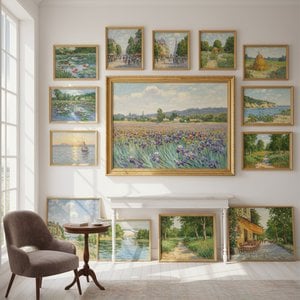
Impressionist Landscapes: 10 Masterpieces for Your Home | ArtsDot
Journey through 10 iconic Impressionist landscapes by Monet, Renoir & Degas. Explore the history, techniques & emotions behind these masterpieces. Find museum-quality reproductions for your home at ArtsDot.com – where art comes to life! Discover all masterpieces on ArtsDot.com

Beyond the Horizon: A Curated Guide to Integrating Post-Impressionist Landscapes into Modern Interiors
Transform your home with the emotive power of Post-Impressionist landscapes. Discover expert tips on selecting hand-painted oil reproductions to create a soulful, vibrant interior that reflects your unique style and connection to nature.


