

 Preview
 Send
Send Share
Share
 Details
 Guide
Guide

 Download
 Similars
 X-Ray
X-Ray Diaporama
 Q&A
Q&A Stats
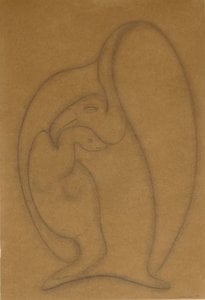
StatsSchädel auf einem Pfosten
 Read More
Giclée / Art Print
Museum-quality giclée or canvas print with fast production and flexible finish options. ( Buy Hand Made Painting Switch to Digital Image)




































Pick from our preset sizes that match the artwork's original proportions.

Type the width and the height you need, to fit your frame or your wall. A print can only be cut, never made bigger than the picture, so a size with a different shape loses a part of the image. We send you a digital mockup to approve before we print anything. The picture shown on this page does not show the real cut — only the mockup does.
Worldwide Delivery () in 2 weeks instead of standard 4/5 weeks. (4 November)

Free Worldwide Express Shipping

High-Quality Linen Canvas

Full Shipping Insurance

Customs Tax Refund Guarantee

True Color Matching Guarantee

100-Day Return Policy (Defects Only)

100% Money-Back Guarantee

Bulk Discount Offer
 Glass option is only available in size under 110 CM

Schädel auf einem Pfosten
Giclée / Art Print
Reproduction Size
-


Total Price
$ 63
Related Artworks



Artist Biography
The Visionary Architect of an Inner Cosmos
Adolf Wölfli stands as one of the most singular and profound figures in the history of modern art, a man whose entire existence was a testament to the power of the creative impulse to transcend even the most harrowing human suffering. Recognized as a pioneer of Art Brut—a term later popularized by Jean Dubuffet to describe art created outside the traditional cultural establishment—Wölfli’s work offers a window into a private, meticulously constructed universe. His oeuvre is not merely a collection of drawings but a sprawling, multidimensional epic that blends autobiographical narrative, musical notation, and complex geometric symbolism. To encounter Wölfli’s art is to step into a labyrinthine world where the boundaries between reality and myth are perpetually blurred.
Born in 1864 in Switzerland, Wölfli’s early life was defined by profound trauma and social displacement. Orphaned at the age of ten and subjected to the harsh realities of being a verdingbub—an indentured child laborer—his formative years were marked by neglect, physical abuse, and instability. This period of intense hardship followed him into adulthood, leading to legal struggles and eventual confinement within the Waldau psychiatric clinic in Bern. It was within the sterile, isolated confines of this institution that Wölflis’s true genius began to bloom. Diagnosed with schizophrenia, he transformed his psychological isolation into a fertile ground for invention, using the tools at his disposal to build a monumental personal mythology centered around his alter ego, Saint Adolf.
A Symphony of Lines and Symbols
The sheer scale and complexity of Wölfli’s output are nothing short of staggering. He was the creator of an immense, self-contained archive consisting of approximately 25,000 pages, meticulously organized into handmade books that functioned as both diaries and sacred texts. His technique is characterized by a dense, obsessive layering of detail that leaves almost no white space untouched. This "horror vacui"—a fear of empty space—manifests in intricate patterns, swirling motifs, and rhythmic repetitions that give his work a pulsating, organic energy.
Wölfli’s artistic language was uniquely polyphonic, integrating various forms of expression into a single cohesive stream:
- Visual Narrative: His drawings often functioned as a continuous, epic autobiography, weaving together real-life memories with fantastical, surrealist imagery.
- Musicality: He incorporated complex musical notations directly into his compositions, treating the page as both a canvas and a musical score.
- Mathematical Precision: The inclusion of numerical calculations and geometric symbols suggests a deep-seated need to impose order and logic upon a chaotic inner world.
- Chromatic Vibrancy: Despite the often-monochromatic nature of his early sketches, his later works utilized a highly idiosyncratic and bold use of color to define his symbolic landscapes.
Legacy and the Triumph of the Outsider
The historical significance of Adolf Wölfli extends far beyond the walls of the Waldau Clinic. He remains a cornerstone of Outsider Art, challenging the traditional hierarchies of the art world by proving that profound aesthetic depth can emerge from the most marginalized corners of society. His work predates and informs many of the themes later explored by Surrealists, particularly in its exploration of the subconscious, the dream state, and the fragmentation of identity.
Today, Wölfli is celebrated not as a patient of a psychiatric institution, but as a master of composition and a visionary architect of the human spirit. His ability to transmute personal agony into a structured, beautiful, and enduring legacy serves as an eternal inspiration. Through his intricate maps of the mind, he has ensured that while his physical life was confined, his creative vision remains boundless, inviting every viewer to wander through the magnificent, swirling forests of his imagination.

Adolf Wölfli
1864 - 1930
Quick Facts
- Full Name: Adolf Wölfli
- Nationality: Swiss
- Date Of Birth: 1864
- Date Of Death: 1930
- Place Of Birth: Bern, Switzerland
- Notable Artworks:
- Fliegen-Wald
- Campbell’s Tomato Soup
- Artistic Movement Or Style: Outsider Art / Art Brut
- Artists Or Movements Influenced By This Artist: ['Jean Dubuffet']


