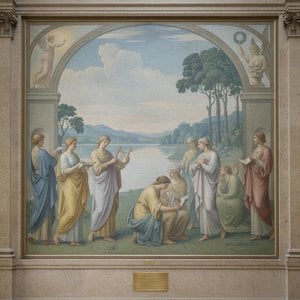
Museums on this site: Museu Nacional de Belas Artes
Born: 1894, Rio de Janeiro, Brazil
Art period: Modern
Nationality: Brazil
Works on this site: 1
Top 3 works: Costume ball
A Life Dedicated to Brazilian Decorative Arts: Rodolfo Amoêdo Chambelland
Rodolfo Amoêdo Chambelland, born in Rio de Janeiro in 1894, emerged as a significant figure in the burgeoning Brazilian art scene of the early 20th century. While not always a household name internationally, his contributions to the aesthetic landscape of his homeland were profound, particularly in the realm of decorative arts and mural painting. Chambelland’s artistic journey began with formal training at the Escola Nacional de Belas Artes in 1911, where he benefited from the tutelage of esteemed artists like Rodolfo Amoêdo – a namesake but not directly related – João Zeferino da Costa, and Daniel Bérard. This foundational education instilled in him a classical sensibility that would later be tempered by the evolving modern currents sweeping through Europe. His early participation in the Exposições Gerais de Belas Artes, beginning after 1906, signaled his commitment to public artistic life and quickly garnered recognition with several prize wins.
Early Commissions and Collaborative Projects
Chambelland’s career took a collaborative turn in 1911 when he joined forces with his brother João Timóteo da Costa, along with Carlos and Rodolfo Chambelland, to decorate the Brazilian pavilion at the Turin International Exhibition. This project was pivotal, exposing him to international styles and solidifying his reputation as a skilled decorative artist capable of large-scale undertakings. The experience undoubtedly broadened his artistic horizons and fueled his ambition to transform interior spaces into immersive works of art. Following this success, Chambelland became increasingly sought after for prestigious commissions within Rio de Janeiro itself. He wasn’t merely executing designs; he was actively shaping the visual identity of the city's most prominent institutions.
Transforming Iconic Spaces: A Legacy in Murals and Interiors
The hallmark of Chambelland’s career lies in his ability to seamlessly blend artistic skill with architectural context. He left an indelible mark on several iconic Rio de Janeiro landmarks, demonstrating a mastery of mural painting and interior design. Among his most notable achievements are the decorative schemes within the headquarters of the Fluminense Football Club – a testament to his versatility beyond purely aesthetic pursuits – and the elegant noble hall of the Tiradentes Palace. However, it is perhaps his murals at Copacabana Palace that best exemplify his artistic vision. These works weren’t simply embellishments; they were integral components of the hotel's luxurious ambiance, reflecting the glamour and sophistication of the era. The Copacabana Palace commissions showcase Chambelland’s talent for creating scenes that are both visually stunning and evocative of Brazilian culture and lifestyle.
A Premature End and Lasting Influence
Tragically, Rodolfo Chambelland's promising career was cut short by his untimely death in 1932 at the Hospício Pedro II in Rio de Janeiro. Despite his relatively brief artistic lifespan, he left behind a significant body of work that continues to inspire and captivate. His influence can be seen in the subsequent development of Brazilian decorative arts, particularly in the emphasis on integrating art with architecture and celebrating national identity through visual expression. While often overshadowed by more internationally recognized figures, Chambelland’s contributions were essential in shaping the aesthetic character of Rio de Janeiro during a period of rapid modernization and cultural transformation. He represents a vital link between classical traditions and the emerging Brazilian modernism, embodying a unique blend of artistic skill, collaborative spirit, and dedication to enhancing the beauty of his surroundings.
Key Characteristics of His Work
Classical Foundation: Chambelland’s training at the Escola Nacional de Belas Artes provided him with a strong grounding in classical painting techniques and composition.
Decorative Emphasis: He excelled in decorative arts, focusing on transforming interior spaces through murals, designs, and embellishments.
Integration of Art & Architecture: Chambelland’s work was characterized by a seamless integration with the architectural context, enhancing rather than dominating the surrounding environment.
Celebration of Brazilian Culture: His murals often reflected aspects of Brazilian life, culture, and landscape, contributing to a growing sense of national identity in art.
Collaborative Spirit: He frequently worked on large-scale projects with his brothers and other artists, demonstrating a willingness to collaborate and share artistic vision.
By the ArtsDot.com Editorial Team
Quick quiz
There is only one correct answer for each question.
Question 1:
Rodolfo Amoêdo Chambelland was primarily known as a:
Question 2:
In what city was Rodolfo Amoêdo Chambelland born?
Question 3:
Rodolfo Chambelland studied at the Escola Nacional de Belas Artes under which artist?
Question 4:
Chambelland contributed to the decoration of which famous Rio de Janeiro landmark?
Explore the life & work of Pierre Puvis de Chavannes, a pivotal Symbolist painter renowned for his monumental murals. Discover his aesthetic principles, key artworks like 'Hope,' and lasting influence on modern art. A deep dive into 19th-century French painting.
Elevate luxury hospitality with museum-quality masterpiece reproductions. Our expert guide for hotel designers explores using hand-painted oils and bespoke commissions to transform suites into timeless, soulful destinations through curated art excellence.
What is the top-ranked painting by Rodolfo Amoêdo Chambelland on ArtsDot.com?
Costume ball
In what city was Rodolfo Amoêdo Chambelland born?
Rio de Janeiro
Is Rodolfo Amoêdo Chambelland's work still under copyright?
No, works by this artist are in the public domain.
Who is Rodolfo Amoêdo Chambelland?
A Life Dedicated to Brazilian Decorative Arts: Rodolfo Amoêdo Chambelland
Rodolfo Amoêdo Chambelland, born in Rio de Janeiro in 1894, emerged as a significant figure in the burgeoning Brazilian art scene of the early 20th century. While not always a household name internationally, his contributions to the aesthetic landscape of his homeland were profound, particularly in the realm of decorative arts and mural painting. Chambelland’s artistic journey began with formal training at the Escola Naci
When did Rodolfo Amoêdo Chambelland die?
1932
How many of Rodolfo Amoêdo Chambelland's paintings are on ArtsDot.com?
1
In what year did Rodolfo Amoêdo Chambelland die?
1932
Chambelland contributed to the decoration of which famous Rio de Janeiro landmark?
Copacabana Palace
Where is Rodolfo Amoêdo Chambelland from?
Brazil
Rodolfo Amoêdo Chambelland was primarily known as a: