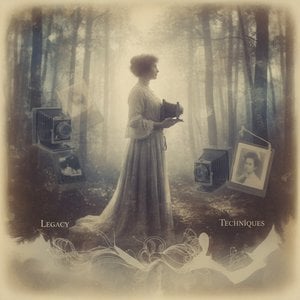
The Luminous World of Yoon Jeong-Mi
Born in the vibrant coastal city of Busan, South Korea, in 1983, Yoon Jeong-Mi has emerged as a profound voice in contemporary photography, weaving intricate narratives that bridge the gap between the tangible world and the ethereal realm of memory. Her artistic journey is one defined by an intimate exploration of femininity, childhood innocence, and the quiet beauty found within the domestic sphere. While her biographical beginnings remain somewhat veiled, her work speaks with a clarity that suggests a deep-seated connection to Korean cultural traditions, blended seamlessly with a globalized aesthetic sensibility. Through her lens, the everyday is transformed into something sacred, where a simple collection of objects becomes a vessel for profound emotional resonance.
The essence of Yoon’s practice lies in her ability to manipulate color and composition to evoke a sense of nostalgia and dreamlike stillness. Her photographic style is famously characterized by a masterful use of vibrant palettes, often employing saturated hues to establish a specific psychological atmosphere. This technique allows her to move beyond mere documentation, instead creating hyper-realized moments that feel suspended in time. In her celebrated work, "Pink Project: Jiwoo and Her Pink Things," the viewer is immediately enveloped in a sanctuary of saccharine sweetness. Here, the color pink serves as more than just an aesthetic choice; it becomes a symbolic language for femininity and the curated, protected world of youth. The meticulous arrangement of thirteen teddy bears and various toys creates an overflowing landscape of affection, inviting us to contemplate how objects serve as anchors for our most cherished memories.
Artistic Lineage and Stylistic Influences
Yoon Jeong-Mi’s visual language is a sophisticated tapestry woven from diverse historical influences. A significant cornerstone of her artistic identity is her connection to the Ukiyo-e art movement of Japan's Edo era. From this tradition, she draws upon the use of bold colors and dynamic, deliberate perspectives to depict scenes that feel both decorative and deeply impactful. This influence manifests in her careful framing and a compositional vision that prioritizes visual balance, drawing the eye through carefully constructed layers of detail.
Her work also invites comparisons to other masters of light and form, creating a dialogue between contemporary photography and historical portraiture. The way she captures texture and grandeur echoes elements found in Eadweard J. Muybridge’s iconic imagery, while her commitment to striking, emotive landscapes and portraits resonates with the stylistic depth of artists like Ellen Kooi. By blending these disparate influences—the graphic strength of Japanese woodblock prints with the atmospheric depth of modern photography—Yoon has developed a unique aesthetic that is both culturally grounded and universally accessible.
Legacy and Contemporary Significance
As a rising star in the contemporary Korean art scene, Yoon Jeong-Mi continues to push the boundaries of visual storytelling. Her significance lies in her ability to use the medium of photography to explore the architecture of growing up and the emotional weight of nostalgia. She does not merely capture images; she constructs visual poems that celebrate the delicate textures of life. Through her dedication to exploring themes of memory and identity, Yoon has established a body of work that serves as a poignant reminder of the beauty found in the most personal and fleeting moments of human existence.
Questions & Answers
What moods do Yoon Jeong-Mi's artworks express?
Yoon Jeong-Mi's works can be browsed by mood on the artist's Mood Room page, which arranges the artworks by their recorded moods.
What are the birthplace and birth year of Yoon Jeong-Mi?
Yoon Jeong-Mi was born in Busan in 1983.
What are the birth city and country of Yoon Jeong-Mi?
Yoon Jeong-Mi was born in Busan, in South Korea.