A Renaissance Sanctuary: The Soul of Casa Vasari
To step across the threshold of Casa Vasari in Florence is to leave the bustling modern streets of Borgo Santa Croce and enter a silent, breathing dialogue with the Italian Renaissance. This unassuming building, nestled within the heart of the city, serves as much more than a mere historical residence; it is a profound testament to the creative spirit of Giorgio Vasari , the man whose biographical writings would become the very foundation of Western art history. As one wanders through its halls, the atmosphere shifts from the mundane to the monumental, offering an intimate encounter with the personal sanctuary of a master who was simultaneously painter, architect, and historian.
The architecture of Casa Vasari tells a story of Florentine evolution, with its structure dating back to approximately 1500. The façade, characterized by its three axes spanning five floors, retains a sixteenth-century dignity that reflects the ambitions of the era's nobility. The stone frames surrounding the windows, particularly on the noble floor, act as silent witnesses to the craftsmanship of an age where every architectural detail was designed to convey status and aesthetic purpose. It is a space where the boundaries between a private home and a professional studio blur, allowing the modern visitor to contemplate the very environment that nurtured Vasari’s legendary intellect.
The Triumph of Fresco and Allegory
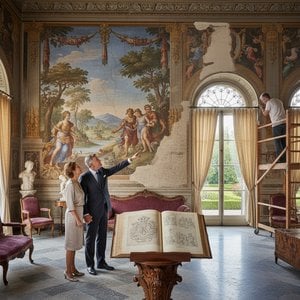
The true heart of the museum lies within the Sala Grande , a room that transcends mere decoration to become an immersive narrative tableau. Here, the walls are alive with a breathtaking cycle of frescoes executed by Vasari and his dedicated workshop around 1572. These monumental works are not merely ornamental; they are a visual manifesto celebrating the primacy of painting. Through a masterful orchestration of color and composition, the frescoes weave together scenes from classical mythology and sacred biblical narratives, embodying the humanist ideals that defined the Florentine golden age.
For the art lover and the interior designer alike, the decoration within this Great Hall offers unparalleled inspiration. The intricate allegorical representations are designed to provoke thought, using meticulously rendered figures to express complex philosophical assertions about human understanding and the role of art in society. To stand before these walls is to witness the intersection of technical virtuosity and intellectual conviction, where every brushstroke serves a higher purpose of storytelling and spiritual elevation.
An Intimate Legacy for the Discerning Eye
What distinguishes Casa Vasari from the grand, sweeping galleries like the Uffizi is its profound intimacy. While larger museums overwhelm the senses with scale, Casa Vasari invites a quiet, focused contemplation of an artist’s personal process. It offers a rare opportunity to absorb the atmosphere of a working studio, where the echoes of Renaissance innovation still linger in the air. Historically, this residence was a repository of immense cultural value, once housing works by luminaries such as Leonardo da Vinci and Albrecht Dürer , making it a microcosm of the era's greatest artistic achievements.
For collectors and enthusiasts of Renaissance aesthetics, the museum provides a unique window into the lifestyle of the maestro . The preservation of this singular space allows for a direct connection to Vasari’s enduring legacy, making it an essential pilgrimage for anyone seeking to understand the roots of artistic biography and the architectural elegance of Florence. Because access is carefully managed to ensure the conservation of these delicate treasures, a visit to Casa Vasari remains a rare and precious privilege, promising a deeply personal encounter with the very essence of the Renaissance.