


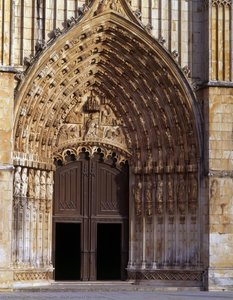


A Monument Forged in Victory: The Batalha Monastery
Rising from the plains of Portugal like a sculpted echo of national triumph, the Batalha Monastery is far more than an architectural marvel; it is a testament to faith and sovereignty rendered in stone, glass, and intricate ornamentation. Officially known as the Monastery of Saint Mary of the Victory, its very existence is inextricably linked to the pivotal Battle of Aljubarrota in 1385—a victory that secured Portugal's independence and ushered in a new era for the kingdom. Commissioned by King John I, construction began in 1386, not merely as an act of gratitude, but as a bold declaration of nationhood. For over a century, successive generations of architects poured their skill and devotion into this sacred space, resulting in a breathtaking fusion of Late Flamboyant Gothic and the uniquely Portuguese Manueline styles. The monastery stands as a powerful symbol of Portugal’s journey through time, its artistic innovation, unwavering faith, and enduring spirit—a place where history breathes alongside artistry.
Stepping within the monastery's walls is to enter a realm where earthly power meets spiritual aspiration. Immediately arresting is the sheer scale of the edifice itself, with soaring flying buttresses reaching upwards towards the heavens, mirroring the ambition of its patrons and embodying the unwavering belief that underpinned Portugal’s quest for autonomy. But it is in the details—the meticulously carved stone and the shimmering stained-glass windows—that the true artistry reveals itself. Dominating the interior is the Founder's Chapel, a poignant tribute to King John I and Queen Philippa, whose marriage symbolized the unification of Portugal after decades of strife. Here, light streams through magnificent windows depicting Christ appearing to the Virgin Mary—a masterpiece by Francisco Henriques from 1518—casting vibrant hues upon the intricately carved alabaster panels that adorn the walls. These are not simply decorative elements; they are narratives rendered in color and form, designed to inspire reverence and contemplation.
The evolution of Batalha reflects Portugal's own journey through time, a fascinating tapestry woven from disparate influences. Initially conceived as a Gothic cathedral, the monastery gradually embraced the burgeoning Manueline style—a uniquely Portuguese expression born during the Age of Discovery, characterized by maritime motifs, naturalistic ornamentation, and an exuberant display of artistic skill. The Unfinished Chapels, those enigmatic octagonal structures, represent an audacious attempt to surpass even the grandeur of European counterparts, showcasing the ambition of Portugal’s rulers. Within these spaces, one finds intricate carvings depicting marine creatures—sea serpents, coral reefs, and stylized seaweed—which serve as striking symbols of Portugal's dominion over the seas and its profound connection to the natural world. This architectural legacy is further solidified by the Royal Chapels, which house the tombs of Portuguese monarchs from the Avis dynasty, adorned with elaborate alabaster sculptures and gilded decorations that offer a visual feast for the discerning eye.
Today, the Batalha Monastery transcends its role as merely a historical landmark; it is a living embodiment of Portugal’s artistic innovation. Visitors can wander through the Cloisters, featuring stunning Manueline carvings that celebrate the nation's seafaring prowess, or marvel at the central church, where ribbed vaults soar upwards to create an awe-inspiring sense of space. Declared a National Monument in 1907 and rightfully recognized as a UNESCO World Heritage site in 1983, Batalha remains a beacon of national pride. For art lovers and historians alike, it offers an unparalleled opportunity to witness how stone can be made to breathe with the weight of a nation's soul, ensuring that the transformative power of artistic vision continues to inspire awe and wonder for generations to come.



