Portrait of Simone Martini

Simone Martini's Most Famous Paintings: All 100, Ranked

Updated October 2026 · ranked by our popularity score (searches, visits and orders for each work) · 151 works by Simone Martini in our catalogue

In short

The Simone Martini painting most people know is The Annunciation and Two Saints (1333), and you can see it at the Galleria degli Uffizi, Florence. Right after it come The Annunciation and Two Saints (detail) (1333) and The Annunciation with St. Margaret and St. Ansanus (1333). Out of 151 works by Simone Martini in our catalogue, these 100 are the best known. Each one comes with its year, its museum and a short note on what makes it stand out.

1284 – 1344, Siena International gothic Most works: Palazzo Pubblico

Simone Martini's top 10: the pieces everyone knows

1
The Annunciation and Two Saints (1333) by Simone Martini

The Annunciation and Two Saints

1333 · Acrylic On Canvas · Galleria degli Uffizi, Florence

In the hallowed halls of the Uffizi Gallery, there exists a moment frozen in time, a divine intersection of heaven and earth captured by the masterful hands of Simone Martini and Lippo Memmi. The Annunciation with Saint Margaret and Saint Ansanus, painted in 1333, is not merely a religious panel; it is a breathtaking symphony of Sienese Gothic elegance. As one gazes upon this masterpiece, the eye is immediately drawn…

2
The Annunciation and Two Saints (detail) (1333) by Simone Martini

The Annunciation and Two Saints (detail)

1333 · Acrylic On Canvas · Galleria degli Uffizi, Florence

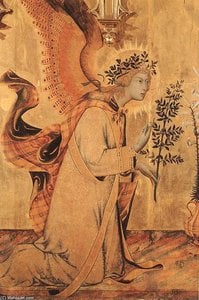
A Vision of Grace: Decoding Simone Martini’s Annunciation Simone Martini's *The Annunciation and Two Saints (detail)*, created in 1333, is more than just a religious depiction; it’s a shimmering testament to the elegance and refinement of the International Gothic style. Housed within Florence’s prestigious Galleria degli Uffizi, this tempera painting encapsulates a pivotal moment in art history, bridging the gap between Byzantine tradition and the burgeoning Renaissance. The Scene Unveiled:…

3
The Annunciation with St. Margaret and St. Ansanus (1333) by Simone Martini

The Annunciation with St. Margaret and St. Ansanus

1333 · Tempera On Panel · Galleria degli Uffizi, Florence

A Renaissance Vision of Faith & Grace Simone Martini’s *The Annunciation with St. Margaret and St. Ansanus* (1333) is a masterpiece of Early Italian Renaissance painting, embodying the elegance and spiritual fervor of the Sienese school. This stunning triptych isn't merely a depiction of a biblical event; it’s a carefully constructed world of symbolic meaning and refined artistry designed to inspire devotion. Decoding the Scene: Narrative & Composition The artwork…

4
St Clare and St Elizabeth of Hungary (1317) by Simone Martini

St Clare and St Elizabeth of Hungary

1317 · Fresco

This breathtaking fresco, measuring 215 x 185 cm, offers an unparalleled glimpse into the artistic genius of Simone Martini, a pivotal figure bridging the medieval and Renaissance periods. Painted in 1317, “St Clare and St Elizabeth of Hungary” is more than just a religious depiction; it’s a testament to the Sienese Master's profound understanding of elegance, grace, and the subtle power of visual storytelling. The scene captures two iconic saints…

5
Altar of St Louis of Toulouse (detail) (1317) by Simone Martini

Altar of St Louis of Toulouse (detail)

1317 · Tempera On Panel · Museo di Capodimonte, Naples

A Vision of Sienese Splendor The Altar of St Louis of Toulouse (detail) serves as a breathtaking window into the heart of medieval devotion, capturing the very essence of the Sienese Gothic style. Created around 1317 by the incomparable Simone Martini, this work is far more than a mere religious relic; it is a masterclass in courtly elegance and spiritual intimacy. In this delicate detail, we witness a scene imbued…

6
The Virgin of the Annunciation (1333) by Simone Martini

The Virgin of the Annunciation

1333 · Acrylic On Canvas · Koninklijk Museum voor Schone Kunsten, Antwerp

A Vision of Sorrow and Grace: Simone Martini’s *Virgin of the Annunciation* This intimate devotional painting by Simone Martini, created in 1333, offers a poignant glimpse into the emotional world of the late Medieval period. Measuring just 23 x 14 cm, its small scale belies the profound spiritual weight it carries – a testament to Martini’s mastery of conveying complex emotions within refined compositions. Style and Historical Context Simone Martini…

7
Saint Martin Renounces his Weapons (detail) (1312) by Simone Martini

Saint Martin Renounces his Weapons (detail)

1312 · Oil On Canvas

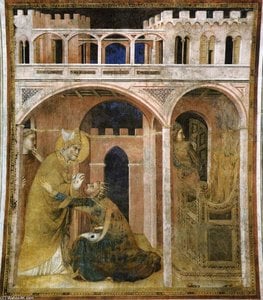
This exquisite detail from Simone Martini's monumental panel, painted in 1312, offers a profound glimpse into the heart of medieval piety and artistic innovation. Measuring 68 x 56 cm, this work transcends mere representation; it’s an embodiment of spiritual transformation, meticulously rendered with the hallmark elegance that defined Martini’s career. The scene depicts Saint Martin, a pivotal figure in Christian tradition, as he dramatically relinquishes his military possessions – a…

8
Saint Martin Renounces his Weapons (detail) (1312) by Simone Martini

Saint Martin Renounces his Weapons (detail)

1312 · Oil On Canvas

This exquisite detail from Simone Martini’s “Saint Martin Renounces His Weapons,” painted in 1312, offers a profound glimpse into the heart of Sienese artistic achievement during the early 14th century. More than just a depiction of a biblical narrative – the moment Saint Martin distributes his armor to a peasant – it is a carefully constructed tableau brimming with symbolic weight and technical mastery. Martini, a master of elegance and…

9
Blessed Agostino Novello Altarpiece (detail) (1324) by Simone Martini

Blessed Agostino Novello Altarpiece (detail)

1324 · Acrylic On Canvas · Pinacoteca Nazionale, Siena

Simone Martini’s Masterpiece: A Window into Siena’s Artistic Soul Simone Martini, a luminary of the Sienese school of painting, gifted us with Blessed Agostino Novello Altarpiece (detail), a breathtaking testament to his unparalleled skill and artistic vision. Currently residing in the Pinacoteca Nazionale di Siena, Italy, this tempera painting—measuring 65 x 67 cm—dates back to 1324 and encapsulates the essence of International Gothic style: elegance, meticulous detail, and profound religious…

10
Maestà (Madonna with Angels and Saints) (1315) by Simone Martini

Maestà (Madonna with Angels and Saints)

1315 · Acrylic On Canvas · Palazzo Pubblico, Siena

In the heart of Siena, within the hallowed halls of the Palazzo Pubblico, resides a masterpiece that transcends the boundaries of mere paint and plaster. Simone Martini’s Maestà is not simply a fresco; it is a breathtaking window into the divine, a monumental achievement of the 14th century that continues to stir the souls of all who behold it. As one gazes upon this vast composition, they are immediately swept…

Keep exploring Simone Martini: 11 to 100

11Portrait of Petrarch's Fictional Lover, Laura by Simone MartiniPortrait of Petrarch's Fictional Lover, LauraGemäldegalerie 12Madonna and Child (1325) by Simone MartiniMadonna and Child1325 13Guidoriccio da Fogliano at the siege of Montemassi (1330) by Simone MartiniGuidoriccio da Fogliano at the siege of Montemassi1330 14Maestà (detail) (1315) by Simone MartiniMaestà (detail)1315 · Palazzo Pubblico 15Virgin and Child (1325) by Simone MartiniVirgin and Child1325 · Isabella Stewart Gardner Museum 16Maestà (detail) (1315) by Simone MartiniMaestà (detail)1315 · Palazzo Pubblico 17Maestà (Madonna with Angels and Saints) (1315) by Simone MartiniMaestà (Madonna with Angels and Saints)1315 · Palazzo Pubblico 18Blessed Agostino Novello Altarpiece (1324) by Simone MartiniBlessed Agostino Novello Altarpiece1324 · Pinacoteca Nazionale 19Virgin and Child with Saints (1320) by Simone MartiniVirgin and Child with Saints1320 · Isabella Stewart Gardner Museum 20Altar of St Louis of Toulouse (1317) by Simone MartiniAltar of St Louis of Toulouse1317 · Museo di Capodimonte 21Burial of St Martin (detail) (1312) by Simone MartiniBurial of St Martin (detail)1312 22The Death of St Martin (detail) (1312) by Simone MartiniThe Death of St Martin (detail)1312 23The Angel of the Annunciation, after 1339, panel pai by Simone MartiniThe Angel of the Annunciation, after 1339, panel pai 24Maestà (detail of the medallions) (1315) by Simone MartiniMaestà (detail of the medallions)1315 · Palazzo Pubblico 25Madonna and Child with Angels and the Saviour (1320) by Simone MartiniMadonna and Child with Angels and the Saviour1320 · Museo dell'Opera del Duomo 26Saint Andrew (1326) by Simone MartiniSaint Andrew1326 · Metropolitan Museum of Art 27Maestà (detail) (1315) by Simone MartiniMaestà (detail)1315 · Palazzo Pubblico 28Madonna in Glory with Musician Angels (detail) (1311) by Simone MartiniMadonna in Glory with Musician Angels (detail)1311 · Oratorio di San Lorenzo in Ponte 29Maestà (detail) (1315) by Simone MartiniMaestà (detail)1315 · Palazzo Pubblico 30The Annunciation and Two Saints (detail) (1333) by Simone MartiniThe Annunciation and Two Saints (detail)1333 · Galleria degli Uffizi 31Guidoriccio da Fogliano (detail) (1328) by Simone MartiniGuidoriccio da Fogliano (detail)1328 · Palazzo Pubblico 32Polyptych (detail) (1320) by Simone MartiniPolyptych (detail)1320 · Fitzwilliam College 33Maestà (detail) (1315) by Simone MartiniMaestà (detail)1315 · Palazzo Pubblico 34St Louis of France (detail) (1317) by Simone MartiniSt Louis of France (detail)1317 35The Dream of St. Martin (detail) (1312) by Simone MartiniThe Dream of St. Martin (detail)1312 36St Elizabeth of Hungary (detail) (1317) by Simone MartiniSt Elizabeth of Hungary (detail)1317 37St John the Evangelist (1330) by Simone MartiniSt John the Evangelist1330 · Barber Institute of Fine Arts 38St Anthony and St Francis by Simone MartiniSt Anthony and St Francis 39Guidoriccio da Fogliano by Simone MartiniGuidoriccio da Fogliano 40Window (1312) by Simone MartiniWindow1312 41The Miracle of the Resurrected Child, approx. - (1321) by Simone MartiniThe Miracle of the Resurrected Child, approx. -1321 42Burial of St Martin (scene 10) (1312) by Simone MartiniBurial of St Martin (scene 10)1312 43Boston Polyptych (1321) by Simone MartiniBoston Polyptych1321 · Isabella Stewart Gardner Museum 44Blessed Agostino Novello Altarpiece (detail) (1324) by Simone MartiniBlessed Agostino Novello Altarpiece (detail)1324 · Pinacoteca Nazionale 45Saviour Blessing (tympanum) and Madonna of Humility (lunette) (1341) by Simone MartiniSaviour Blessing (tympanum) and Madonna of Humility (lunette)1341 · Notre-Dame-des-Doms 46Saint Andrew (?) by Simone MartiniSaint Andrew (?)Museum of Fine Arts 47Meditation (detail) (1312) by Simone MartiniMeditation (detail)1312 48St Elisabeth, St Margaret and Henry of Hungary (1318) by Simone MartiniSt Elisabeth, St Margaret and Henry of Hungary1318 49St Catherine and St Lucy (1320) by Simone MartiniSt Catherine and St Lucy1320 · Berenson Collection 50Maestà (detail of the medallions) (1315) by Simone MartiniMaestà (detail of the medallions)1315 · Palazzo Pubblico 51Crucifix (1321) by Simone MartiniCrucifix1321 52Altar of St Louis of Toulouse (without predella) (1317) by Simone MartiniAltar of St Louis of Toulouse (without predella)1317 · Museo di Capodimonte 53Saint Judas Thaddeus (1315) by Simone MartiniSaint Judas Thaddeus1315 · National Gallery of Art 54Maestà (detail) (1315) by Simone MartiniMaestà (detail)1315 · Palazzo Pubblico 55Madonna and Child (from Lucignano d'Arbia) (1321) by Simone MartiniMadonna and Child (from Lucignano d'Arbia)1321 · Pinacoteca Nazionale 56Christ on the Cross (1340) by Simone MartiniChrist on the Cross1340 · Harvard Art Museums 57St Louis of France and St Louis of Toulouse (1317) by Simone MartiniSt Louis of France and St Louis of Toulouse1317 58Blessed Agostino Novello Altarpiece (detail) (1324) by Simone MartiniBlessed Agostino Novello Altarpiece (detail)1324 · Pinacoteca Nazionale 59Saint James Major (1315) by Simone MartiniSaint James Major1315 · National Gallery of Art 60Madonna and Child (from Castiglione d'Orcia) (1320) by Simone MartiniMadonna and Child (from Castiglione d'Orcia)1320 · Pinacoteca Nazionale 61Consecration of the Chapel, detail, approx. 1321, fr by Simone MartiniConsecration of the Chapel, detail, approx. 1321, fr 62A Saint Holding a Book (1337) by Simone MartiniA Saint Holding a Book1337 · Birmingham Museum and Art Gallery 63St. Luke (1330) by Simone MartiniSt. Luke1330 · J. Paul Getty Museum 64Saint Matthew (1315) by Simone MartiniSaint Matthew1315 · National Gallery of Art 65The Virgin of the Annunciation, 1333, tempera on woo by Simone MartiniThe Virgin of the Annunciation, 1333, tempera on woo 66St Mary Magdalene and St Catherine of Alexandria by Simone MartiniSt Mary Magdalene and St Catherine of Alexandria 67The Carrying of the Cross (1333) by Simone MartiniThe Carrying of the Cross1333 · The Louvre 68Polyptych of Santa Caterina (detail) (1319) by Simone MartiniPolyptych of Santa Caterina (detail)1319 · Museo Nazionale di San Matteo 69Saint Ansanus (1326) by Simone MartiniSaint Ansanus1326 · Metropolitan Museum of Art 70Saint Simon (1315) by Simone MartiniSaint Simon1315 · National Gallery of Art 71Pisa polyptych (detail) by Simone MartiniPisa polyptych (detail) 72Madonna of Mercyercy by Simone MartiniMadonna of Mercyercy 73St. Martin is Knighted, approx. 1321, fresco, Lower by Simone MartiniSt. Martin is Knighted, approx. 1321, fresco, Lower 74Consecration of the Chapel (1317) by Simone MartiniConsecration of the Chapel1317 75The Dream of St. Martin (scene 2) (1312) by Simone MartiniThe Dream of St. Martin (scene 2)1312 76Saint Bartholomew (1317) by Simone MartiniSaint Bartholomew1317 77St Ladislaus, King of Hungary (1326) by Simone MartiniSt Ladislaus, King of Hungary1326 · Museo della Consolazione 78The Virgin of the Annunciation, after 1339, panel pa by Simone MartiniThe Virgin of the Annunciation, after 1339, panel pa 79View of the Chapel of St Martin (1320) by Simone MartiniView of the Chapel of St Martin1320 80St Anthony of Padua and St Francis (1317) by Simone MartiniSt Anthony of Padua and St Francis1317 81St. Catherine of Alexandria (1322) by Simone MartiniSt. Catherine of Alexandria1322 · National Gallery of Canada 82The Miracle of the Resurrected Child (detail) (1312) by Simone MartiniThe Miracle of the Resurrected Child (detail)1312 83Meditation (scene 6) (1312) by Simone MartiniMeditation (scene 6)1312 84The Miracle of the Resurrected Child (detail) (1312) by Simone MartiniThe Miracle of the Resurrected Child (detail)1312 85St. Martin is Knighted (detail) (8) (1312) by Simone MartiniSt. Martin is Knighted (detail) (8)1312 86Division of the Cloak, approx. 1321, fresco, Lower C by Simone MartiniDivision of the Cloak, approx. 1321, fresco, Lower C 87Saint Martin Renounces his Weapons (scene 4) (1312) by Simone MartiniSaint Martin Renounces his Weapons (scene 4)1312 88Window (1312) by Simone MartiniWindow1312 89Polyptych (detail) (1320) by Simone MartiniPolyptych (detail)1320 · Fitzwilliam College 90Miraculous Mass (detail) (1312) by Simone MartiniMiraculous Mass (detail)1312 91St Francis and St Louis of Toulouse (1318) by Simone MartiniSt Francis and St Louis of Toulouse1318 92Miraculous Mass (scene 7) (1312) by Simone MartiniMiraculous Mass (scene 7)1312 93Miracle of Fire (scene 8) (1312) by Simone MartiniMiracle of Fire (scene 8)1312 94St. Martin is Knighted (scene 3) (1312) by Simone MartiniSt. Martin is Knighted (scene 3)1312 95Guidoriccio da Fogliano (detail) (1328) by Simone MartiniGuidoriccio da Fogliano (detail)1328 · Palazzo Pubblico 96Blessing Christ (1317) by Simone MartiniBlessing Christ1317 · Museo di Capodimonte 97St Mary Magdalen and St Catherine of Alexandria (1317) by Simone MartiniSt Mary Magdalen and St Catherine of Alexandria1317 98St Mary Magdalene (detail) (1317) by Simone MartiniSt Mary Magdalene (detail)1317 99The Miracle of the Resurrected Child (detail) (1312) by Simone MartiniThe Miracle of the Resurrected Child (detail)1312 100St. Martin is Knighted (detail) (1312) by Simone MartiniSt. Martin is Knighted (detail)1312

Simone Martini's paintings, period by period

What Simone Martini painted most

The four subjects that come up most often in these pieces, each with its best-known example.

Where you can see Simone Martini's paintings

The 8 museums that hold the most of the paintings on this page.

Museum City Works by Simone Martini Paintings from this list
Palazzo Pubblico, SienaPalazzo Pubblico Siena 17 Maestà (Madonna with Angels and Saints), Maestà (detail), Maestà (detail)
Pinacoteca Nazionale, SienaPinacoteca Nazionale Siena 9 Blessed Agostino Novello Altarpiece (detail), Blessed Agostino Novello Altarpiece, Blessed Agostino Novello Altarpiece (detail)
Galleria degli Uffizi, FlorenceGalleria degli Uffizi Florence 5 The Annunciation and Two Saints, The Annunciation and Two Saints (detail), The Annunciation with St. Margaret and St. Ansanus
National Gallery of Art, WashingtonNational Gallery of Art Washington 5 Saint Judas Thaddeus, Saint James Major, Saint Matthew
Museo di Capodimonte, NaplesMuseo di Capodimonte Naples 4 Altar of St Louis of Toulouse (detail), Altar of St Louis of Toulouse, Altar of St Louis of Toulouse (without predella)
Isabella Stewart Gardner Museum, BostonIsabella Stewart Gardner Museum Boston 4 Virgin and Child, Virgin and Child with Saints, Boston Polyptych
Metropolitan Museum of Art, New YorkMetropolitan Museum of Art New York 4 Saint Andrew, Saint Ansanus
Fitzwilliam College, CambridgeFitzwilliam College Cambridge 3 Polyptych (detail), Polyptych (detail)

One famous Simone Martini piece for every decade

Works per decade

Pick a decade to see its standout piece.

Simone Martini paintings: what people want to know

What painting is Simone Martini best known for?See the answer

Top of the list is The Annunciation and Two Saints (1333), Galleria degli Uffizi, Florence. Right behind it: The Annunciation and Two Saints (detail) (1333) and The Annunciation with St. Margaret and St. Ansanus (1333).

How old was Simone Martini at the time of The Annunciation and Two Saints?See the answer

49 years old. Simone Martini was born in 1284, and The Annunciation and Two Saints dates from 1333.

Which 10 Simone Martini paintings are the most famous?See the answer

The Annunciation and Two Saints, The Annunciation and Two Saints (detail), The Annunciation with St. Margaret and St. Ansanus, St Clare and St Elizabeth of Hungary, Altar of St Louis of Toulouse (detail), The Virgin of the Annunciation, Saint Martin Renounces his Weapons (detail), Saint Martin Renounces his Weapons (detail), Blessed Agostino Novello Altarpiece (detail) and Maestà (Madonna with Angels and Saints). You'll find the year and the museum of each in the list above.

How many Simone Martini works are there?See the answer

We have 151 works by Simone Martini in our catalogue, dated 1311 to 1341.

Which museums have Simone Martini's best-known paintings?See the answer

You'll find most of them in Palazzo Pubblico (Siena), Pinacoteca Nazionale (Siena) and Galleria degli Uffizi (Florence). The museum list above has the full breakdown.

When were Simone Martini's most famous pieces painted?See the answer

In 1310s, more than any other time: 52 of the 100 pieces on this page date from then, St Clare and St Elizabeth of Hungary among them.

What are the oldest and newest famous paintings by Simone Martini?See the answer

The earliest piece here is Madonna in Glory with Musician Angels (detail) (1311); the most recent is Saviour Blessing (tympanum) and Madonna of Humility (lunette) (1341).

What did Simone Martini paint most?See the answer

Medieval art (53), Religious iconography (19) and Virgin mary (18), out of the 100 pieces on this page.

What did Simone Martini usually paint with?See the answer

Tempera On Panel, used in 32 of the 100 pieces on this page.

Which art movement is Simone Martini linked to?See the answer

International gothic and Gothic, as you can see in the pieces on this page.

What can you see by Simone Martini at the Palazzo Pubblico?See the answer

You can see 12 of the pieces on this page at the Palazzo Pubblico, Siena, including Maestà (Madonna with Angels and Saints), Maestà (detail) and Maestà (detail).

Can I order a Simone Martini reproduction for my home?See the answer

Yes. Every painting on this page is available as a hand-painted oil reproduction or a print, in the size that suits you. Just open the painting's page to order.

Meet Simone Martini

The Life and Identity of Simone Martini

Born in Siena, Italy, around 1284, Simone Martini lived a life that mirrored the shifting tides of his era. Known also as Simone di Martino, he was a central figure in the development of early Italian painting. His presence in the art world was felt from the heart of Tuscany to the papal courts of France, marking him as a man whose reach extended far beyond his birthplace. He was a painter who understood the language of his time, moving through the religious and civic centers of Europe with a steady, purposeful hand.

His identity was deeply tied to the city of Siena, a place of commerce and deep devotion. This environment helped shape a man who could navigate both the sacred requirements of a church and the sophisticated tastes of a royal court. He was not a solitary figure working in isolation; his life was woven into the social and intellectual fabric of the fourteenth century. His connections even reached the famous poet Petrarch, suggesting a life spent among the thinkers and leaders of the age.

The scope of his life can be understood through the various cities where he left his mark, including:

  • Siena, Italy
  • Naples, Italy
  • Orvieto, Italy
  • Assisi, Italy
  • Avignon, France

Early Life, Family and Training

Born in Siena, Italy, around 1284, Simone Martini grew up in a city where art was the language of both faith and civic pride. While the exact details of his childhood remain somewhat obscured by time, his path into the world of painting seems to have been guided by the hands of the masters. He was likely a pupil of Duccio di Buoninsegna, the leading artist of Siena, whose influence helped shape the early sensibilities of the young man who would eventually redefine the Sienese style.

Family connections played a significant part in his life and professional circle. He was the brother of Donato, and his social and artistic ties were further strengthened through his marriage. In 1324, he wed Giovanna, the daughter of Memmo di Filippuccio. This union brought him into a close-knit network of creators, as his brother-in-law was the artist Lippo Memmi. These relationships likely provided more than just companionship; they offered a shared language of technique and a collaborative spirit that would characterize much of the artistic activity in Siena during this era.

Artistic Activity in Siena and Tuscany

By 1315, Simone Martini was already making his mark on the civic life of Siena. That year, he painted the Maestà fresco for the Palazzo Pubblico, the seat of the city's government. This work placed him at the center of Sienese public life, working within the halls where the city's leaders met. His presence in the region grew steadily as he moved between the city and its surrounding territories, establishing a reputation that would soon carry him far beyond the walls of Siena.

His hands were busy with various commissions throughout the following decade. In 1319, he completed the Saint Catherine of Alexandria Polyptych in Pisa. As his career progressed, his reach extended to other Tuscan towns, including Orvieto, where he was active in 1320. These years were a period of constant movement and steady production, as he navigated the needs of different religious and civic patrons across the landscape.

The work he produced during this time reflected a growing familiarity with the specific demands of his patrons. Around 1324, he was commissioned to paint the Blessed Agostino Novello Altarpiece. This period of his life was defined by this steady rhythm of travel and creation, as he moved through the hills and valleys of Tuscany, leaving behind a trail of painted surfaces that documented his presence in the region.

Patrons, Workshop and Commissions

Simone Martini’s career was shaped by the shifting centers of power across Italy and France. In his early years, he worked closely with the Government of the Nine in Siena, decorating the halls of the Palazzo Pubblico. This civic connection provided a steady foundation for his growing reputation. His reach eventually extended to the royal courts, such as when he was commissioned by the House of Anjou in Naples in 1317. These early roles allowed him to move between the religious and the political, finding work that required both spiritual depth and a sense of courtly grace.

His reputation for elegance eventually brought him to the highest levels of European patronage. In 1336, he accepted a significant commission from Pope Benedict XII. This appointment led him to Avignon, where he was tasked with creating frescoes for the Papal Palace. Living in the heart of the papal court, he moved within an intellectual circle that included the poet Petrarch. This period of his life was marked by a transition from the local traditions of Tuscany to the sophisticated, international tastes of the French court.

  • Saint Louis of Toulouse Crowning His Brother Robert of Anjou, 1317
  • Maestà, 1315

Artistic Style and Technique

Simone Martini worked with a delicate sensibility that favored grace over the heavy, monumental forms found in Florence. He was an architect of elegance, focusing on the way a line could flow across a surface to create a sense of movement. His compositions often featured elongated figures and soft, decorative details that gave his work a courtly refinement. This aesthetic was shaped by the arrival of French influences through the Via Francigena, specifically the intricate patterns found in manuscript illumination and the fine textures of ivory carving. He did not simply adopt these foreign styles; he blended them with the traditions of Siena to create a visual language that felt both sophisticated and deeply spiritual.

To achieve the luminous quality of his colors, Martini relied on the tempera technique. He used egg yolk as a binder for his pigments, a method that allowed for precise, fine brushwork and a lasting clarity. This technical precision was essential for the intricate ornamentation he favored. In his paintings, the interplay of light and color was used to convey emotion through subtle shifts in posture and gesture rather than through dramatic scale. His ability to balance these decorative elements with a sense of narrative clarity allowed him to depict complex religious scenes with a quiet, poetic intensity.

Key Works and Masterpieces

Martini’s hands were busy throughout his travels, leaving behind works that reflect the shifting needs of his patrons. In 1317, he worked on the Altar of St Louis of Toulouse, a piece that depicts the saint alongside his brother, Robert of Anjou. This work, now held in the Museo Nazionale di Capodimonte in Naples, captures a moment of familial and spiritual connection. His ability to handle complex narratives was evident in the Saint Catherine of Alexandria Polyptych, which he produced in 1319.

As his reputation grew, so did the scale and intimacy of his subjects. In 1333, he painted the Annunciation with St. Margaret and St. Ansanus, a work currently housed in the Galleria degli Uffizi in Florence. This piece demonstrates his ability to balance religious devotion with a sense of courtly grace. Even in his later years, his brush remained steady. In 1342, he completed the Christ Discovered in the Temple, a painting that can be found in the Walker Art Gallery in Liverpool.

Later Years and Death

The later years of Martini's life were marked by a significant shift in geography and social circles. Around 1334 or 1335, he moved from the familiar landscapes of Tuscany to Avignon, France. This transition placed him in a center of European power, where he worked closely with the Papal court. His presence in Avignon allowed him to move within highly intellectual circles, forming a friendship with the humanist poet Petrarch. This connection between the visual arts and the burgeoning humanism of the era was a defining feature of his time in France.

While in Avignon, his work continued to reflect the sophisticated tastes of his patrons. Some accounts suggest he even painted a portrait of Laura de Noves, the woman who served as Petrarch's lifelong muse, though that specific work has been lost to history. His time in the French court was a period of high-level engagement, far removed from the provincial life of his early training. He remained active in this cosmopolitan environment until his death in July 1344. He passed away in Avignon, leaving behind a body of work that had already begun to bridge the gap between different European traditions.

Legacy and Enduring Influence

Simone Martini helped bridge the gap between the medieval era and the Renaissance. His presence in the art world signaled a shift toward a new way of seeing, moving away from the heavy, monumental forms of the past. By bringing the Sienese style across the mountains, he helped Sienese painting penetrate French territory, allowing his specific aesthetic to take root in new lands. This movement helped spread the International Gothic style throughout Europe, influencing how artists across the continent approached line and decoration.

The reach of his work extended far beyond his own lifetime. Generations of artists followed the paths he cleared, adopting the grace and refined detail that defined his hand. His ability to blend the spiritual with a certain courtly elegance left a mark on the development of European painting. Even as styles changed, the way he used color and silhouette remained a point of reference for those who came after him.

Where to See the Works Today

To encounter the physical presence of Martini's art, one must travel through the landscapes of Italy and beyond. In Siena, the Palazzo Pubblico holds the Maestà fresco, a work that has occupied its space since 1315. Seeing it in the seat of the city's government allows for a sense of the scale and civic importance his paintings once held. In Naples, the Museo di Capodimonte preserves the Altar of St Louis of Toulouse, a piece that reflects the artist's ability to handle complex religious narratives through color and form.

His reach extended far beyond the borders of Tuscany. In Florence, the Galleria degli Uffizi contains the Annunciation with St. Margaret and St. Ansanus, created in 1333. This work provides a look at the delicate, flowing lines that defined his approach during his years of high activity. For those traveling to the United Kingdom, the Walker Art Gallery in Liverpool houses Christ Discovered in the Temple, a work from 1342 that shows his skill even in his later years.

All 151 works by Simone Martini →