Portrait of Rembrandt

Rembrandt's Most Famous Paintings: All 100, Ranked

Updated October 2026 · ranked by our popularity score (searches, visits and orders for each work) · 1,554 works by Rembrandt in our catalogue

In short

The Rembrandt painting most people know is Night Watch (1642), and you can see it at the Rijksmuseum, Amsterdam. Right after it come Christ in the Storm on the Sea of Galilee (1633) and The Anatomy Lesson of Dr Nicolaes Tulp (1632). Out of 1,554 works by Rembrandt in our catalogue, these 100 are the best known. Each one comes with its year, its museum and a short note on what makes it stand out.

1606 – 1669, Leiden Baroque Most works: National Gallery

Rembrandt's top 10: the pieces everyone knows

1
Night Watch (1642) by Rembrandt

Night Watch

1642 · Oil On Canvas · Rijksmuseum, Amsterdam

Step closer and observe the sheer energy contained within this frame. What we see here is not a static group portrait, but a scene caught in mid-motion. Captain Frans Banninck Cocq and Lieutenant van Ruytenburch appear to be stepping forward, leading their company into action. There is an organized chaos at work; the Kloveniers civic militia are not preparing for a grim battle, but rather assembling for what feels like…

2
Christ in the Storm on the Sea of Galilee (1633) by Rembrandt

Christ in the Storm on the Sea of Galilee

1633 · Oil On Canvas · Isabella Stewart Gardner Museum, Boston

A Tempestuous Vision: Rembrandt’s ‘Christ in the Storm on the Sea of Galilee’ Subject and Narrative: This monumental oil painting plunges viewers directly into one of the most dramatic episodes from the Gospels – Christ calming the storm on the Sea of Galilee. Depicted with breathtaking intensity, we witness the disciples battling a ferocious tempest in a small fishing boat, tossed violently by mountainous waves. Amidst their fear and desperation,…

3
The Anatomy Lesson of Dr Nicolaes Tulp (1632) by Rembrandt

The Anatomy Lesson of Dr Nicolaes Tulp

1632 · Oil On Canvas · Mauritshuis, The Hague

In the heart of the Dutch Golden Age, a young Rembrandt van Rijn captured a moment that would forever define the power of Baroque storytelling. The Anatomy Lesson of Dr. Nicolaes Tulp is not merely a portrait of a medical procedure; it is a profound theatrical performance rendered in oil on canvas. As the eye enters the dimly lit lecture room, one is immediately struck by the visceral tension held…

4
The return of the prodigal son (1662) by Rembrandt

The return of the prodigal son

1662 · Acrylic On Canvas · Hermitage Museum, Saint Petersburg

Rembrandt van Rijn’s The return of the Prodigal Son ca eremitaget, dated 1662, stands as a monumental achievement in Baroque art—a poignant meditation on repentance, forgiveness, and familial reconciliation. More than just a depiction of biblical narrative, it’s a masterful exploration of human emotion captured with Rembrandt's signature use of light and shadow, cementing its place among the most celebrated paintings of his era.

5
Danae by Rembrandt

Danae

Oil On Canvas · Hermitage Museum, Saint Petersburg

Rembrandt van Rijn’s Danaë stands as an unparalleled testament to Baroque artistry, capturing not merely a mythological narrative but also the profound psychological depth characteristic of the Dutch Golden Age. Completed in 1636, this monumental canvas—measuring eight by ten feet—immediately draws the eye with its dramatic chiaroscuro, Rembrandt's signature technique that masterfully manipulates light and shadow to convey emotion and create an atmosphere of palpable tension.

6
The jewish bride by Rembrandt

The jewish bride

Oil On Canvas

"The Jewish Bride" is a masterpiece that captures the profound emotional connection between two figures in an intimate embrace. This painting exudes warmth and tenderness, making it a captivating addition to any art collection or interior space. The central focus is on the couple's interaction, with the man's protective arm around the woman and her hand gently resting on his chest. Their expressions and body language convey a deep sense…

7
The Feast of Belshazzar (1635) by Rembrandt

The Feast of Belshazzar

1635 · Oil On Canvas · National Gallery, London

The Feast of Belshazzar by Rembrandt van Rijn is a masterful example of Dutch Golden Age artistry, capturing the dramatic tension and rich symbolism of a biblical narrative. This monumental painting exemplifies Rembrandt's mastery of Baroque style, characterized by its dynamic composition, intense emotional depth, and meticulous attention to detail.

8
Sampling Officials of the Guild of the Drapers (1662) by Rembrandt

Sampling Officials of the Guild of the Drapers

1662 · Acrylic

Sampling Officials of the Guild of the Drapers: A Window Into Dutch Renaissance Portraiture Rembrandt van Rijn’s “Sampling Officials of the Guild of the Drapers,” painted in 1662, stands as a cornerstone of Dutch Renaissance portraiture—a testament to his unparalleled ability to distill human emotion and psychological complexity onto canvas. Currently residing within the Rijksmuseum's hallowed halls in Amsterdam, this monumental oil on canvas (192 x 279 cm) transcends mere…

9
Bathsheba at Her Bath by Rembrandt

Bathsheba at Her Bath

Oil On Canvas

A Moment of Contemplation: Unveiling Rembrandt’s *Bathsheba at Her Bath* Rembrandt van Rijn, a titan of the Dutch Golden Age, masterfully blends biblical narrative and profound human emotion in his 1654 painting, *Bathsheba at Her Bath*. This work is not merely a depiction of a scene from the Old Testament; it’s an intimate exploration of vulnerability, temptation, and the weight of moral consequence. The Narrative & Historical Context The painting…

10
Aristotle Contemplating a Bust of Homer by Rembrandt

Aristotle Contemplating a Bust of Homer

Oil On Canvas · Metropolitan Museum of Art, New York

A Meeting of Minds: Rembrandt’s ‘Aristotle Contemplating a Bust of Homer’ Rembrandt van Rijn's 1653 masterpiece, *Aristotle Contemplating a Bust of Homer*, is far more than a portrait; it’s a profound meditation on art, intellect, and the enduring power of legacy. Commissioned by Don Antonio Ruffo of Messina, Sicily, this oil-on-canvas now resides in the Metropolitan Museum of Art, captivating viewers with its dramatic lighting and complex symbolism. Subject &…

Keep exploring Rembrandt: 11 to 100

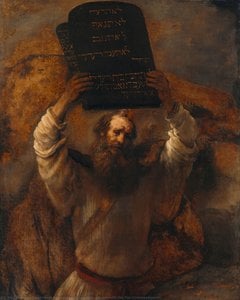
11Moses with the Ten Commandments (1659) by RembrandtMoses with the Ten Commandments1659 · Gemäldegalerie 12The flayed ox by RembrandtThe flayed ox 13The Abduction of Europa by RembrandtThe Abduction of EuropaJ. Paul Getty Museum 14Title in Swedish: Batavernas trohetsed till Claudius Civilis (1662) by RembrandtTitle in Swedish: Batavernas trohetsed till Claudius Civilis1662 · Nationalmuseum 15The Man with the Golden Helmet - Rembrandt van Rijn (2026) by RembrandtThe Man with the Golden Helmet - Rembrandt van Rijn2026 16Self-Portrait With Saskia Or The Prodigal, Dresden (1638) by RembrandtSelf-Portrait With Saskia Or The Prodigal, Dresden1638 · Staatliche Kunstsammlungen Dresden 17Meditation by RembrandtMeditationLouvre Abu Dhabi 18The Blinding of Samson (1636) by RembrandtThe Blinding of Samson1636 · Städel Museum 19The Stoning of St. Stephen (1625) by RembrandtThe Stoning of St. Stephen1625 · Museum of Fine Arts of Lyon 20The Sacrifice of Isaac, Eremitag (1635) by RembrandtThe Sacrifice of Isaac, Eremitag1635 · Hermitage Museum 21Pallas Athena (1655) by RembrandtPallas Athena1655 · Calouste Gulbenkian Museum 22Balaam's Ass (1626) by RembrandtBalaam's Ass1626 · Musée Cognacq-Jay 23The Polish Rider (1655) by RembrandtThe Polish Rider1655 · The Frick Collection 24Flora (1634) by RembrandtFlora1634 · Hermitage Museum 25The anatomy lesson of Dr. Joan Deijman (1656) by RembrandtThe anatomy lesson of Dr. Joan Deijman1656 · Amsterdam Museum 26Andromeda (1630) by RembrandtAndromeda1630 · Mauritshuis 27Self-Portrait with Two Circles (1665) by RembrandtSelf-Portrait with Two Circles1665 28Artemisia (1634) by RembrandtArtemisia1634 · Museo del Prado 29Jeremiah mourning over the Destruction of Jerusalem (1630) by RembrandtJeremiah mourning over the Destruction of Jerusalem1630 · Rijksmuseum 30The Anatomy Lecture of Dr. Nicolaes Tulp [1632] (1632) by RembrandtThe Anatomy Lecture of Dr. Nicolaes Tulp [1632]1632 · Mauritshuis 31The Return of the Prodigal Son (1669) by RembrandtThe Return of the Prodigal Son1669 · Hermitage Museum 32Philosopher in Meditation (1632) by RembrandtPhilosopher in Meditation1632 · The Louvre 33Belshazzar's feast by RembrandtBelshazzar's feastNational Gallery 34Le Retour De L Enfant Prodigue (1660) by RembrandtLe Retour De L Enfant Prodigue1660 · Hermitage Museum 35Isaac and Rebecca, known as (1669) by RembrandtIsaac and Rebecca, known as1669 · Rijksmuseum 36Philosopher in Meditation (1632) by RembrandtPhilosopher in Meditation1632 · The Louvre 37Philosopher Reading (1631) by RembrandtPhilosopher Reading1631 · Nationalmuseum 38Two Women Teaching a Child to Walk (1640) by RembrandtTwo Women Teaching a Child to Walk1640 · British Museum 39The Martyrdom of St. Stephen by RembrandtThe Martyrdom of St. Stephen 40Autoportrait En St Paul, amsterdam (1661) by RembrandtAutoportrait En St Paul, amsterdam1661 41The Incredulity of St. Thomas (1634) by RembrandtThe Incredulity of St. Thomas1634 · Pushkin State Museum 42A Woman with a Little Child on her Lap (1635) by RembrandtA Woman with a Little Child on her Lap1635 · The Louvre 43The Mill (1648) by RembrandtThe Mill1648 · National Gallery of Art 44A Man Seated at a Table Covered with Books, (1636) by RembrandtA Man Seated at a Table Covered with Books,1636 45The Holy Family at Night, Rembrandt van Rijn (workshop of), c. 1642 - c. 1648 (1648) by RembrandtThe Holy Family at Night, Rembrandt van Rijn (workshop of), c. 1642 - c. 16481648 · Rijksmuseum 46Portrait of an Old Jew, Eremitage (1654) by RembrandtPortrait of an Old Jew, Eremitage1654 47Christ Resurected (1661) by RembrandtChrist Resurected1661 · Alte Pinakothek 48Portrait of a Seated Woman (1633) by RembrandtPortrait of a Seated Woman1633 · Metropolitan Museum of Art 49Judas Rapportant 30 Deniers, private (1629) by RembrandtJudas Rapportant 30 Deniers, private1629 50Preaching of St John the Baptist (1634) by RembrandtPreaching of St John the Baptist1634 51Portrait De Famille, brunswick (1669) by RembrandtPortrait De Famille, brunswick1669 52Philosopher Meditating by RembrandtPhilosopher Meditating 53Conspiracy of the Bataves (1661) by RembrandtConspiracy of the Bataves1661 · Nationalmuseum 54Crucifixion (1633) by RembrandtCrucifixion1633 · Alte Pinakothek 55Christ Resurected (1634) by RembrandtChrist Resurected1634 · Pushkin State Museum 56Jeremiah Lamenting the Destruction of Jerusalem (1630) by RembrandtJeremiah Lamenting the Destruction of Jerusalem1630 · Rijksmuseum 57Old Rabbi by RembrandtOld RabbiSzépművészeti Múzeum 58Portrait of an Old Man (1645) by RembrandtPortrait of an Old Man1645 · Calouste Gulbenkian Foundation 59Self Portrait (1659) by RembrandtSelf Portrait1659 · National Gallery of Art 60St. Jerome Writing, Seated near a Large Tree (1648) by RembrandtSt. Jerome Writing, Seated near a Large Tree1648 61Portrait of the Artist as a Young Man (1631) by RembrandtPortrait of the Artist as a Young Man1631 · Walker Art Gallery 62The Visitation (1640) by RembrandtThe Visitation1640 · Detroit Institute of Arts 63Cottages under a Stormy Sky, c. 1635 (1635) by RembrandtCottages under a Stormy Sky, c. 16351635 · Albertina 64The Toilet of Bathsheba (1643) by RembrandtThe Toilet of Bathsheba1643 · Metropolitan Museum of Art 65Christ and the adulteress ng london (1644) by RembrandtChrist and the adulteress ng london1644 · National Gallery 66Agatha Bas (1611-58) (1641) by RembrandtAgatha Bas (1611-58)1641 · Royal Collection 67Self Portrait in Oriental Attire (1631) by RembrandtSelf Portrait in Oriental Attire1631 68The Prophet Jonah before the Walls of Nineveh, c. 1655 (1655) by RembrandtThe Prophet Jonah before the Walls of Nineveh, c. 16551655 · Albertina 69Portrait of a Man, perhaps Rembrandt"s Father, Harmen Gerritsz van Rijn, Rembrandt van Rijn (copy after), after c. 1634 (1634) by RembrandtPortrait of a Man, perhaps Rembrandt"s Father, Harmen Gerritsz van Rijn, Rembrandt van Rijn (copy after), after c. 16341634 70The Virgin Mourning the Death of Jesus (1641) by RembrandtThe Virgin Mourning the Death of Jesus1641 71Presentation in the Temple in the Dark Manner (1654) by RembrandtPresentation in the Temple in the Dark Manner1654 72La Sainte Famille Avec Anges, st Petersbourg (1645) by RembrandtLa Sainte Famille Avec Anges, st Petersbourg1645 73Self Portrait, Frowning (1630) by RembrandtSelf Portrait, Frowning1630 74Simeon with the Christ Child in the Temple by RembrandtSimeon with the Christ Child in the Temple 75Self Portrait at the Age of 63 (1669) by RembrandtSelf Portrait at the Age of 631669 · National Gallery 76An Elderly Man as Saint Paul by RembrandtAn Elderly Man as Saint PaulNational Gallery 77Repentant Judas Returning The Pieces Of Silver (1629) by RembrandtRepentant Judas Returning The Pieces Of Silver1629 78The Woman taken in Adultury (1644) by RembrandtThe Woman taken in Adultury1644 · National Gallery 79Landscape with the Good Smaritan (1638) by RembrandtLandscape with the Good Smaritan1638 80Portraits of Jean Pellicorne and his Son Casper (1633) by RembrandtPortraits of Jean Pellicorne and his Son Casper1633 · Wallace Collection 81Doctor Nicolaes Tulp's Demonstration of the Anatomy of the Arm by RembrandtDoctor Nicolaes Tulp's Demonstration of the Anatomy of the ArmAmsterdam Museum 82Christ in the Storm (1633) by RembrandtChrist in the Storm1633 · Isabella Stewart Gardner Museum 83Self Portrait Drawing at a Window (1648) by RembrandtSelf Portrait Drawing at a Window1648 84Self Portrait (24) (1633) by RembrandtSelf Portrait (24)1633 85Portrait of the Dortrecht Merchant Jacob Trip (1661) by RembrandtPortrait of the Dortrecht Merchant Jacob Trip1661 · National Gallery 86Philosopher in Meditation (1632) by RembrandtPhilosopher in Meditation1632 · The Louvre 87History Painting (1626) by RembrandtHistory Painting1626 · Museum de Lakenhal 88Young Woman in Bed (also known as Sarah Waiting for Tobias) (1647) by RembrandtYoung Woman in Bed (also known as Sarah Waiting for Tobias)1647 89Portrait of a Woman holding Gloves (1632) by RembrandtPortrait of a Woman holding Gloves1632 · Kunsthistorisches Museum 90Le Bon Samaritain, louvre (1633) by RembrandtLe Bon Samaritain, louvre1633 91The man with the golden helmet ca Gemäldegal (1650) by RembrandtThe man with the golden helmet ca Gemäldegal1650 92An Old Lady with a Book (1637) by RembrandtAn Old Lady with a Book1637 · National Gallery of Art 93David and uriah eremitaget (1665) by RembrandtDavid and uriah eremitaget1665 94Christ Driving The Money Changers From The Temple (1626) by RembrandtChrist Driving The Money Changers From The Temple1626 95Supper at Emmaus (1648) by RembrandtSupper at Emmaus1648 · The Louvre 96Portrait of a Woman (1635) by RembrandtPortrait of a Woman1635 · Cleveland Museum of Art 97Les Pelerins D Emmaus, Louvre (1648) by RembrandtLes Pelerins D Emmaus, Louvre1648 98A Beggar Sitting in an Elbow Chair by RembrandtA Beggar Sitting in an Elbow Chair 99David Et Jonathan, st Petersbourg (1642) by RembrandtDavid Et Jonathan, st Petersbourg1642 100An Old Woman Reading (1655) by RembrandtAn Old Woman Reading1655

Rembrandt's paintings, period by period

What Rembrandt painted most

The four subjects that come up most often in these pieces, each with its best-known example.

Where you can see Rembrandt's paintings

The 8 museums that hold the most of the paintings on this page.

Museum City Works by Rembrandt Paintings from this list
National Gallery, LondonNational Gallery London 35 The Feast of Belshazzar, Belshazzar's feast, Christ and the adulteress ng london
Hermitage Museum, Saint PetersburgHermitage Museum Saint Petersburg 31 The return of the prodigal son, Danae, The Sacrifice of Isaac, Eremitag
Rijksmuseum, AmsterdamRijksmuseum Amsterdam 39 Night Watch, Jeremiah mourning over the Destruction of Jerusalem, Isaac and Rebecca, known as
The Louvre, ParisThe Louvre Paris 21 Philosopher in Meditation, Philosopher in Meditation, A Woman with a Little Child on her Lap
Metropolitan Museum of Art, New YorkMetropolitan Museum of Art New York 43 Aristotle Contemplating a Bust of Homer, Portrait of a Seated Woman, The Toilet of Bathsheba
Mauritshuis, The HagueMauritshuis The Hague 24 The Anatomy Lesson of Dr Nicolaes Tulp, Andromeda, The Anatomy Lecture of Dr. Nicolaes Tulp [1632]
National Gallery of Art, WashingtonNational Gallery of Art Washington 23 The Mill, Self Portrait, An Old Lady with a Book
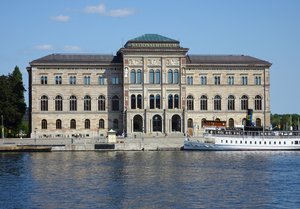
Nationalmuseum, StockholmNationalmuseum Stockholm 14 Title in Swedish: Batavernas trohetsed till Claudius Civilis, Philosopher Reading, Conspiracy of the Bataves

One famous Rembrandt piece for every decade

Works per decade

Pick a decade to see its standout piece.

Rembrandt paintings: what people want to know

What painting is Rembrandt best known for?See the answer

Top of the list is Night Watch (1642), Rijksmuseum, Amsterdam. Right behind it: Christ in the Storm on the Sea of Galilee (1633) and The Anatomy Lesson of Dr Nicolaes Tulp (1632).

How old was Rembrandt at the time of Night Watch?See the answer

36 years old. Rembrandt was born in 1606, and Night Watch dates from 1642.

Which 10 Rembrandt paintings are the most famous?See the answer

Night Watch, Christ in the Storm on the Sea of Galilee, The Anatomy Lesson of Dr Nicolaes Tulp, The return of the prodigal son, Danae, The jewish bride, The Feast of Belshazzar, Sampling Officials of the Guild of the Drapers, Bathsheba at Her Bath and Aristotle Contemplating a Bust of Homer. You'll find the year and the museum of each in the list above.

How many Rembrandt works are there?See the answer

We have 1,554 works by Rembrandt in our catalogue, dated 1625 to 1669.

Which museums have Rembrandt's best-known paintings?See the answer

You'll find most of them in National Gallery (London), Hermitage Museum (Saint Petersburg) and Rijksmuseum (Amsterdam). The museum list above has the full breakdown.

When were Rembrandt's most famous pieces painted?See the answer

In 1630s, more than any other time: 36 of the 100 pieces on this page date from then, Christ in the Storm on the Sea of Galilee among them.

What are the oldest and newest famous paintings by Rembrandt?See the answer

The earliest piece here is The Stoning of St. Stephen (1625); the most recent is The Return of the Prodigal Son (1669).

What did Rembrandt paint most?See the answer

Dutch golden age (25), Portraiture (18) and Chiaroscuro (14), out of the 100 pieces on this page.

What did Rembrandt usually paint with?See the answer

Oil On Canvas, used in 60 of the 100 pieces on this page.

Which art movement is Rembrandt linked to?See the answer

Baroque, as you can see in the pieces on this page.

What can you see by Rembrandt at the National Gallery?See the answer

You can see 7 of the pieces on this page at the National Gallery, London, including The Feast of Belshazzar, Belshazzar's feast and Christ and the adulteress ng london.

Can I order a Rembrandt reproduction for my home?See the answer

Yes. Every painting on this page is available as a hand-painted oil reproduction or a print, in the size that suits you. Just open the painting's page to order.

Meet Rembrandt

The Life of Rembrandt van Rijn

Born on 15 July 1606 in Leiden, in the Dutch Republic, Rembrandt van Rijn entered a world of modest means. He was the ninth child born to Harmen Gerritszoon van Rijn and Neeltgen Willemsdochter van Zuijtbrouck. His life was one of immense productivity, spanning many decades of creative output. By the time he died on 4 October 1669, he had left behind a vast legacy that includes about 300 paintings, 300 etchings, and several hundred drawings.

As a painter, printmaker, and draughtsman, he became a central figure of the Dutch Golden Age. His work was not limited to a single medium; he moved between the heavy application of paint and the precise, delicate lines of intaglio printmaking. This technical range allowed his visual ideas to reach far beyond the borders of the Netherlands. His ability to capture human emotion and light became a defining characteristic of his many years of practice.

His surviving works offer a window into a life lived through constant creation. Some of his notable pieces include:

Early Life, Family and Training

Born into a family of modest, industrious means, Rembrandt entered a world shaped by the steady rhythms of trade. His father, Harmen Gerritszoon van Rijn, worked as a miller, while his mother, Neeltgen Willemsdochter van Zuijtbrouck, was the daughter of a baker. This stable upbringing in Leiden provided the foundation for a boy who would eventually command the attention of the Dutch Republic. Before he ever picked up a brush, he attended Latin school, an education that likely sharpened the intellectual depth found in his later compositions.

His formal artistic development began in earnest when he was apprenticed to Jacob van Swanenburg. This three-year period of study provided the technical grounding necessary for a professional career. After completing his apprenticeship, he moved toward the center of the Dutch art world, seeking further instruction in Amsterdam. He spent six months under the guidance of the history painter Pieter Lastman, a period that proved essential in shaping his understanding of complex narrative and human emotion.

Establishing a Career in Leiden and Amsterdam

By 1625, the young artist had moved beyond his apprenticeship and opened a studio in Leiden. He did not work alone; he shared this space with his colleague Jan Lievens. During these years, his output focused on religious and allegorical subjects. He often paid close attention to the fine details of costumes and jewelry in these early works. As his reputation grew, he began to attract his own pupils, including Gerrit Dou and Isaac de Jouderville, which helped establish a professional workshop structure.

A significant shift occurred in 1631 when he moved to Amsterdam. This relocation was a strategic step into the commercial heart of the Dutch Republic. Shortly after his arrival, he became involved with the Amsterdam art dealer Hendrik van Uylenburgh. This connection provided the professional stability and access to high-profile clients necessary to solidify his standing. He soon became a member of the city's guild of painters, a formal recognition of his status within the established artistic community. In this bustling urban environment, he transitioned into a leading portraitist, finding success through a growing network of patrons and the support of the city's merchant class.

Patrons, Workshop and Commissions

Success in the Dutch Golden Age required more than talent; it demanded the right connections. By 1628, Rembrandt had already secured his first recorded buyer, Joan Huydecoper. This early recognition was soon bolstered by the discovery of his talent in 1629 by Constantijn Huygens. Such high-level patronage provided the stability necessary to expand his influence. Prince Frederik Hendrik became a consistent supporter, continuing to purchase his paintings and ensuring the artist's presence in the most influential circles of the time.

As his reputation grew, so did the scale of his operations. He began accepting students in 1627, building a workshop that would become a significant center for artistic production. Among those who studied under his guidance were Gerrit Dou and Isaac de Jouderville. This instructional period allowed him to manage a growing number of commissions while refining the specific techniques that would define his career. His studio was a place of constant activity, where the demands of his patrons met the practical needs of a busy professional practice.

Marriage and Family Life

In 1634, Rembrandt’s personal life underwent a significant change when he married Saskia van Uylenburgh on 2 July. Saskia came from a family of standing; her father, Rombertus Uylenburg, held the positions of mayor and justice of the Court of Friesland. Their union brought a sense of stability to his growing life in Amsterdam, and Saskia became a constant presence in his creative world. She appeared frequently as a model in his drawings and etchings, her likeness becoming a recurring element in his visual language.

The couple had a son, Titus van Rijn, who grew up within the busy atmosphere of the artist's studio. Titus was more than a member of the household; he was a frequent subject for his father's studies and eventually took on the responsibility of managing the family's affairs. The bond between father and son was central to the domestic life of the household, particularly as the years passed and the complexities of the artist's professional and financial standing shifted.

Technique and Artistic Style

Rembrandt had a way of making light feel like a physical presence in a room. He became a master of chiaroscuro, using the sharp contrast between deep shadows and bright highlights to create a sense of drama and weight. This was not merely a trick of the light; it was a way to guide the eye and suggest the hidden depths of a person's character. He used these shadows to sculpt faces and objects, making them feel tangible and real even in the dimmest settings.

His skill extended far beyond the canvas and into the intricate world of intaglio printmaking. He was a prolific etcher who understood how to translate the heavy, atmospheric qualities of his paintings onto a copper plate. To achieve this, he relied on a precise set of technical methods. He used biting to etch lines into the metal, combined with fluid lines and delicate cross-hatching to build up texture. Through subtle tonalities, he could replicate the soft transitions of light that he achieved with a brush, allowing his visual ideas to reach a much wider audience through his prints.

Key Works and Masterpieces

Rembrandt’s ability to capture human emotion is perhaps most visible in his large-scale compositions. In 1642, he completed The Night Watch, a work that demonstrates his command over light and shadow to create a sense of movement and drama. This period of his life saw him moving toward more complex, crowded scenes that required a deep understanding of how light falls across a group of people.

As he aged, his focus often turned toward the weight of human experience and spiritual themes. The Return of the Prodigal Son, finished in 1669, reflects the profound psychological depth he sought in his later years. Similarly, Isaac and Rebecca, painted about 1669, shows his interest in the quiet, intimate connections between individuals. Even in his earlier, more vigorous works like The Blinding of Samson, there is a clear sense of the tension and narrative power he could pull from a single moment.

Where to See the Works Today

To encounter the physical presence of Rembrandt's hand, one must travel to several major institutions across Europe and North America. His legacy is spread across many collections, with the National Gallery in London holding sixteen of his works. In Paris, the Louvre maintains thirteen pieces, offering a quiet space to observe his use of light. The Mauritshuis in The Hague is another essential stop, housing twelve works that reflect his development.

The reach of his art extends far beyond the Netherlands. In Munich, the Alte Pinakothek holds eleven paintings, while the Metropolitan Museum of Art in New York contains eleven as well. These collections allow us to see how his style evolved from his early years in Leiden to his later, more introspective period. Seeing these works in person reveals the texture of the paint and the depth of the shadows he created.

All 1554 works by Rembrandt →