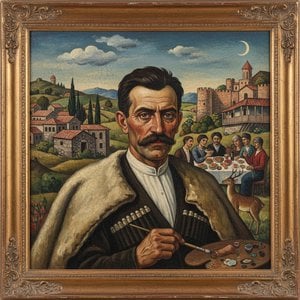
Sergei Parajanov: A Cinematic Visionary
Sergei Iosifovich Paradzhanov (სერგო ფარაჯანოვი), born January 9, 1924, in Tbilisi, Georgia, was a Soviet film director and screenwriter whose singular artistic vision irrevocably altered the landscape of cinematic storytelling. His legacy endures as one of the most influential filmmakers of the 20th century—a title earned not merely for quantity but for unparalleled depth and beauty. Descended from Armenian parents – Iosif Paradjanyan, a merchant, and Siranush Bejanov – Sergei’s upbringing instilled in him an appreciation for artistic expression that would profoundly shape his creative trajectory. He pursued musical studies initially, mastering violin, voice, and ballet before enrolling at Moscow’s VGIK (Всероссийский государственный институт кинематографии им. А.С. Пушкина), where he honed his craft under the mentorship of Ukrainian luminaries Igor Savchenko and Aleksandr Dovzhenko.- Early Influences: Savchenko's emphasis on realism and Dovzhenko’s exploration of Soviet ideology initially steered Paradzhanov toward conventional filmmaking techniques, yet these formative experiences quickly fueled a discontentment with the prevailing stylistic constraints of Socialist Realism—a doctrine that dictated artistic output within the USSR.
- A Dissenter's Path: Recognizing the limitations imposed by official dogma, Paradzhanov increasingly championed independent cinematic experimentation, rejecting the prescribed aesthetic formulas and yearning for forms that could capture the essence of human experience with greater nuance and sensitivity.
The Color of Pomegranates: A Triumph of Symbolism
Despite the repressive climate of his time, Paradzhanov persevered, directing *Color of Pomegranates* (*Цвет пурпурный*) in 1969—a film that solidified his reputation as a cinematic visionary. This ambitious project, filmed entirely in color but deliberately stylized to resemble illuminated manuscripts and theatrical costumes, recounted the life story of Armenian poet Sayat-Nova through a series of vignettes interwoven with music and dance. The film’s meticulous visual design—characterized by opulent fabrics, intricate patterns, and symbolic gestures—created an immersive experience that transported viewers into a realm of mythic grandeur. Its reception was overwhelmingly positive among filmmakers worldwide, cementing its place as one of the greatest films ever made.Recognition and Legacy
Paradzhanov’s unwavering commitment to artistic integrity garnered him numerous awards at prestigious film festivals—including Cannes—and ensured his name would be honored with retrospectives across Europe. Directors such as Andrei Tarkovsky, Pier Paolo Pasolini, Federico Fellini, and Michelangelo Antonioni recognized Paradzhanov's singular genius, acknowledging his profound influence on their own cinematic endeavors. His films continue to inspire artists and filmmakers today, demonstrating the enduring power of visionary storytelling.A Complex Figure
Sergei Paradzhanov’s artistic achievements stand alongside a controversial personal life—marked by turbulent marriages and legal battles—underscoring the multifaceted nature of this extraordinary artist. Despite facing constant obstacles from Soviet censorship, he remained steadfast in his pursuit of creative freedom, leaving an indelible mark on cinematic history as a champion of poetic expression and a defiant voice against ideological constraints.Questions & Answers
In which historical period did Sergei Iosifovich Parajanov work?
Sergei Iosifovich Parajanov worked in the Modern period. The period situates the artist's activity in history.
Can I browse Sergei Iosifovich Parajanov's works by mood?
The Mood Room of Sergei Iosifovich Parajanov is a page that arranges the artist's artworks by mood.
What colors did Sergei Iosifovich Parajanov use most often?
The color profile of Sergei Iosifovich Parajanov's work is shown on the artist's Palette Genome page.