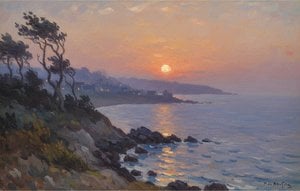
Maxime Emile Louis Maufra: A Painter of Light and Atmosphere
Maxime Emile Louis Maufra (1861 – 1918) stands as a prominent figure in French landscape painting, particularly renowned for his masterful depiction of Breton coastal vistas and marine scenes. Born in Nantes on May 17th, he embarked on an artistic journey largely self-taught, nurtured by the encouragement of fellow artists from Nantes—Charles Leduc and Alfred Leduc—and influenced by the expressive style of Charles Le Roux. His formative years instilled a deep appreciation for observation and meticulous detail, shaping his distinctive approach to capturing the essence of nature.
- Early Life & Training: Maufra’s initial artistic inclinations blossomed during his teenage years, fueled by an innate curiosity about visual representation. Despite lacking formal academic training, he honed his skills through independent experimentation and engagement with the vibrant artistic milieu of Nantes.
- Influences & Artistic Style: Maufra's aesthetic sensibilities were profoundly impacted by Impressionism and Symbolism. He particularly admired the pointillist technique championed by Georges Seurat and Camille Pissarro, adopting their method to achieve luminous effects and textural nuances. Furthermore, he drew inspiration from the Pont-Aven School’s bold color palettes and dynamic brushstrokes, establishing himself as a key contributor to this influential movement.
The Breton Landscape: A Sanctuary for Artistic Vision
Maufra's artistic focus solidified in 1890 when he relocated to Pont-Aven, Brittany—a region that would become synonymous with his oeuvre. This pivotal decision coincided with the arrival of fellow artists Paul Gauguin and Paul Sérusier at the Bateau-Lavoir, fostering a collaborative environment conducive to experimentation and innovation. The rugged Breton coastline served as an inexhaustible source of inspiration for Maufra’s canvases—studies of dramatic skies, turbulent seascapes, and serene harbors—each imbued with palpable emotion and atmospheric depth. Notable works include “La Houle à Donant Belle Ile en Mer” (1896) and “La Grande Houle à Donant (Belle île)” (1898), which exemplify his ability to convey the sublime grandeur of the natural world.
Technique & Innovation: Pointillism and Beyond
Maufra’s artistic technique was characterized by a deliberate commitment to capturing light and color with unparalleled precision. He embraced the pointillist method—developed by Seurat and Sisley—employing tiny dots of pigment to build up tonal variations and create shimmering surfaces. This approach demanded painstaking attention to detail, yet yielded breathtaking results—a testament to Maufra’s unwavering dedication to mastering his craft. Beyond pointillism, he skillfully utilized glazing techniques and expressive brushstrokes to imbue his paintings with dynamism and emotional resonance.
Major Achievements & Legacy
Throughout his prolific career, Maufra produced an impressive body of work—over 300 paintings—that continue to captivate audiences worldwide. His landscapes are celebrated for their evocative beauty and masterful rendering of atmospheric conditions, cementing his place among the foremost painters of the late nineteenth century. “Study for Pont-Aven Red Sky (Former Title: L)” remains a cornerstone of Breton art history, housed in the Musée de Pont-Aven—a poignant reminder of Maufra’s enduring contribution to Impressionist and Symbolist aesthetics. His legacy extends beyond his artistic output; he championed the Bateau-Lavoir as a haven for artists and fostered a spirit of creative collaboration that shaped the cultural landscape of Montmartre. Maxime Emile Louis Maufra's art continues to inspire admiration for its luminous beauty and profound connection to the natural world.