

Table of Contents
Quick Facts
- Works on APS: 39
- Mediums: oil on canvas
- Creative periods:
- mature period
- late period
- Born: 1871, Granada, Spain
- Also known as:
- Marià Fortuny I De Madrazo
- Mariano Fortuny Marsal
- Movements:
- art nouveau
- art deco
- Museums on APS:
- Museo del Traje
- Museo del Traje
- Museo del Traje
- Museo del Traje
- Museo del Traje
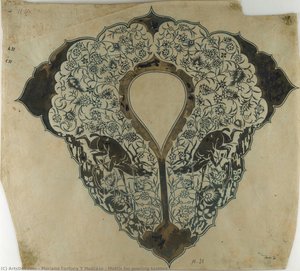
- Top-ranked work: Matrix for printing textiles
- Copyright status: Public domain
- Vibe:
- elegant
- dramatic
- Emotional tone: melancholic
- More…
- Lifespan: 78 years
- Art period: Modern
- Top 3 works:
- Matrix for printing textiles
- Wagnerian Cycle. Parsifal. The Flower-Maidens
- Matrix for printing textiles
- Best occasions:
- statement
- accent
- Died: 1949
- Gift suitability: other-none
- Color intensity:
- balanced
- monochromatic
- Room fit: living room
- Typical colors:
- earthy
- other
- Nationality: Spain
Art Quiz
There is only one correct answer for each question.
Question 1:
Mariano Fortuny y Madrazo was born in which country?
Question 2:
Besides being an artist, what other fields did Mariano Fortuny excel in?
Question 3:
What was a significant contribution of Fortuny to the world of theatre?
Question 4:
Fortuny's famous 'Delphos' gown was known for its...
Question 5:
Where is the Museo Fortuny located?
A Polymath of Venice: The Life and Legacy of Mariano Fortuny
Mariano Fortuny y Madrazo, a name synonymous with innovation, artistry, and the alluring mystique of Venice, was far more than simply a painter or designer. Born in Granada, Spain, in 1871, his life unfolded as a testament to boundless curiosity and an unwavering pursuit of aesthetic perfection across multiple disciplines. The early loss of his father, also a celebrated painter, propelled a move with his mother to Paris, where young Mariano was immersed in the vibrant artistic currents of the late 19th century. This formative period instilled within him not only a technical foundation but also a deep appreciation for color, texture, and the power of visual expression. However, it was the subsequent relocation to Venice in 1889 that truly ignited his creative spirit. The city’s rich history, its unique light, and its atmosphere of faded grandeur became an enduring source of inspiration, shaping his artistic vision for decades to come.From Stage Lighting to Textile Revolution
Fortuny's genius lay in his ability to seamlessly blend art with invention. He wasn’t content merely to create beautiful objects; he sought to understand and control the very processes that brought them into being. Initially captivated by the world of theatre, he revolutionized stage lighting through ingenious systems of reflected illumination, moving beyond simple direct light to create nuanced atmospheres and dramatic effects. This fascination with light extended beyond the stage, influencing his later work with textiles. He wasn’t simply designing fabrics; he was engineering them, developing unique dyeing techniques and even inventing machinery to achieve previously unattainable effects. His designs weren't just about aesthetics but also about manipulating how light interacted with fabric, creating a shimmering, almost ethereal quality that became his signature. This dedication led him to secure over twenty patents for his inventions, demonstrating a remarkable technical prowess alongside his artistic sensibility.The Delphos Gown and the Fortuny Aesthetic
While his contributions spanned numerous fields, Mariano Fortuny is perhaps best known today for his revolutionary approach to fashion. In 1906, he opened his couture house in Venice, quickly gaining renown for dresses that defied convention. The iconic *Delphos* gown, introduced around 1920, became a symbol of modern elegance and freedom. Inspired by the flowing drapery of ancient Greek sculptures, these gowns were crafted from specially pleated silk, allowing them to conform to the body with graceful fluidity. They weren’t tailored in the traditional sense; rather, they seemed to drape themselves upon the wearer, creating an effect of effortless sophistication. Beyond the *Delphos*, his textiles – richly colored and intricately patterned – found their way into interiors worldwide, adorning walls and furniture with a distinctly Venetian flair. The fabrics were not merely decorative; they were works of art in their own right, imbued with a sense of history and timeless beauty.A Lasting Influence
Mariano Fortuny’s legacy extends far beyond the exquisite garments and textiles he created. He embodied a holistic approach to design, believing that true artistry required mastery of every stage of the creative process – from initial concept to final execution. His dedication to craftsmanship, his innovative spirit, and his unwavering pursuit of beauty continue to inspire artists and designers today. The Fortuny factory in Venice, still operating on Giudecca Island, remains a testament to his enduring vision, preserving the time-honored techniques he pioneered. Furthermore, the Museo Mariano Fortuny y Madrazo, housed in his former palazzo, offers a captivating glimpse into his multifaceted world, showcasing not only his artworks and designs but also his inventions and the atmosphere that fueled his extraordinary creativity. He was truly a magician of Venice, transforming tradition with innovation and leaving an indelible mark on the worlds of art, fashion, and design.Key Achievements & Collections
- Innovative Stage Lighting: Pioneered indirect lighting techniques that revolutionized theatrical productions.
- Textile Design & Production: Developed unique dyeing processes and machinery for creating richly patterned silks.
- The Delphos Gown: Created a revolutionary garment inspired by ancient Greek drapery, celebrated for its fluidity and elegance.
- Museo Fortuny (Venice): His former home and studio now serves as a museum dedicated to his life and work.
- Notable Collections: Works are held in prestigious institutions including the Museum of Fine Arts, Boston (Mariano Fortuny: Teagown) and the Museo del Traje, Madrid (Mariano Fortuny: Swatch).
Related Articles
Draped Narratives: Fashion as Symbol & Subject in Historical Art
Explore the fascinating history of fashion as a symbol of power & status in art! Discover masterpieces from Gainsborough to Tissot and learn how clothing shaped societal narratives. Find museum-quality reproductions at ArtsDot.


Rafael de Penagos: A Study in Spanish Portraiture & Artistic Identity
Explore the life & art of Rafael de Penagos, a leading Spanish Art Deco illustrator. Discover his iconic 'Penagos Woman', commercial work, and lasting legacy. Learn about this pivotal figure in 20th-century Spanish art history.

Gastronomic Canvas: Culinary Aesthetics & Artistic Representation for Hotel Design
Explore the captivating intersection of culinary arts & artistic representation for hotel design. Discover techniques to elevate dining experiences through visual harmony, composition, and inspiration from classic still life painting.




![Sotoportego [underpass] in Venice](/media/artworks/images/thumbnails/e3/31/e3314e7a228542af920561515d780d99.jpg)

