The Quiet Presence of J.L.P. Marquart
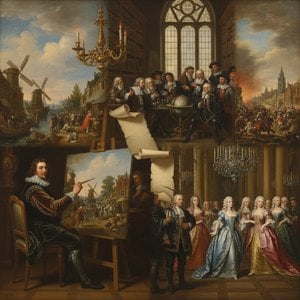
In the mid-eighteenth century, the art of portraiture was deeply intertwined with the social fabric of the Dutch landscape. J.L.P. Marquart, a painter active during this era, contributed to this tradition by capturing the likenesses of the individuals who shaped their era. Born in 1730, Marquart worked during a period when a portrait was more than a mere likeness; it was a record of status, character, and lineage. His life and work remain tied to the historical records of the time, offering a window into the faces of the eighteenth century.
The artist's legacy is most clearly seen through the portraits he left behind, many of which have found their way into significant collections. His ability to render the presence of his subjects allowed these individuals to persist through the centuries, long after their physical lives had concluded. His work is a part of the visual history of the Netherlands, preserved in the halls of historic estates.
A Legacy in Portraiture
The surviving works of Marquart offer a look into the social circles of the eighteenth century. His paintings focus on the formal representation of his subjects, capturing the dignity of the sitter. His known works include:
- Portrait of Alexander Walraad Diederik van Hugenpoth (1695-1780)
- Portrait of Cornelia Simona van Doetinchem
These paintings are held within the Huis Zypendaal collection in Arnhem. The estate, a country house situated in a hilly landscape, serves as the home for an extensive collection of family portraits. While these specific works are part of the history of the Brantsen family's holdings, they reflect the broader role of the painter as a chronicler of the landed gentry. Through these portraits, we see the faces of the era and the people who shaped the history of the region.
Historical Significance
Marquart passed away in 1790, leaving behind a body of work that serves as a vital link to the eighteenth century. While much of his personal life remains obscured by the passage of time, his contribution to the art of portraiture is documented through the preservation of his subjects. He lived through a transformative era, and his paintings remain as the primary evidence of his skill and his place in the history of Dutch painting. His work continues to reside in the quiet rooms of Arnhem, where the history of the families he painted is still felt.