Iconography, as a branch of art history, studies the identification, description and interpretation of the content of images: the subjects depicted, the particular compositions and details used to do so, and other elements that are distinct from arti...
To look at a painting is often to merely see; to read it is to understand. The term iconography, derived from the Greek for writing with images, suggests that a canvas is not just a surface for pigment but a structured text. For those who find comfort in the established traditions of the past, understanding this visual vocabulary offers a way to connect with the minds of long-dead masters. It requires us to move beyond the initial impression and look for the specific details—the placement of a hand, the tilt of a head, or the presence of a particular object—that carry weight far beyond their physical form.
This practice of identification finds its roots in the scholarly efforts of the nineteenth century, where specialists like Émile Mâle began to systematically classify religious imagery. They looked at the world not as a collection of random shapes, and instead saw an organized system of meaning. We see this same impulse today when we encounter the works within the Cheshunt Foundation in Cambridge. In pieces such as Don Simone Camaldolese’s Gradual Fragment, the meticulous precision of Byzantine iconography invites a stillness that is both scholarly and deeply personal. The image does not demand attention through noise, but through a quiet, structured communication that rewards the patient observer.
Sacred Signifiers: The Language of Devotion and Faith
A Visionary Descent into the Surreal In the shadowy corridors of art history, few names evoke as much mystery and visceral intrigue as Hieronymus Bosch. His work, particularly the haunting masterpiece The Temptation of St. Anthony (manner of Bosch, c...
In the realm of sacred art, symbols act as bridges between the earthly and the divine. A single object can represent an entire theological concept, turning a simple depiction into a profound meditation on grace or suffering. When we observe religious works, we are often looking at a carefully constructed liturgy in paint. The artists of the past understood that to depict the holy, one must use signs that resonate with the soul, using light and shadow to suggest truths that words cannot fully capture.
Consider the tension found in Northern Mannerism, where the stability of the High Renaissance began to fracture. In works such as The Temptation of St. Anthony, attributed to the manner of Hieronymus Bosch, the landscape is a site of spiritual warfare. Here, the hollow tree trunk sheltering the saint serves as a metaphor for human vulnerability and isolation. The presence of hybrid creatures and unsettling imagery underscores the pervasive influence of temptation. This use of symbol allows the viewer to experience the psychological torment of the subject, proving that even the most grotesque elements can be imbued with deep spiritual significance.
Nature’s Hidden Narratives: Animals and Flora as Allegory
French (Fontainebleau) Painter: An Enigmatic Legacy The identity of the French (Fontainebleau) painter remains one of the most captivating mysteries in the annals of art history, a figure shrouded in the soft mists of the sixteenth century. Born in t...
The natural world in classical painting is rarely just a backdrop; it is often an active participant in the story being told. A wilting flower or a specific breed of animal can signal the passage of time, the presence of mortality, or even political shifts. The masters used the organic textures of the earth to ground their allegories, making the abstract concepts of life and death feel tangible and immediate.
This dialogue between nature and meaning is strikingly evident in the Fontainebleau School. In the works of a French (Fontainebleau) Painter, we see an era where the rigid structures of the early Renaissance dissolved into something more fluid and decorative. The use of elongated figures and complex perspectives often mirrored the natural world's own capacity for grace and distortion. Just as a vine twists around a trellis, the artists of this period used organic forms to create a sense of theatrical drama and psychological depth, reminding us that nature itself can be a vessel for human emotion.
Attributes of Identity: Decoding Status in Portraiture
A Vision of Baroque Elegance In the quiet majesty of Michael Dahl’s The Duchess of Rutland , viewers are transported to the height of the English Baroque period. This exquisite portrait, captured around 1695-1700, is far more than a mere likeness of ...
In portraiture, every element of a sitter's attire and surroundings is a deliberate choice intended to communicate their place in the social hierarchy. A ring, a book, or even the specific way a sleeve is gathered speaks volumes about wealth, intellect, and lineage. To study these portraits is to engage in a form of historical detective work, where we piece together the identity of the subject through the clues left by the artist's brush.
We see this mastery of social signaling in Michael Dahl’s The Duchess of Rutland. In this portrait from the English Baroque, the sitter’s status is not merely stated but demonstrated through texture and object. The open book resting beneath her hand is a deliberate symbolic gesture, speaking to her erudition and engagement with the literary pursuits of her era. It transforms the portrait from a simple display of aristocratic grace into a celebration of the intellect. Such details allow us to see the person behind the title, connecting us to the lived reality of the seventeenth century.
The Drama of Light: Chiaroscuro and the Weight of Shadow
A Glimpse into Renaissance Devotion – The Oratorio del Gonfalone Tucked away within the labyrinthine streets of Rome, the Oratorio del Gonfalone stands as a testament to the city’s layered history and artistic brilliance. Often referred to as the “Si...
Light is perhaps the most powerful tool in an artist's repertoire, capable of sculpting form and directing the viewer's gaze. Through the technique of chiaroscuro—the dramatic interplay between light and dark—artists can create a sense of volume and atmosphere that feels almost tactile. This use of light does more than illuminate; it creates a sense of mystery, casting certain truths into the shadows while pulling others into sharp, undeniable focus.
This sculptural use of light is central to the emotional weight found in the Oratorio del Gonfalone in Rome. Within its walls, the Mannerist frescoes depict scenes from the Passion of Christ with an intense, theatrical energy. The way light hits the exaggerated poses and elongated figures creates a sense of movement and spiritual urgency. By manipulating the contrast between brightness and gloom, the artists ensure that the viewer is not just watching a scene, but is instead drawn into the very heart of the drama, where every shadow holds the potential for revelation.
Michael Dahl (1659-1743): Celebrated Swedish Baroque portraitist renowned for his aristocratic subjects & time painting in England. Discover his masterpieces!
Explore the revolutionary Barbizon School and its masters, from Corot to Rousseau. Discover how these pioneers of plein air painting redefined landscape art through naturalism. Find museum-quality hand-painted reproductions and expert art insights at ArtsDot.com.
Master the art of visual storytelling with our expert guide to decoding masterpieces. Learn professional techniques in formal analysis, iconography, and historical context to unlock the profound layers of meaning within iconic artworks.
Immerse yourself in the elegance of Sir Anthony van Dyck. Explore 25 iconic Baroque masterpieces, from royal portraits to Flemish classics. Find inspiration for museum-quality art reproductions and timeless decor. Discover all masterpieces on ArtsDot.com.
Step into the surreal nightmares of Hieronymus Bosch. Explore 25 iconic Northern Renaissance masterpieces, from dark symbolism to legendary imagery. Find inspiration for museum-quality art reproductions and curated decor. Discover all masterpieces on ArtsDot.com.



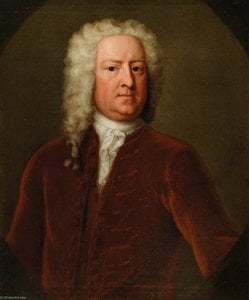

 Iconography
 The Temptation of St Anthony, Jheronimus Bosch (manner of), c. 1550 - c. 1600
 French (Fontainebleau) Painter
 The Duchess of Rutland (possibly Katherine Manners, née Noel, 1657–1733, Duchess of Rutland, wife of John Manners, 1st Duke of Rutland)
 Oratorio del Gonfalone


