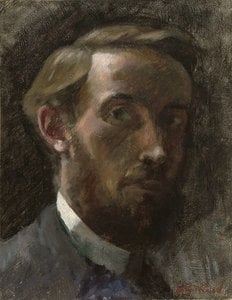
A pastel (US: ) is an art medium that consists of powdered pigment and a binder. It can exist in a variety of forms, including a stick, a square, a pebble, and a pan of color, among other forms. The pigments used in pastels are similar to those used ...
To understand the pastel is to understand the rawest state of color. Unlike the heavy, structural permanence of oil paint, which relies on a complex architecture of drying oils and resins, pastel exists as a direct dialogue between powdered pigment and a minimal binder. It is a medium of immediacy, where the artist’s hand meets the substrate without the mediation of a brush. This fundamental characteristic grants the work an ethereal quality; the eye does not merely see color but perceives a delicate dusting of light that seems to vibrate against the paper.
This technical simplicity belies a deep historical lineage. In the 18th century, pastel rose to prominence as a primary vehicle for portraiture, favored by the aristocracy for its ability to render the velvet smoothness of skin and the intricate textures of lace. The English painter Francis Cotes, a student of the Venetian master Rosalba Carriera, pushed these boundaries through his meticulous approach. His work demonstrated how subtle gradations could achieve a luminosity that felt as though it glowed from within the paper itself. Today, whether one is examining a period piece or a contemporary work by Katharine Walter Rowe, that same reliance on pure pigment remains the medium's defining strength.
Chasing the Sun: The Impressionist Legacy of Light
A Sanctuary of Vision: The Soul of The Barnes Foundation To step into The Barnes Foundation is to enter a space where the boundaries between art, life, and education dissolve into a singular, transformative experience. Located in the heart of Philade...
The history of pastel is inextricably linked to the evolution of light in Western art, reaching its zenith during the Impressionist revolution. While oil painters often struggled with long drying times when attempting to capture a fleeting sunset, pastel artists possessed the ability to record the instant. This immediacy allowed them to chase the sun, translating the ephemeral shifts of dawn and dusk into tangible form. The medium became the preferred language for those seeking to document the transient nature of modern life, where light is never static but always in motion.
This pursuit of the momentary is perhaps most evident in the works of Edgar Degas. In his 1892 study, Woman washing in the bath, he utilizes a muted palette of slate, ochre, and soft blue to transform a private ritual into a meditation on atmosphere. The loose, gestural lines capture the muscular grace and the soft tulle of the subject with a precision that feels both lifelike and dreamlike. This same impulse to capture the fleeting is found in the works housed within The Barnes Foundation, where the arrangement of Impressionist and Post-Impressionist works encourages a deep, rhythmic dialogue with the canvas, much like the way light scatters across a landscape at dusk.
The Architecture of Surface: Texture, Scumbling, and Depth
The painting Silver Trees by Jean Edouard Vuillard is a stunning example of post-impressionist art, characterized by its vibrant colors and delicate pastel work. Created in 1907, this artwork measures 25 x 32 cm and showcases the artist's unique styl...
Because the pigment sits atop the grain of the paper rather than being forced into it through heavy oils, there is an inherent velvety texture that defines the medium. This allows for a layering process that is both additive and subtractive. Artists can build up luminous clouds of color or scrape away layers to reveal hidden brilliance. Techniques such as scumbling—applying pigment in thin, dry layers—create a hazy effect that mimics the way light scatters in natural environments.
This manipulation of surface is central to the work of Jean-Édouard Vuillard. In his 1907 piece, Silver Trees, the use of pastel creates a soft, dreamy atmosphere where the yellow grass and trees blend seamlessly together. The texture of the medium allows for this level of atmospheric blurring, creating depth through the accumulation of dust rather than the application of heavy impasto. It is a delicate balance; if one applies too much pigment, the "tooth" of the paper becomes full, and the ability to layer is lost, leading to a muddying of the composition.
Chromatic Resonance: Color as an Emotional Conduit
The Ethereal Vision of Oxana Olegovna Klip Born in the vibrant cultural landscape of Kyiv, Ukraine, in 1987, Oxana Olegovna Klip has emerged as a profound voice in contemporary pastel art. Her work serves as a delicate bridge between the tangible wor...
Color in pastel is not merely a descriptive tool but a power that directly influences the soul. The medium allows for a level of saturation and luminosity that few other processes can replicate. Because the color effect of pastels is closer to natural dry pigments than almost any other method, the artist can achieve a profound emotional resonance through hue alone. This is particularly evident in contemporary voices like Oxana Olegovna Klip, who utilizes the inherent softness of pastel to convey complex psychological states, blurring the boundaries between reality and dreamscape.
This capacity for emotional depth finds its roots in the masters who understood that color could evoke the very breath of nature. From the vibrant, experimental strokes of the Post-Impressionists to the more structured, emotive works of artists like James Henry Moser, the medium has always been used to translate feeling into form. When we observe the way a particular shade of blue can suggest a chilling wind or a warm ochre can evoke the heat of summer, we are witnessing the true potential of the pastelist's craft—a symphony of color that moves beyond mere representation.
The Line and the Layer: The Transition from Sketch to Finished Work
A Moment Frozen in Pastel Light: Exploring Renoir’s ‘Portrait of a Child’ Pierre-Auguste Renoir's “Portrait of a Child,” painted circa 1879, stands as a quintessential example of Impressionism—a movement that sought to capture the fleeting beauty of ...
Historically, pastel was often relegated to preparatory sketches or anatomical studies, a tool for capturing quick impressions before returning to the more permanent medium of oil. However, the medium eventually broke free from its role as a secondary tool, becoming a primary vehicle for finished, complex compositions. This transition required a mastery of both hard and soft pastels; hard pastels are essential for fine details and outlines, while the softer varieties provide the lush, buttery marks necessary for finishing touches.
This evolution is visible in the way artists like Pierre-Auguste Renoir approached the medium. In his Portrait of a Child, he utilized extensive blending and layering to create a sense of innocence and ephemeral charm. The work demonstrates how a series of deliberate, layered strokes can build a sense of volume and warmth that feels entirely organic. This ability to move from the graphic precision of a line to the soft, atmospheric weight of a color field is what allows pastel to occupy the unique space between drawing and painting.
The Fragile Record: Preservation in an Age of Impermanence
A Sanctuary of Soft Light and Pastel Dreams Nestled within the tranquil heart of Saint-Quentin, France, the Musée Antoine-Lécuyer offers far more than a mere gallery visit; it provides an intimate portal into the luminous soul of the eighteenth centu...
There is a certain fragility inherent in pastel art. Because the medium consists of loose pigment held by minimal binder, finished works require careful protection, often through framing under glass or the application of a fixative. Without these precautions, the very dust that gives the work its life can be lost to time or touch. This vulnerability serves as a reminder of the ephemeral nature of the subjects being depicted—the fleeting sunset, the passing shadow, the momentary expression.
Yet, this fragility is also what makes the medium so precious. To encounter a well-preserved pastel is to witness a captured moment of history, held in a delicate state of suspension. Whether it is an 18th-century portrait in the Musée Antoine-Lécuyer or a modern work by Nina Squire, the preservation of these pigments allows us to maintain a connection to the past. In an age of digital permanence and mass production, the visible grain of the pigment and the soft, blurred edges of a well-kept pastel offer a grounding, tactile experience that reminds us of the beauty found in the transient and the delicate.
For those seeking to bring this sense of history into their own spaces, ArtsDot.com offers an extensive catalog of hand-painted reproductions and museum-quality prints. From large-scale murals for corporate environments to custom commissions that transform personal memories into classical oil paintings, we provide the logistical reliability and artistic excellence required by professionals and collectors alike.
Discover the professional secrets of pastel art. From Impressionist light techniques to mastering texture and pigment layering, our expert guide explores the ethereal beauty and technical precision required to master this delicate medium.
Embark on a sensory journey through Impressionist and Post-Impressionist masterpieces. Discover the profound beauty of light, color, and soul through expert art history insights and bespoke, hand-painted oil reproductions designed for the true connoisseur.
Discover the ethereal beauty of pastel art through an Impressionist lens. Explore how masters like Monet and Renoir captured light and velvet textures, and learn to curate a collection of luminous, museum-quality masterpieces for your home.



 Pastel
 The Barnes Foundation
 Silver Trees
 Oxana Olegovna Klip
 Portrait of a Child
 Musée Antoine-Lecuyer