The Last Judgment is a concept originating in Zoroastrianism and found across the Abrahamic religions. Christianity considers the Second Coming of Jesus Christ to entail the final judgment by God of all people who have ever lived, resulting in the sa...
To stand before a grand depiction of the Last Judgment is to feel the very air thicken with the gravity of existence. It is an encounter where the temporal meets the eternal, and the fleeting actions of a single lifetime are weighed against the infinite scales of cosmic justice. At its heart lies a profound moment of divine reckoning—the divine audit—where Christ returns to evaluate all of humanity, both the living and the resurrected dead. This concept, which finds roots in Zoroastrianism and permeates the Abrahamic traditions, is far more than a religious narrative; it is a visual manifestation of the ultimate separation between the righteous and the wicked.
The theological weight of these works rests on the belief in a final verdict rendered upon the soul. In Christian tradition, this Second Coming entails the resurrection of all people, resulting in the salvation of some and the damnation of others. This tension between heaven and hell provides the essential friction for artistic creation. Artists have long used the language of iconography to bridge the gap between earthly struggles and the unseen realm of divine authority. Through the careful placement of light and shadow, they attempt to make the invisible visible, inviting us to contemplate the eternal consequences of our faith, words, and deeds.
Michelangelo’s Sistine Vision: The Human Form at the Threshold
The Last Judgment (Italian: Il Giudizio Universale) is a fresco by the Italian Renaissance painter Michelangelo covering the whole altar wall of the Sistine Chapel in Vatican City. It is a depiction of the Second Coming of Christ and the final and et...
In the heart of Vatican City, covering the entire altar wall of the Sistine Chapel, resides perhaps the most monumental expression of this divine drama. Michelangelo’s Il Giudizio Universale is a whirlwind of celestial energy, a fresco that captures the Second Coming with an intensity that borders on the overwhelming. Here, the human form becomes the primary vessel for spiritual emotion. Over three hundred figures populate this cosmic stage, their bodies rendered with a muscularity and tension that reflect the profound struggle of the soul.
The composition avoids the traditional, ordered harmony often seen in earlier works. Instead, Michelangelo presents an arrangement that suggests agitation and excitement; even the upper reaches of the fresco possess a sense of profound disturbance and commotion. At the center, Christ is shown as the individual verdicts are pronounced. He appears beardless, his form composed of antique conceptions of Hercules, Apollo, and Jupiter Fulminator. As he looks down towards the damned, his raised hand serves as a gesture of ostentatio vulnerum, revealing the wounds of his Crucifixion. Surrounding him, saints like St. Bartholomew—holding his own flayed skin, which features a self-portrait of Michelangelo—and St. Lawrence, with his gridiron, remind us that even the most powerful intercessors are part of this monumental, rotating movement of souls.
Northern Renaissance Precision: Detail as Devotion in Memling and Van der Weyden
Hans Memling's Last Judgment Triptych: A Window into Medieval Justice The Last Judgment Triptych by Hans Memling, completed in 1467, is more than just a religious painting; it’s a meticulously crafted meditation on mortality, judgment, and the enduri...
While the Italian masters focused on the muscularity of the human spirit, the artists of the Northern Renaissance sought the divine through an almost microscopic devotion to detail. In the works of Hans Memling, such as his Last Judgment Triptych, we find a different kind of intensity. Completed in 1467, this triptych exemplifies the Early Netherlandish style, where light dances across faces to convey fear, sorrow, or hope. Memling utilized the innovation of oil paint to achieve unprecedented levels of luminosity and subtle gradations of tone, making the drapery appear almost tangible.
A similar, though perhaps more visceral, approach is found in the work of Rogier van der Weyden. His depictions are explorations of human emotion and the weighty consequences of earthly actions. In his Last Judgment, the focus often rests on the immediate aftermath of Christ’s descent—a chaotic tableau of souls being drawn toward their final destination. Van der Weyden, who began his career as a goldsmith, brought a dedication to texture and light that allowed him to capture the subtle shifts in expression, from furrowed brows to outstretched hands. In these Northern works, the meticulous rendering of every fold of cloth and every facial feature serves as a form of prayer, an attempt to find the sacred within the hyper-realistic.
The Weight of Symbols: Decoding Iconography from Trumpets to Scales
The Genesis of Sacred Imagery: Early Religious Art & Its Purpose Wikipedia: Religious art Religious art is a visual representation of religious ideologies and their relationship with humans. Sacred art directly relates to religious art in the sense t...
Every element within these compositions carries a specific weight of meaning, acting as a coded language for the faithful. The presence of angels wielding trumpets is a recurring motif, symbolizing the proclamation of judgment and the enforcement of divine will. In the black-and-white engravings of Albrecht Dürer, this is rendered through stark contrasts of light and dark, where fine hatching and cross-hatching create a sense of movement and gravity. The trumpet blast is the signal that the time of waiting has ended.
Other symbols act as anchors for the narrative. A clock may serve as a reminder of the fleeting nature of time, while a book represents the divine law by which all are measured. In the works of Memling, objects like these underscore the urgency of the moment. Even the placement of figures follows a strict symbolic logic: the saved ascending on the left and the damned descending on the right. These visual cues ensure that even those who cannot read the scriptures can understand the stakes of the cosmic struggle between good and evil.
The Evolution of Style: From Gothic Intensity to Renaissance Humanism
The Master of Transition: The Life and Legacy of Bernhard Strigel In the twilight of the Middle Ages, as the rigid structures of the Gothic era began to dissolve into the luminous dawn of the Northern Renaissance, there emerged a painter of profound ...
The history of Last Judgment imagery is a chronicle of shifting human perspectives. In the twilight of the Middle Ages, painters like Bernhard Strigel acted as bridges between worlds. Strigel’s work wove together the meticulous, spiritual intensity of the Flemish Primitives with the burgeoning humanism of the German Renaissance. His evolution from pious, detailed altarpieces to more psychologically focused portraiture mirrors the changing religious and political tides of the Holy Roman Empire.
As we move into the High Renaissance, the focus shifts toward a more classical, yet deeply emotive, interpretation of the divine. The influence of classical antiquity—seen in Michelangelo’s use of Herculean proportions—brought a new sense of physical power to religious subjects. This era saw the transition from the static, iconic representations of the Byzantine tradition, such as those influenced by Theophanes the Greek, toward a more dynamic and human-centered drama. This evolution reflects a broader movement in art history where the relationship between man, the universe, and God was being constantly renegotiated through the lens of new scientific and philosophical understandings.
Bringing the Divine Home: Curating Dramatic Narratives for Modern Spaces
The Soul of the Canvas: Understanding the Emotional Resonance of Sacred Imagery Divine Visions: Top 10 Masterpieces of Religious Art Through the Ages Introduction To step into the presence of religious art is to enter a dialogue with the infinite. Fo...
Integrating such profound themes into a contemporary interior requires a thoughtful approach to scale and mood. A large-format mural or a multi-panel split painting can recreate the architectural grandeur of a historical fresco, allowing a room to possess the same sense of weight and history as a cathedral. For those looking to introduce these narratives without overwhelming a space, mid-range canvas prints offer a way to explore these textures and tones through a more accessible medium.
When selecting art for your home, consider how the color palette of a piece interacts with your existing decor. A monochromatic Dürer print can provide a sophisticated, somber focal point in a minimalist room, while an oil reproduction with deeper tonal ranges can add warmth and depth to a traditional study. Whether you are drawn to the muscular tension of the Italian Renaissance or the luminous precision of the Northern masters, these works serve as more than decoration; they are invitations to pause, to reflect, and to reconnect with the universal human endeavor to find meaning in the face of mystery.
At ArtsDot.com, we specialize in bringing these historical narratives into the modern home through high-quality, hand-painted reproductions and professional digital mockups. Our artists use 100% cotton canvas and traditional techniques to ensure that every brushstroke captures the soul of the original. Whether you wish to transform a personal photo into a Renaissance-style portrait or find a large-scale mural to anchor a room, our team is here to guide your discovery.
Step into the divine beauty of the Sistine Chapel. Explore 25 iconic Renaissance masterpieces by Michelangelo and more. From breathtaking frescoes to timeless legends, find inspiration for museum-quality art reproductions. Discover all masterpieces on ArtsDot.com.
Step into the divine beauty of the Sistine Chapel. Explore 25 iconic Renaissance masterpieces by Michelangelo and more. From breathtaking frescoes to timeless legends, find inspiration for museum-quality art reproductions. Discover all masterpieces on ArtsDot.com.
Discover how to select breathtaking religious art for your home. Our expert guide explores sacred themes, from Renaissance grace to Baroque drama, helping you find hand-painted masterpieces that inspire devotion and elevate your interior design with timeless beauty.
Explore the rich history of religious iconography in art! Discover symbolism, movements & masterpieces from Byzantine to Renaissance periods. Expert insights for collectors and enthusiasts at ArtsDot.



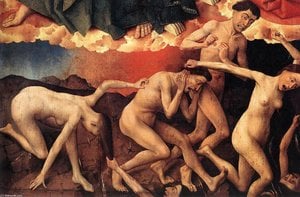


 Last Judgment
 The Last Judgment (Michelangelo)
 Last Judgment Triptych (open)
 Sacred Narratives Embodied: A Comprehensive Exploration of Religious Iconography in Art History
 Hans Ii Strigel
 Divine Beauty: A Connoisseur's Guide to Selecting Captivating Religious Art for Your Home


