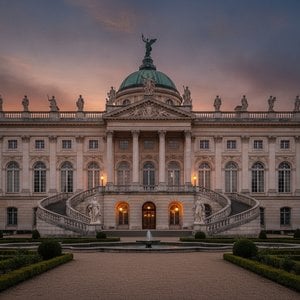
Timeless Masterpieces: A Journey Through the Evolution of Italian Art History
Embark on an expert-led journey through Italian art history, from Renaissance humanism to Baroque grandeur. Discover the stories behind timeless masterpieces and learn how to bring their enduring beauty into your home with museum-quality, hand-painted oil reproductions.
Santa Maria di Campagna: A Renaissance Gem in Piacenza Nestled in the Emilia-Romagna region of Italy, Santa Maria di Campagna stands as a beacon of Renaissance artistry and devotion. More than just a church, it’s a meticulously crafted monument to fa...
To understand the soul of Italian art, one must first travel back to the 14th and 15th centuries, a period defined by the concept of rinascita—rebirth. This was not merely a change in aesthetic preference but a profound intellectual awakening known as Humanism. As scholars rediscovered the lost wisdom of ancient Greece and Rome, artists began to move away from the flat, symbolic rigidity of the Medieval era toward a more grounded, scientific observation of the natural world. In the workshops of Florence, innovators like Filippo Brunelleschi revolutionized the very concept of space through the development of linear perspective, allowing painters to create a window into a three-dimensional reality.
This era was characterized by an obsession with proportion, geometry, and the harmonious balance of the human form. The architecture of the period, seen in the revolutionary domes and classical columns of early Renaissance structures, mirrored the mathematical precision found in painting. It was a time when the divine and the human were reconciled through the beauty of natural law. In sacred spaces like the Basilica of Santa Maria di Campagna in Piacenza, one can still witness this intersection of faith and innovation, where breathtaking frescoes illuminate walls that embody both spiritual devotion and the burgeoning humanist spirit. For those who find themselves moved by this era of clarity and balance, our museum-quality oil reproductions offer a way to invite this classical order into contemporary living spaces, capturing every delicate line and mathematical grace.
The Baroque Explosion: Drama, Chiaroscuro, and the Art of Illusion
A Symphony of Baroque Grandeur Stepping into the View of the Hall of Saturn is akin to entering a dreamscape of seventeenth-century opulence, where the boundaries between architecture and illusion dissolve. This breathtaking depiction of the Galleria...
As the 16th century gave way to the 17th, the serene equilibrium of the Renaissance fractured into something far more theatrical and emotive. The Counter-Reformation, driven by the Roman Catholic Church’s desire to reassert its spiritual authority, demanded an art form that could stir the soul and overwhelm the senses. This was the birth of the Baroque—a style defined by movement, deep shadows, and a profound sense of drama. Artists mastered chiaroscuro, the intense contrast between light and dark, to create figures that seemed to emerge from the very depths of the canvas.
The Baroque period turned architecture and painting into a singular, immersive experience. In works such as Pietro da Cortona’s depictions of the Hall of Saturn, the boundaries between physical structure and painted illusion dissolve through the technique of quadratura. This mastery of perspective creates the sensation that ceilings are opening directly into the heavens, populated by swirling clouds and celestial figures. Even the more decorative elements, such as the intricate grotesques executed by masters like Giovanni Antonio Paganino in the Palazzo Farnese, utilized trompe l'oeil to trick the eye and expand the perceived limits of reality. This era was a symphony of grandeur, where every brushstroke served to evoke awe. At ArtsDot.com, we specialize in recreating this tactile intensity; our hand-painted oils utilize thick, visible brushstrokes and deep tonal ranges to ensure that the dramatic energy of the Baroque is preserved on your canvas.
Venetian Splendor: The Mastery of Light, Color, and Atmosphere
The Venetian Roots of Tiepolo's Genius Wikipedia: Venetian painting Venetian painting was a major force in Italian Renaissance painting and beyond. Beginning with the work of Giovanni Bellini (c. 1430–1516) and his brother Gentile Bellini (c. 1429–15...
While Rome and Florence focused on line and structure, the maritime Republic of Venice developed a different, more sensory approach to art. Venetian painting became a celebration of colore—the use of color to define form and atmosphere. Influenced by the shimmering, diffused light of the Venetian lagoon, masters such as Giovanni Bellini and later the legendary Giambattista Tiepolo prioritized the interplay of light and pigment over rigid outlines. The air in a Venetian masterpiece feels heavy with moisture and warmth, a quality achieved through sophisticated glazing techniques that allow light to penetrate multiple layers of oil paint.
This focus on atmosphere created a sense of poetic movement that was uniquely Venetian. The lineage of this school, stretching from the early Renaissance workshops to the late Baroque, emphasizes the emotional resonance of color. To study Venetian art is to witness the evolution of light itself—from the steady, devotional glow of Bellini to the effervescent, sun-drenched brilliance of the Rococo period. For the collector seeking to infuse a room with warmth and luminosity, a reproduction of a Venetian master provides an unparalleled sense of depth and radiance that digital prints simply cannot replicate.
Rococo Elegance: The Effervescent Grace of 18th-Century Italy
A Baroque Symphony in Stone and Stucco In the vibrant, sun-drenched heart of Palermo, where the ancient echoes of the Cassaro meet the spiritual gravity of the Cathedral, lies a hidden masterpiece of Sicilian grandeur: Palazzo Asmundo . This late-Bar...
As the heavy, muscular drama of the Baroque began to soften, the 18th century ushered in the Rococo—a period of lightness, grace, and ornamental delight. If the Baroque was a thunderous orchestral movement, the Rococo was a delicate chamber concerto. This style flourished in the aristocratic palaces of Italy, where the focus shifted from religious awe to the celebration of pleasure, beauty, and refined taste. The works of Giambattista Tiepolo epitomize this era; his canvases are characterized by an airy, theatrical splendor that seems to float above the viewer.
Rococo art is defined by asymmetrical curves, pastel palettes, and a sense of effortless movement. It was an era of "lightness," where even the most complex compositions felt weightless. This period also saw the rise of highly skilled decorative artists who worked in stucco and fresco to transform interiors into dreamlike landscapes of gold and silk. In places like Palazzo Asmundo in Palermo, the late-Baroque and Rococo influences merge, creating spaces where mythological narratives are rendered with an ethereal, almost translucent quality. Our artists at ArtsDot.com are trained to capture this specific luminosity, ensuring that the delicate textures and soft transitions of the Rococo era are authentically represented in every custom commission.
Architectural Grandeur: From Brunelleschi’s Domes to Baroque Palazzos
Renaissance architecture is the European architecture of the period between the early 15th and early 16th centuries in different regions, demonstrating a conscious revival and development of certain elements of ancient Greek and Roman thought and mat...
The history of Italian art is inseparable from its architecture. The evolution of the Italian landscape is a physical record of changing human values. In the early Renaissance, architecture was an exercise in logic and revivalism, looking back to the Roman triumphal arch and the hemispherical dome to establish a sense of permanence and civic pride. Architects like Brunelleschi used stone and geometry to create structures that felt as though they were governed by the same laws as the stars.
However, as the centuries progressed, architecture became increasingly sculptural and dynamic. The Baroque era transformed buildings into living organisms. Facades began to undulate, and interiors became stages for light and shadow. The use of expensive materials—marble, granite, and gold leaf—was not merely a display of wealth but a way to create a sensory experience that mirrored the complexity of the art within. From the monumental churches of Genoa to the aristocratic residences of Rome, Italian architecture serves as the essential frame for the masterpieces of painting. For those looking to recreate this historical majesty, we offer large-format murals and ceiling frescoes, allowing you to transform any modern space into a hall of historical splendor.
Preserving the Legacy: Bringing Italian Masterpieces into the Modern Home
The journey through Italian art history is a testament to the enduring power of human creativity. These works have survived centuries of political upheaval, religious shifts, and cultural revolutions, yet their ability to move the human spirit remains undiminished. Today, the challenge lies in how we preserve this legacy within our own lives. While the original masterpieces reside in the hallowed halls of museums, the essence of their beauty can be brought into the contemporary home through the art of meticulous reproduction.
At ArtsDot.com, we believe that art should be lived with, not just observed from a distance. Our process is dedicated to maintaining the academic integrity of these historical treasures. We do not offer mere copies; we offer hand-painted reinterpretations on 100% cotton canvas, where every brushstroke is an homage to the masters. Whether it is the structured precision of a Renaissance portrait or the dramatic chiaroscuro of a Baroquebattle scene, our artists use traditional oils and fine pigments to ensure a depth of color and texture that honors the original. By choosing a high-quality reproduction, you are not just decorating a wall; you are participating in the ongoing story of art history, ensuring that the light of the Italian masters continues to shine in the modern age.
Explore the captivating evolution from Baroque's drama to Rococo's grace! Discover key artists, characteristics & lasting influence of these art movements with expert insights at ArtsDot.
Discover the enduring elegance of Florence. Explore how Renaissance masterpieces and Italian craftsmanship inspire timeless art collections through museum-quality, hand-painted oil reproductions and bespoke commissions for the discerning collector.
Explore the breathtaking tension of Baroque Classicism. Discover how 17th-century masters reconciled dramatic emotion with classical order through light, shadow, and divine grandeur in this expert art history guide for true connoisseurs.
Explore the profound transition from Baroque drama to Rococo elegance. Our expert guide delves into chiaroscuro, architectural grandeur, and the masterful techniques of the Old Masters, perfect for fine art enthusiasts and interior designers seeking historical inspiration.
Explore the profound elegance of Baroque Classicism. Discover how 17th-century masters synthesized dramatic emotion with classical order through the lens of the Counter-Reformation and the works of legends like Carlo Maratta and Andrea Sacchi.



 Santa Maria di Campagna
 View of the Hall of Saturn
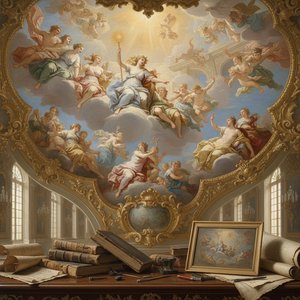 Giambattista Tiepolo: A Rococo Master's Legacy of Light & Illusion
 Palazzo Asmundo
 Renaissance architecture