The Verdant Threshold: An Introduction to Botanical Artistry
To enter a room adorned with botanical art is to step beyond the confines of the domestic and into a world governed by different laws—the laws of growth, light, and seasonal rhythm. There is a particular gravity found in works that focus on foliage, a weight that comes from the deep, layered greens and the structural complexity of organic life. Unlike the fleeting nature of a floral bouquet, which begins its decline the moment it is cut, botanical art captures the enduring vitality of the plant in its most potent state.
This fascination with the green world is not merely decorative; it is an engagement with the very architecture of our planet. When we look at the deep emeralds of a jungle canopy or the delicate, pale veins of a single leaf, we are participating in a long tradition of observation that seeks to understand the intricate connections between species. It is a quiet, contemplative form of beauty that rewards the patient eye, offering a sense of permanence in an increasingly transient age.
The Explorer’s Lens: Marianne North and the Global Record
A Botanical Symphony in Oil In the lush, verdant world of Marianne North’s 1878 masterpiece, Foliage and Fruit of the Banyan , the viewer is transported from the structured drawing rooms of Victorian England to the humid, vibrant heart of a tropical ...
Few figures embody this connection between scientific rigor and artistic passion as completely as Marianne North. Born in 1830, she lived a life that refused the quiet domesticity expected of Victorian women. Instead, she utilized her botanical curiosity as a passport, traversing continents from the humid reaches of Borneo to the sun-drenched Australian bush. Her work does not merely depict plants; it documents ecosystems.
In works such as Foliage and Fruit of the Banyan (1878), we see North’s ability to move beyond the sterile, white-background illustrations common in her era. She brings the viewer into the heart of the habitat. Her technique, often utilizing oil on panel, allows for a remarkable depth of color. One can almost feel the humidity of the tropical air through her heavy, textured application of pigment. She was a self-taught botanist whose canvases serve as vital historical archives, recording biodiversity during a period of profound global change.
Examining the Canopy: Texture and Light in Tropical Oils
A Botanical Symphony in Oil In the delicate dance of light and shadow captured within Foliage and Flowers of the Cinnamon Tree , we encounter the profound intimacy of Marianne North’s botanical vision. Painted in 1872, this exquisite oil on panel ser...
When we look closer at North’s compositions, the scientific precision begins to merge with an almost tactile sensory experience. In Foliage and Flowers of the Cinnamon Tree (1872), the viewer is drawn into a close-up encounter where large, waxy leaves provide a backdrop for delicate yellow blossoms. The interplay of light across these surfaces demonstrates a command over oil pigments that makes the flora appear to breathe.
This mastery extends to her more intimate studies, such as Foliage and Fruit of Mammee Apple or South American Apricot (1873). Here, the smooth, deliberate brushstrokes convey the organic contours of the fruit, while a soft, diffused light enhances its ripe appearance. There is a subtle, impressionistic quality to how her colors blend, softening edges to create an atmosphere of quiet abundance. Similarly, in her depiction of the Opium Poppy (1879), North uses the dark, shadowed depths of foliage to create a sense of mystery, where velvety petals emerge from a dense, green darkness.
The Living Canvas: Science and Aesthetics in the Botanic Garden
A Living Chronicle of Botanical Artistry Nestled within the historic heart of Cambridge, the Cambridge University Botanic Garden serves as much more than a mere horticultural display; it is a living, breathing masterpiece where scientific inquiry mee...
The impulse to document and organize the natural world finds its most structured expression in places like the CambridgeUniversity Botanic Garden. Established in 1762, this sanctuary is a living chronicle of botanical artistry. To walk its paths is to witness a deliberate composition where species are grouped by evolutionary relationships, creating a rhythmic flow of texture and color that mirrors the order found within nature itself.
This garden, which once hosted the footsteps of Charles Darwin, functions as both a laboratory and a gallery. The landscape is a masterclass in intentionality, utilizing reclaimed terrain to create reflective lakes and rising mounds that offer panoramic vistas. It is a place where the boundaries between scientific inquiry and aesthetic grace dissolve, proving that the most profound beauty often arises from the most rigorous observation.
Modern Echoes: Tonalism and Contemporary Landscapes
A Life Rooted in Alaskan Beauty: The Journey of Robert Green Robert “Bob” Green’s artistic path is a compelling narrative of reinvention and a deep-seated connection to the landscapes of Alaska. Born in Kodiak, Alaska, he initially experienced life i...
The tradition of capturing the soul of a landscape continues through artists who bridge the gap between classical training and modern sensibility. Robert Green, for instance, brings a perspective rooted in the Alaskan wilderness. His work, while grounded in realism, draws heavily from the Tonalist movement, utilizing subtle gradations of light and shadow to evoke a sense of profound tranquility.
His approach mirrors the dedication found in the great masters, focusing on the atmosphere and the spirit of the environment rather than mere topographical accuracy. This lineage of painting—where the artist seeks to portray a lifestyle and a connection to the earth—ensures that the botanical and landscape traditions remain vital. Whether it is the transition of a corporate career into a dedicated "retirement career" or the exploration of new territories, the commitment to mastering the light and texture of the natural world remains unchanged.
Designing with Nature: Bringing the Verdant World Indoors
Integrating these verdant elements into a modern interior requires an eye for balance and curation. The goal is not simply to decorate, but to anchor a room with organic energy. A large-scale oil reproduction of a North landscape can serve as a commanding focal point, bringing the weight and history of the Victorian era into a contemporary space.
For those looking to layer these textures, the use of botanical motifs can be achieved through various means, from the subtle inclusion of dried eucalyptus to the more structured presence of fine art. The key is to treat the greenery as an architectural element—a way to introduce depth and a sense of life. By selecting works that emphasize texture, light, and historical narrative, one can create a home environment that feels both sophisticated and deeply connected to the enduring beauty of the natural world.
Discover the exquisite world of Victorian botanical painting, where scientific precision meets profound aesthetic grace. Explore a journey through nature's intricate details, from legendary illustrators to the untamed beauty of Marianne North’s vibrant floral masterpieces.
Elevate hospitality interiors with premium Victorian botanical art reproductions. A professional guide for hotel designers on sourcing hand-painted oils and large-scale murals, featuring expert procurement advice, bulk ordering, and reliable global logistics for luxury spaces.
Embark on a global journey through the vibrant botanical landscapes of Marianne North. Explore 25 iconic Victorian masterpieces, from lush tropical flora to rare scientific illustrations. Find museum-quality art reproductions and decor inspiration. Discover all masterpieces on ArtsDot.com.
Journey through the vibrant world of Marianne North. Explore 25 iconic botanical masterpieces that blend Victorian adventure with scientific beauty. Find museum-quality art reproductions and decor inspiration for your home. Discover all masterpieces on ArtsDot.com.



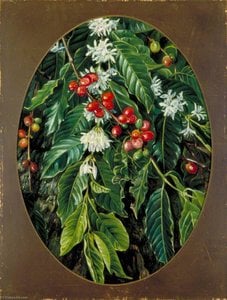


 Foliage and Fruit of the Banyan
 Foliage and Flowers of the Cinnamon Tree
 Cambridge University Botanic Garden
 Robert Green


