Timeless Echoes: Reimagining the Eternal Beauty of Ancient Greece Through an Impressionist Lens
Discover the breathtaking intersection of Ancient Greek mythology and Impressionist light. Explore how timeless legends are reimagined through soft, luminous brushstrokes for the discerning art lover seeking beauty, history, and soulful elegance.
Ancient Greek Art: A Legacy of Beauty and Idealism The art of ancient Greece, spanning roughly from the Mycenaean period (c. 1600 BC) through the Hellenistic era (c. 30 BC), represents a cornerstone of Western civilization’s artistic heritage. More t...
To wander through the corridors of art history is to encounter a profound, enduring dialogue between the human spirit and the divine. Long before the first light of the Impressionist era danced upon the Seine, the artisans of Ancient Greece were engaged in a similar, albeit more structured, quest for truth. Theirs was a pursuit of ideal beauty, a meticulous attempt to capture the perfection of the gods within the tangible medium of marble and clay. From the monumental architecture of the Mycenaean citadels to the refined elegance of the Classical period, Greek art served as a cornerstone of Western civilization, offering a window into a world where geometry and grace were inseparable.
This era was not merely about the creation of beautiful objects; it was an exploration of rational order and the human form. Sculptors like Phidias and Polyclitus mastered techniques such as contrapposto, allowing stone to breathe with a simulated vitality that suggested movement and weight. Whether observing the intricate red-figure narratives of the Berlin Painter on an Attic hydria or contemplating the stoic dignity of a marble bust, one senses a deep reverence for proportion and balance. These works were more than decorations; they were vessels for mythos—the stories that provided the foundational architecture of our collective culture, expressing the complexities of existence through the lens of the eternal.
Light and Legend: How Impressionism Reinterprets Classical Mythology
Explore Alecos Fassianos’ captivating ‘Zeus & Danae’ painting – a classical mythological scene in vibrant colors. Discover his masterful technique & timeless artistry.
Centuries later, a different kind of magic began to unfold in the late 19th century. Where the Greeks sought the immutable and the permanent, the Impressionists sought the ephemeral. Yet, when we allow these two worlds to touch, something extraordinary occurs. Imagine the sun-drenched pantheon of Olympus not as a static, marble monument, but as a shimmering vision seen through a veil of morning mist. The Impressionist movement, with its devotion to the fleeting dance of light and atmosphere, offers a way to breathe new life into ancient legends, stripping away the rigid boundaries of classical realism to reveal the emotional pulse beneath.
In this reimagining, the stories of gods and heroes are no longer bound by the strictures of historical accuracy. Instead, they become sensory experiences. A scene involving Zeus or Danae can be transformed through vibrant, broken brushstrokes that prioritize the feeling of warmth on skin or the vibration of light on water over anatomical precision. This intersection allows us to engage with mythology not as a dusty chronicle of the past, but as a living, breathing dream. By applying the soft, luminous techniques of masters like Monet or Renoir to classical themes, we find that the ancient myths remain remarkably relevant, acting as eternal mirrors in which we recognize our own triumphs and tragedies through a haze of beautiful, shifting color.
From Marble to Monet: Translating Sculptural Form into Fleeting Light
Light in painting serves both technical and aesthetic purposes. Technically, it is essential to visual representation, as it conditions the perception of color, texture, and volume. Aesthetically, its interplay with shadow and its effects on color an...
The transition from the tactile weight of Greek sculpture to the airy textures of Impressionism is perhaps the most fascinating technical journey in art history. In the classical tradition, the artist’s hand worked to define volume and mass, using light primarily to reveal the anatomical accuracy and the structural integrity of the subject. The goal was clarity—a sense of permanence that could withstand the erosion of time. There is a certain intellectual rigor in this approach, much like the later works of Nicolas Pinstin, where every gesture is deliberate and every composition serves as a stage for moral or philosophical contemplation.
Impressionism, however, invites us to abandon this photographic precision. When we translate the solid forms of antiquity into an Impressionist style, we are performing a beautiful alchemy. The hard edges of a marble statue soften into dabs of pigment; the deep shadows of a temple colonnade dissolve into shades of violet and blue. This process does not diminish the subject but rather elevates it to a higher plane of abstraction. We move from observing the object to experiencing the impression of the object. It is a movement from the physical to the atmospheric, where the heavy weight of history is lifted by the sheer brilliance of light, allowing the viewer to feel the warmth of a Mediterranean sun that has been setting for millennia.
A Dialogue Across Centuries: The Emotional Resonance of Mythic Landscapes
Introduction To step into the world of Impressionist landscapes is to abandon the rigid boundaries of reality and embrace the fleeting dance of light and atmosphere. Imagine standing on the banks of the Seine or amidst a sun-drenched meadow in Givern...
There is a profound emotional continuity that links the ancient world to our modern sensibilities. While the techniques and philosophies of art have evolved, the underlying themes—love, betrayal, heroism, and mortality—remain unchanged. To gaze upon a mythological masterpiece is to engage in a dialogue with the primordial psyche of humanity. The landscapes of the ancient world, often depicted in pottery or relief, provided a structured backdrop for divine intervention; however, through an Impressionist lens, these landscapes become active participants in the drama.
An Impressionist landscape, much like a sun-drenched meadow in Giverny, can serve as a vessel for the sublime. When we reimagine the setting of a myth—perhaps the island of Ogygia where Calypso held Odysseus—we are not just looking at a geographical location, but at an emotional state. The heavy moisture in the air, the vibrating horizon, and the interplay of shadow and light create a sense of longing and mystery that mirrors the complexity of the human soul. This resonance is why we continue to return to these stories; they provide a language for the intangible, and when painted with the soulful, textured strokes of an Impressionist master, they offer a sanctuary of beauty in an increasingly fragmented world.
The Modern Muse: Reimagining Antiquity Through Contemporary Brushstrokes
Introduction To step into a gallery dedicated to mythology is to walk through the collective dream of humanity. For millennia, the stories of gods, heroes, and monsters have served as the foundational architecture of our culture, providing a language...
Today, we find ourselves in a unique position to participate in this grand, artistic lineage. We are no longer mere observers of history; we are participants in its ongoing creation. Through the medium of hand-painted oil reproductions, we can bridge the gap between the classical and the contemporary, bringing the grandeur of ancient Greece into our modern lives with a personal, emotive touch. The ability to "remix" art history—to take a cherished memory or a personal portrait and render it in the impasto style of Van Gogh or the light-drenched atmosphere of Monet—allows us to create a new kind of mythology.
This is the true essence of art: its ability to evolve while remaining anchored in tradition. Whether through a large-scale mural that recreates the majesty of a classical ceiling or a bespoke commission that transforms a modern moment into a timeless legend, we continue to find meaning in the interplay of light and shadow. As we look back at the enduring legacy of the Greeks and forward to the expressive freedom of the Impressionists, we realize that beauty is not a static destination, but a continuous, luminous journey.
For those seeking to bring this extraordinary fusion of history and light into their own homes, ArtsDot.com offers exquisite, hand-painted recreations designed to capture the very soul of these timeless eras.
By the ArtsDot.com Editorial Team
Titian Peale
b. 1799 · Philadelphia, United States
High Renaissance style defines Venus Anadyomene. Discover the stunning beauty of his classical works today.
Explore the profound beauty of impermanence through Impressionist and Post-Impressionist eyes. Discover how masters like Monet and Van Gogh captured fleeting light and the poetic essence of nature's transitions in our deep dive into art history and emotional landscapes.
Discover the breathtaking depth of Impressionist art through the magic of impasto. Explore how thick, textured brushstrokes bring masterpieces by Monet and Van Gogh to life, offering a tactile connection to history for the discerning collector.
Journey through history with 10 iconic mythological paintings. From Renaissance masters to dramatic Baroque scenes, explore the stories behind these timeless masterpieces. Find museum-quality art reproductions and decor inspiration. Discover all masterpieces on ArtsDot.com.
Embark on a sophisticated journey through the eternal allure of mythological art. Discover how master painters breathe life into ancient legends, from Greek deities to Baroque masterpieces, and learn to curate these timeless narratives within your own exquisite art collection.



 ancient greek
 Zeus and Danae
 Light in painting
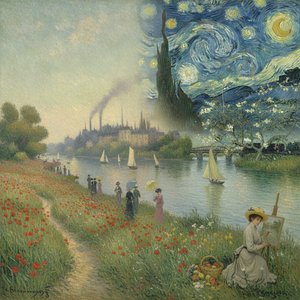 10 Iconic Impressionist Landscapes That Changed Art Forever
 Timeless Legends: Top 10 Masterpieces That Bring Mythology to Life


