Vibrant Abstraction: A Pioneering Work of Modern Art Wassily Kandinsky's *First Abstract Watercolor* is a landmark piece in the history of modern art, marking his transition into pure abstraction. Created in 1910, this dynamic composition embodies th...
The act of looking at a landscape often begins with recognition—the familiar silhouette of a hill, the precise line of a horizon. Yet, for many who seek depth in art, the true essence of a place lies not in its literal contours but in the feeling it leaves behind once the eyes have closed. Abstract landscapes operate in this quiet space between observation and memory. They do not aim to replicate the world as a photograph does; instead, they attempt to capture what remains when the physical details fade. This pursuit of an internal truth requires a departure from strict realism, moving toward a language where a single stroke of pigment can carry the weight of a summer storm or the stillness of a mountain morning.
This movement toward the unseen finds its historical anchor in the early explorations of Wassily Kandinsky. In 1910, with his First Abstract Watercolor, he began to move away from the objective world, seeking instead to express spiritual and universal emotions through non-objective forms. He understood that color and shape could function as a visual symphony, independent of any recognizable subject. Today, contemporary artists continue this dialogue, using abstraction to explore the gap between what we see and how we experience the natural world. The landscape becomes a vessel for the artist's inner necessity, much like the way Kandinsky used color to trigger profound psychological responses.
Chromatic Resonance: The Language of Color and Mood
Captivating Subject and Lush Landscape Immerse yourself in the vibrant beauty of a tropical paradise captured through the masterful brushwork of Paul Gauguin. This evocative scene depicts the lush, mountainous terrain of Martinique, where the natural...
Color possesses a unique ability to bypass the intellect and speak directly to the senses. In an abstract landscape, color is rarely just a descriptive tool; it is the primary driver of mood. A wash of deep violet can evoke the onset of dusk, while a sudden strike of cadmium yellow might suggest the heat of a midday sun. When artists manipulate color theory—placing opposites like red and green in subtle tension—they create a visual vibration that mimics the energy of life itself. This is not merely about aesthetics; it is about using the spectrum to communicate the temperature of an emotion, whether it be the cool isolation of winter or the warmth of a shared memory.
We see the foundations of this chromatic language in the works of the Post-Impressionists, particularly in the way Paul Gauguin utilized bold, non-naturalistic palettes. In his Martinique Landscape, the colors are not strictly bound by reality but are used to emphasize the vitality and spiritual essence of the tropical terrain. By moving away from the muted tones of academic tradition, Gauguin paved the way for a future where color could exist as an emotional force. Modern practitioners follow this lineage, using layered pigments to build a sense of depth that is felt rather than measured, ensuring that the palette serves the soul of the painting rather than just its subject.
The Tactile Surface: Texture as a Sensory Experience
Experience the hypnotic rhythm of Laurent Moreau’s Gilded Intersections, a monumental study of interwoven gold and tactile bone textures that invites you to own this one-of-one masterpiece from ArtsDot.com Studio.
A painting is, at its core, a physical object—a layer of material resting upon a surface. In abstract landscapes, the texture of the paint becomes a vital component of the narrative. The way an artist builds up impasto, or conversely, scrapes back layers to reveal a hidden underpainting, adds a tactile dimension that invites the viewer to engage with the work through touch as much as sight. A thick, rugged application of oil can mimic the coarse bark of a tree or the weathered face of a stone, while thin, translucent glazes can suggest the ephemeral nature of mist or light filtering through leaves.
This emphasis on the physical surface finds a profound parallel in the techniques of artists like Stefania Boiano. She utilizes unconventional tools—hacksaw blades, forks, and even twigs—to create unexpected marks and textures that disrupt the smoothness of the canvas. This process of adding and removing, of scarring and smoothing, mirrors the natural cycles of erosion and growth found in the earth itself. By treating the canvas as a site of physical transformation, the artist ensures that the texture is not merely decorative but is an integral part of the landscape's structural identity.
Reconstructing Nature: Landscapes Born of Memory and Intuition
Introduction There’s a quiet intensity that clings to Paul Cézanne's work, an almost palpable sense of searching—a relentless pursuit of capturing the essence of light and form. To assemble a ‘Top 25’ is, in itself, a somewhat reductive act; it feels...
The most profound abstract landscapes are often those that are not painted en plein air under the sun, but rather reconstructed in the quiet of a studio from the fragments of memory. This process is an act of distillation. An artist might recall the specific way light hit a field in Dorset or the particular scent of rain on dry earth, and then attempt to translate those sensory impressions into form and color. There is no map to follow; there is only the intuition to guide the hand through the reconstruction of a vanished moment. It is a way of painting not what was seen, but what was felt during the encounter.
This reliance on memory and the distillation of experience can be traced back to the approach of Paul Cézanne. While his work remained tethered to the physical reality of objects like Mont Sainte-Victoire, he sought to reduce the landscape to its fundamental geometric primitives. He was not interested in the fleeting light of the Impressionists so much as the enduring structure beneath it. Modern abstract painters take this a step further, often abandoning the structure entirely to focus on the "abstract climate" described by Helen Frankenthaler—a feeling of a place that exists purely within the mind's eye.
Atmospheric Dissolution: Light, Form, and the Evolving Gaze
Introduction Close your eyes for a moment and imagine the world not as a collection of fixed lines and rigid shapes, but as a shimmering dance of light and atmosphere. Imagine the way a morning mist clings to the reeds of a pond, or how the setting s...
Ultimately, the power of an abstract landscape lies in its ability to dissolve the boundaries between the viewer and the viewed. As light and form begin to merge, the painting ceases to be a window into another world and becomes a space for contemplation. The dissolution of hard edges allows for a sense of movement and breath, where a horizon might disappear into a wash of blue, or a solid mass of earth might seem to float within a sea of light. This fluidity mirrors the transient nature of our own perceptions, reminding us that nothing in the natural world is truly static.
This evolution of the gaze was perhaps most radical in the work of J.M.W. Turner, whose late landscapes moved toward a near-total abstraction of light and atmosphere. His ability to render the power of a storm or the glow of a sunset through swirling, indistinct forms provided the essential groundwork for the Abstract Expressionists. Artists like Mark Rothko would later take this even further, using vast fields of color to create a sense of monumental presence and tension. In the contemporary abstract landscape, we continue to find ourselves in this lineage, seeking that precise moment where the physical world dissolves into pure, luminous emotion.
Journey through the vibrant soul of abstraction with our curated guide to the top 25 Wassily Kandinsky masterpieces. Explore the stories behind his iconic colors and shapes. Find museum-quality reproductions and decor inspiration. Discover all masterpieces on ArtsDot.com.
Journey through the revolutionary world of Paul Cézanne. Explore 25 iconic Post-Impressionist masterpieces, from his structural landscapes to timeless still lifes. Find inspiration for museum-quality art reproductions and decor. Discover all masterpieces on ArtsDot.com.
Explore the profound connection between artistic technique and emotion. From the heavy impasto of Van Gogh to classical mastery, learn how brushstrokes define art history and discover museum-quality hand-painted reproductions for your collection.
Rediscover the magic of 19th-century Impressionism. Explore the revolution of light and plein air painting through our expert art history journey, featuring exquisite hand-painted oil reproductions and bespoke commissions from ArtsDot.com.



 First Abstract Watercolor, Collection of Mad
 Martinique Landscape
 Gilded Intersections: A Monumental Study of Woven Gold and Tactile Bone Texture
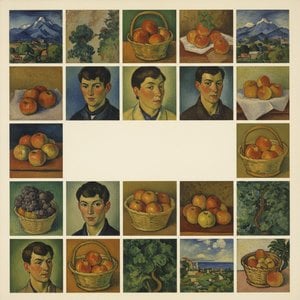 Cézanne's Masterpieces: 25 Iconic Artworks to Transform Your Space
 10 Iconic Impressionist Landscapes That Changed Art Forever


