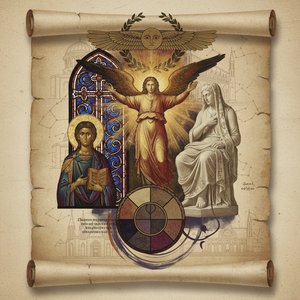
The Halo Effect: Symbolism & Origins in Religious Art
A halo (from Ancient Greek ἅλως, hálōs, 'threshing floor, disk'), also called a nimbus, aureole, glory or gloriole (Latin: gloriola, lit. 'little glory'), is a crown of light rays, circle or disk of light that surrounds a person in works of art. Th...
From the earliest depictions of divinity to the masterpieces of the Renaissance, a recurring motif has illuminated sacred figures – the halo. More than mere decoration, this radiant circle, often depicted as light rays or a golden disk, represents holiness, spiritual power, and a connection to the divine realm. Its origins are deeply rooted in ancient traditions, predating Christianity itself. In Greek art, halos were used to signify rulers and heroes, associating them with solar deities and embodying their authority. The Romans adopted this practice, further solidifying the halo’s association with imperial power. However, it was within the context of early Christian iconography that the halo truly blossomed into a potent symbol of sanctity. Early Christians adapted the visual language of their predecessors, transforming the halo into an emblem of divine grace and spiritual enlightenment. The Gandharan Buddhas, for example, frequently feature halos, demonstrating the cross-cultural exchange of artistic ideas and religious symbolism. The halo wasn’t simply *copied*; it was imbued with new meaning – a testament to faith and a visual declaration of a figure's closeness to God.
Early Christian & Byzantine Iconography: Laying the Foundation
As Christianity spread, so too did its distinctive artistic language. The catacombs of Rome offer some of the earliest examples of Christian art, where simple frescoes depicted Christ as the Good Shepherd and other biblical scenes. While not always present, the halo began to appear with increasing frequency, signifying the divine nature of these figures. The Byzantine era witnessed a flourishing of religious iconography, characterized by its opulent mosaics, intricate details, and stylized representations. Here, the halo reached new levels of sophistication. Often crafted from gold leaf, these halos weren’t merely painted; they *were* light, reflecting the spiritual radiance of the saints and Christ himself. The use of gold wasn't accidental – it symbolized divine perfection and eternity. Byzantine artists developed a complex system of iconography, with specific colors, gestures, and symbols conveying precise theological meanings. The halo became an integral part of this visual vocabulary, distinguishing holy figures from earthly ones and guiding viewers towards spiritual contemplation.
Renaissance Masters & the Humanization of Sacred Stories
Renaissance art (1350 – 1620) is the painting, sculpture, and decorative arts of the period of European history known as the Renaissance, which emerged as a distinct style in Italy in about AD 1400, in parallel with developments which occurred in phi...
The Renaissance marked a pivotal shift in artistic sensibilities. While deeply rooted in classical antiquity, Renaissance artists weren’t simply replicating ancient forms; they were transforming them through contemporary scientific knowledge and humanist philosophy. This period saw a renewed focus on realism, anatomy, and perspective, leading to more naturalistic depictions of religious figures. Masters like Leonardo da Vinci, Michelangelo, and Raphael brought an unprecedented level of emotional depth and psychological complexity to their sacred subjects. However, the halo didn’t disappear; it evolved. Rather than being a flat, static symbol, Renaissance halos often appeared as radiant light emanating from behind the figure's head, subtly illuminating their features and emphasizing their spiritual presence. This shift reflected the humanist emphasis on the individual – even divine figures were portrayed with human emotions and vulnerabilities. The focus moved towards portraying the *experience* of holiness rather than simply indicating it.
Proto-Renaissance Innovations: Giotto and Duccio’s Emotional Depth
The Proto-Renaissance, bridging the gap between Byzantine stylization and the full flowering of the Renaissance, saw groundbreaking innovations in painting. Artists like Giotto di Bondone and Duccio di Buoninsegna revolutionized religious art with their emphasis on naturalism and emotional expression. Giotto’s frescoes, particularly those in the Scrovegni Chapel, are renowned for their lifelike figures, dramatic compositions, and poignant storytelling. His ‘The Crucifixion,’ for example, depicts Christ's suffering with a raw intensity previously unseen in religious art. While Giotto still employed halos, he used them to highlight the emotional weight of the scene – emphasizing Christ’s sacrifice and the grief of those witnessing it. Duccio di Buoninsegna, working in Siena, similarly infused his paintings with a newfound sense of humanity. His ‘Appearance while the Apostles are at Table,’ housed in Siena’s Museo dell’Opera del Duomo, showcases delicate figures and expressive faces, conveying a deep spiritual connection between Christ and his disciples. These artists weren't merely depicting biblical stories; they were inviting viewers to *feel* them.
Beyond Italy: Northern Renaissance Approaches to Biblical Themes
While the Italian Renaissance often dominates discussions of this period, the Northern Renaissance developed its own distinctive artistic traditions. Artists in Flanders and Germany embraced meticulous detail, realism, and a fascination with symbolism. Jan Swart van Groningen, for example, excelled in glass paintings depicting biblical scenes, lamentations, and cityscapes. His work demonstrates a unique style characterized by precise execution and profound emotional resonance. The Master of AB Monogram, another prominent Northern Renaissance artist, created intricate religious paintings filled with symbolic details. These artists often focused on the everyday lives of biblical figures, grounding sacred stories in relatable human experiences. Unlike the Italian emphasis on classical forms, Northern Renaissance art tended to prioritize narrative clarity and moral instruction. The halo continued to be used, but it was often integrated into a larger tapestry of symbolism – emphasizing the spiritual significance of even the most mundane details.
The Enduring Legacy: Religious Art's Influence on Modern Sensibilities
The impact of religious art extends far beyond its historical context. The techniques, themes, and symbols developed over centuries continue to influence artists today. From the dramatic lighting of Caravaggio to the emotional depth of Giotto, these masters have left an indelible mark on Western artistic tradition. Even in secular art, echoes of religious iconography can be found – from the use of light and shadow to the exploration of universal themes like suffering, redemption, and faith. The halo itself remains a powerful symbol, often used to signify spiritual enlightenment or exceptional achievement. Exploring these sacred narratives isn’t simply about understanding art history; it's about connecting with the enduring human quest for meaning and transcendence. At ArtsDot.com, we are dedicated to making these masterpieces accessible to all, offering museum-quality reproductions that capture the beauty, detail, and emotional power of these iconic artworks. Discover a world of artistic inspiration and bring the timeless stories of faith into your home.